Walters A.M.E. Zion Church,
423 Broad Street
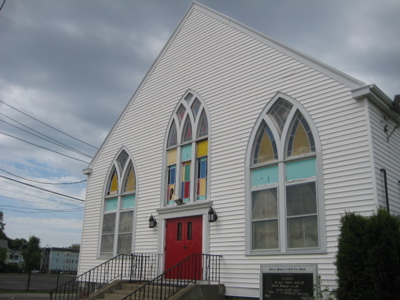
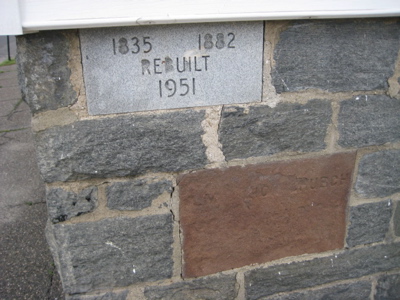
Walters African American Episcopal Zion Church has been located at this site since 1882. When its original structure was destroyed by fire in 1951, the current building was erected on the surviving foundation.
The church is one of the last surviving landmarks of “Little Liberia,” a once-thriving free Black community in Bridgeport. Established by formerly enslaved individuals, Southern migrants, and free African Americans, Little Liberia was home to two churches, a school, a hotel, and numerous residences.
Today, only two historic homes from Little Liberia remain—the Mary and Eliza Freeman Houses (below) on Main Street—preserving the memory of this vibrant 19th-century Black community.

Mary and Eliza Freeman Houses
352-54 and 358-60 Main Street
A block away from the church is a rather un-Main Street-like part of Bridgeport’s Main Street. Looking at the map of the city, it looks like I-95 chopped it up in two and this part, south of the highway, was forgotten and is now a bit dilapidated. Which is a shame when it comes to these Freeman houses, which as you can see, are (I assume) condemned. And surrounded by barbed wire. Oof.
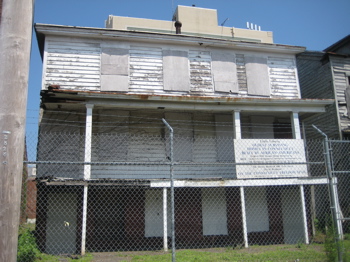
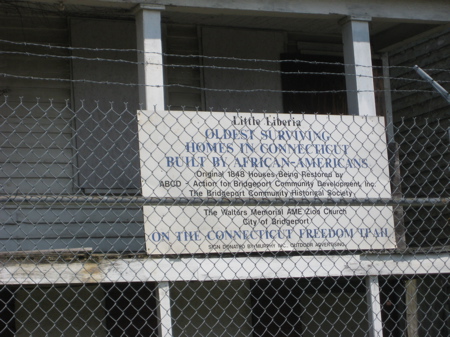
There is a large sign on the front of them though, noting their importance and a promise of repair, so that’s cool. The sign notes this mess as being the “Oldest surviving homes built by African-Americans in Connecticut.” Hey, that’s something.
The Mary and Eliza Freeman Houses are the last two houses to survive of “Little Liberia,” a settlement of black freedmen in this area that began in 1831 and reached its height just prior to the Civil War. “Little?Liberia” (originally known as Ethiope) emerged around 1821 as a settlement of free people of color, Native Americans, and Haitians. It featured the state’s first free lending library, schools, fraternal organizations, businesses, and even a seaside hotel for affluent Black visitors . The Freeman sisters—Mary and Eliza—were trailblazing entrepreneurs; by mid?1800s, Mary was among the wealthiest residents in Bridgeport, second only to P.T.?Barnum.
Wow. More wow:
After decades of vacancy and decay, the City of Bridgeport transferred ownership of the houses to the Freeman Center, supported by grants—including from the National Trust for Historic Preservation and Community Development Block funding—to stabilize and restore the properties. The Center plans to transform them into a joint-house museum, education hub, digital research center, and heritage-driven community space.
Work has begun in 2025 to transform this area. There is currently, in 2025, a gallery north of the houses to learn about Little Liberia and the Freeman sisters. I hope it all comes together as the revitalization of Bridgeport continues.
Connecticut Freedom Trail
The Mary & Eliza Freeman Center
CTMQ’s Freedom Trail page



Leave a Reply