
Your Periodic Reminder that Many Social Media Influencers Are Idiots
Interactive Periodic Table Mini-Museum, Mansfield (Location)
November 2025
Connecticut museum visit #551.
In the new world of dystopian brain-melting stupidity that we live in where hate is a virtue and science is demonized… where measles has returned and beef fat is a vitamin… one of my top-10 triggers is when these YouTube U. grads say things like, “chemical free” and “ew, this ingredient list has so many chemicals” and “I don’t wash my hair with chemicals,” etc.
I loathe these idiots. I loathe that they have platforms that reach millions. I loathe that we have a head of Health and Human Services who thinks “riboflavin” is bad because he can’t pronounce it and doesn’t know that it’s Vitamin B2.
Sigh. Everything is chemicals.
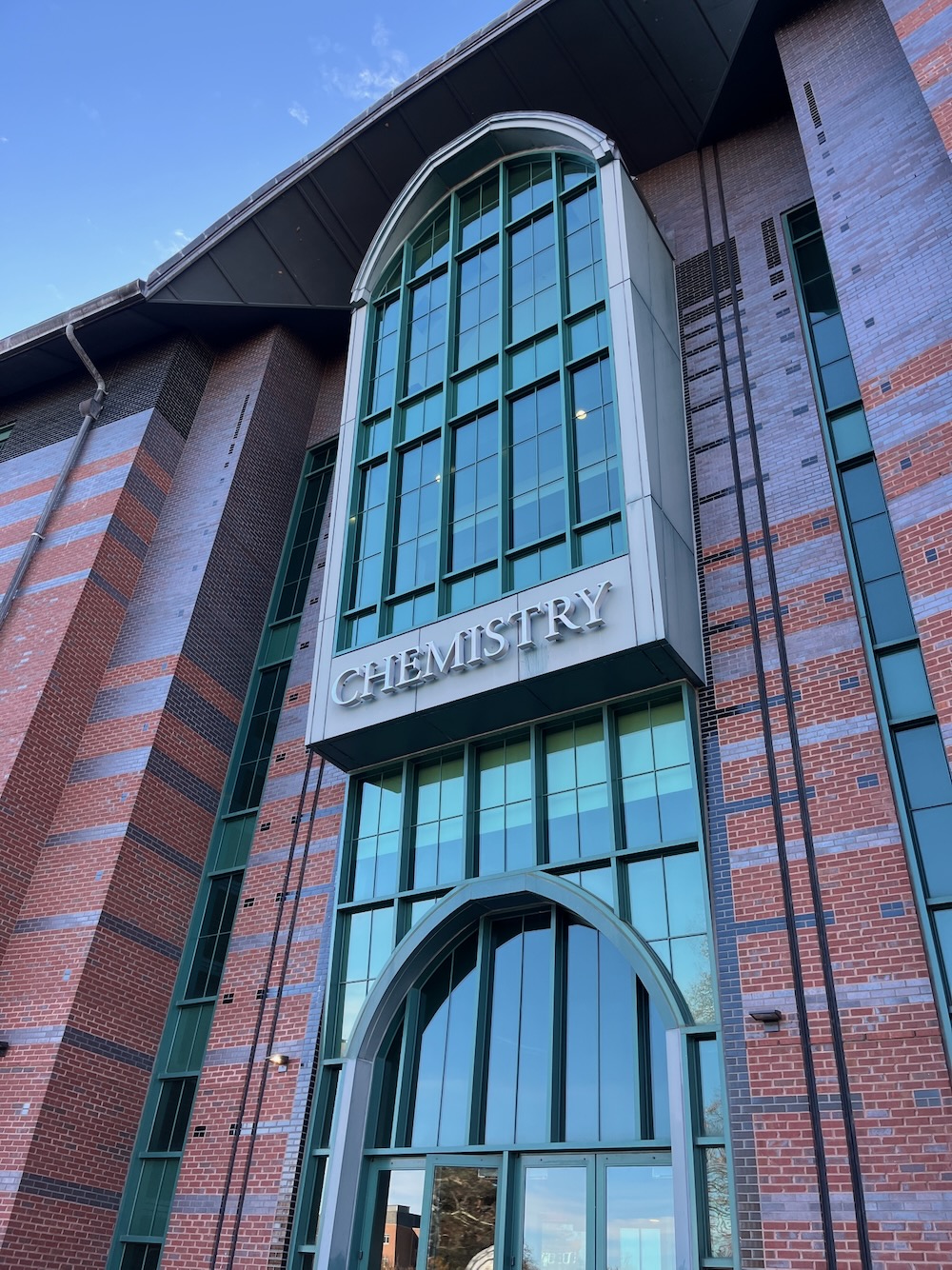
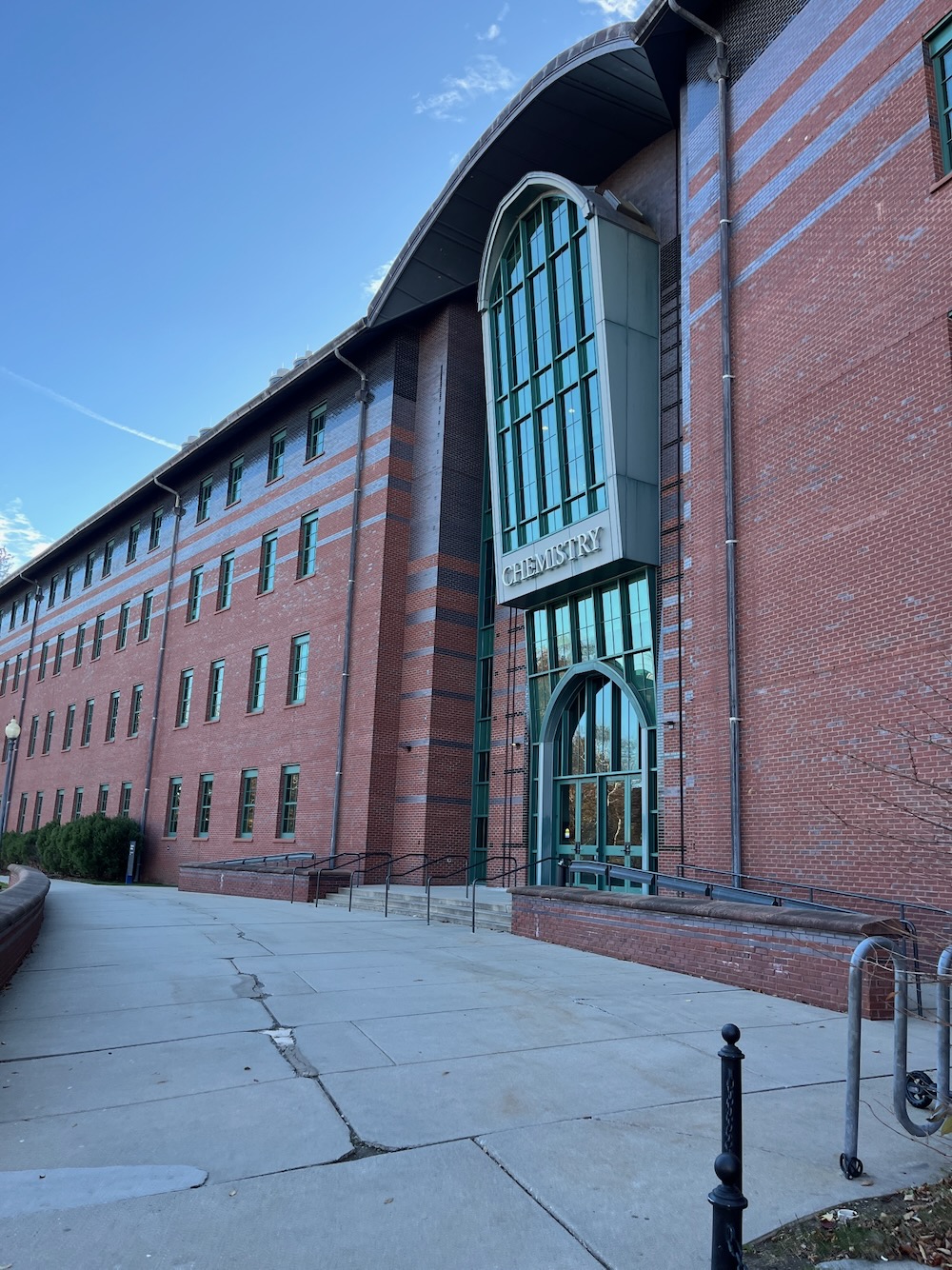
And so, with that heavy mental burden weighing us down, let’s visit the cool little periodic table mini-museum in the UConn Chemistry Building which, you may find mildly interesting, is actually officially called the “UConn Chemistry Building.” No wealthy donor’s name or impactful alumnus’s name has been attached to it.
The Chemistry building is relatively new – new since I graduated the University. The five-story building actually led off the UConn 2000 campaign and was the first of several buildings for the university’s new “Technology Quad,” which centralized the science and engineering programs on campus.
It’s amazing and fantastic how much the campus has improved over the last 30 years.
I parked and found an entrance and made my way up to the second floor to find this mini-museum. I learned of its existence by reading the UConn alumni magazine. And it’s that article that I will be using here to make myself sound smart.
I’d originally called this place the Brückner Periodic Table Mini-Museum because it was created by UConn chemistry department head Christian Brückner. But then I learned that he was merely copying an idea he’d seen elsewhere – not to diminish the coolness of what he’s amassed here, just giving credit where it’s due.
Brückner started collecting more than 45 years ago when he was a young teenager in Germany and his father a metallurgist who’d bring home laboratory leftovers to feed his son’s growing interest in crystals and science.
From an early 19th century bottle of a mercury salt to manganese nodules scooped from the bottom of the Pacific, Brückner’s childhood collection grew piece by piece through the decades. He came upon a tungsten carbide tool used to draw heavy wires from a thick diameter to a thinner one during a summer job as a student. Later on in academia, a retiring colleague gave him an antistatic brush once charged with polonium.
Before he knew it Brückner had collected more than a thousand pieces. Some were worth a good chunk of change and many were packed away in boxes in every nook and cranny of his lab and home. I’m envisioning the typical professor, brilliant of course, but a bit of a mess with personal belongings and such.
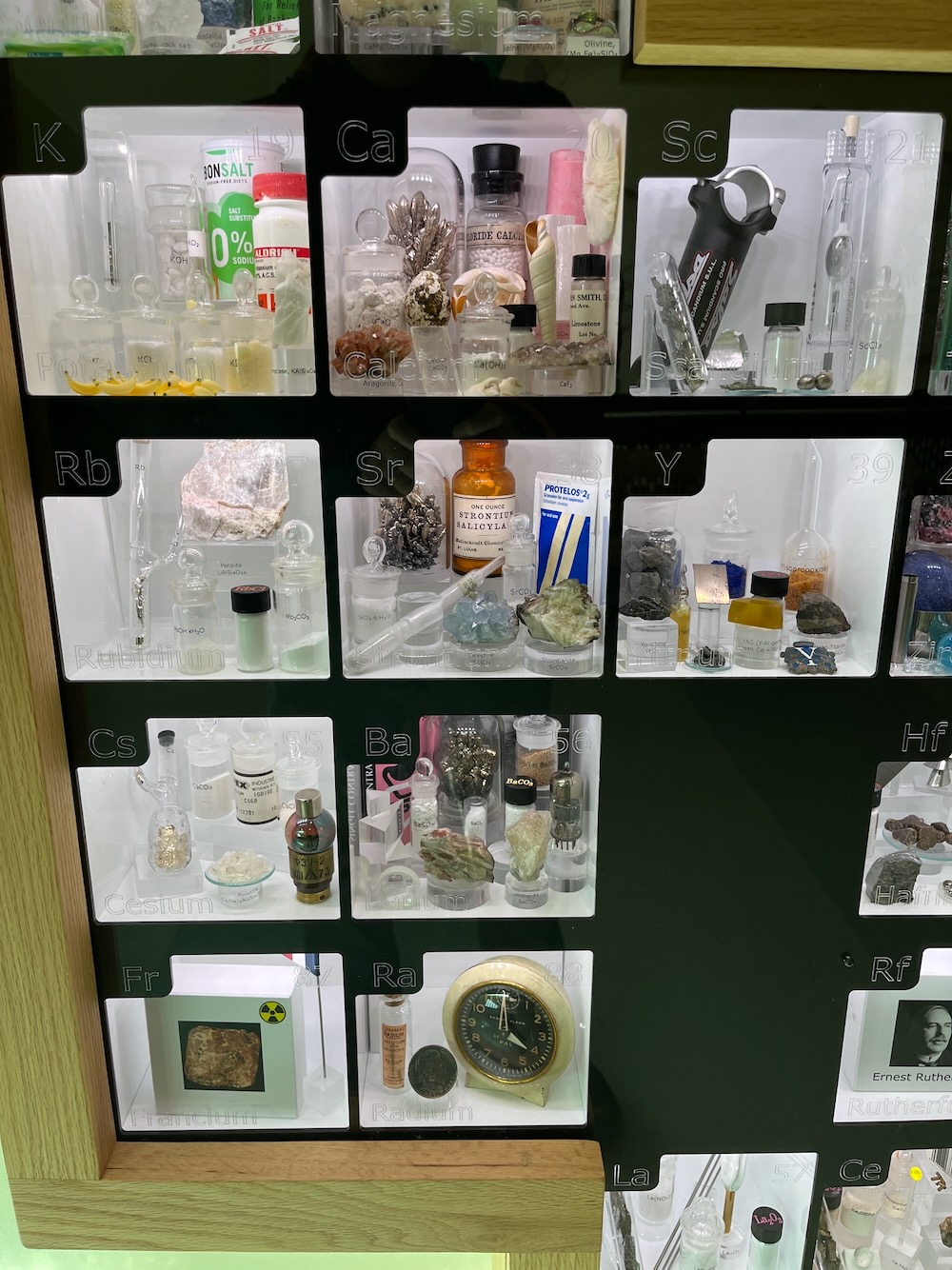
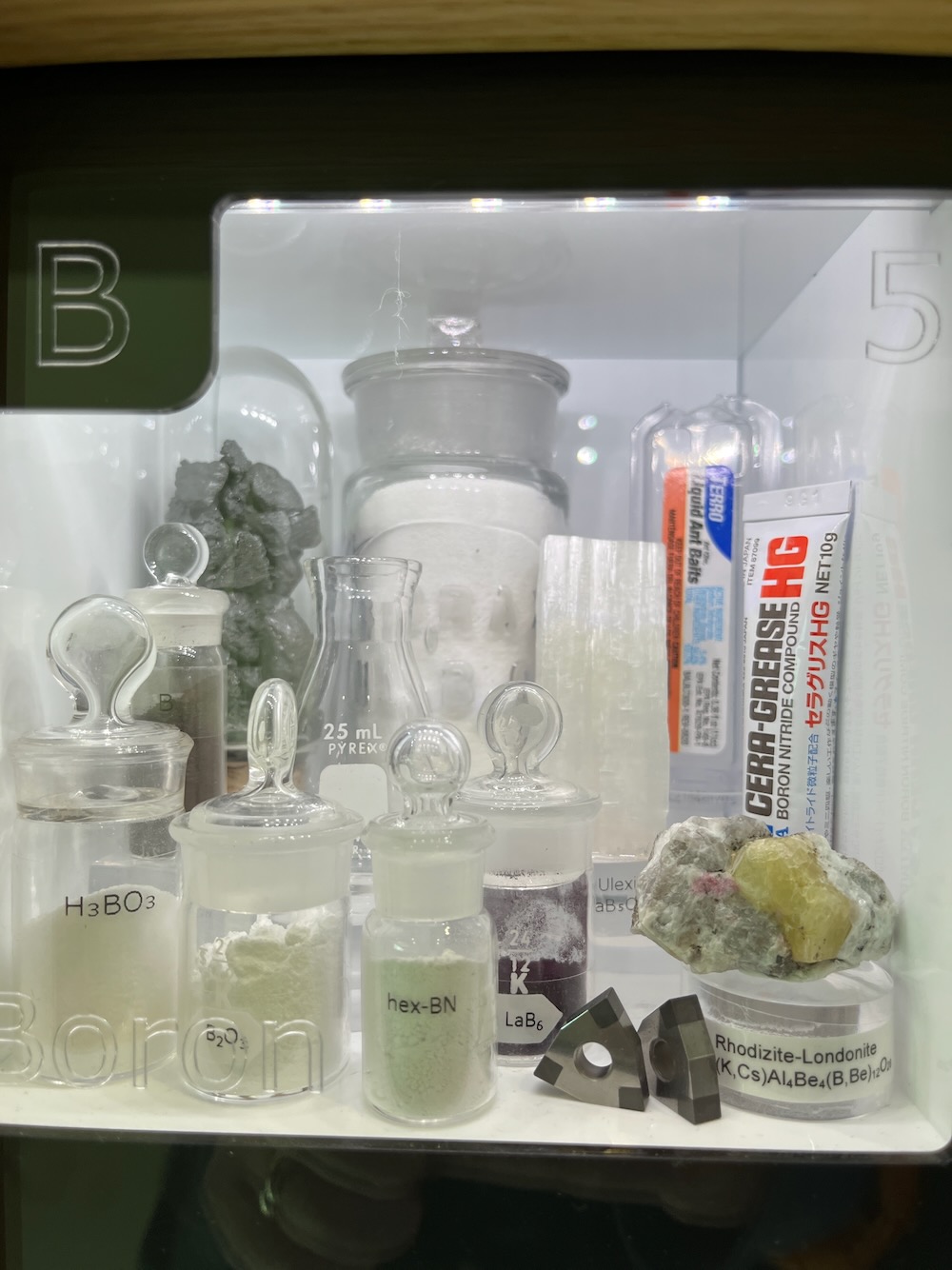
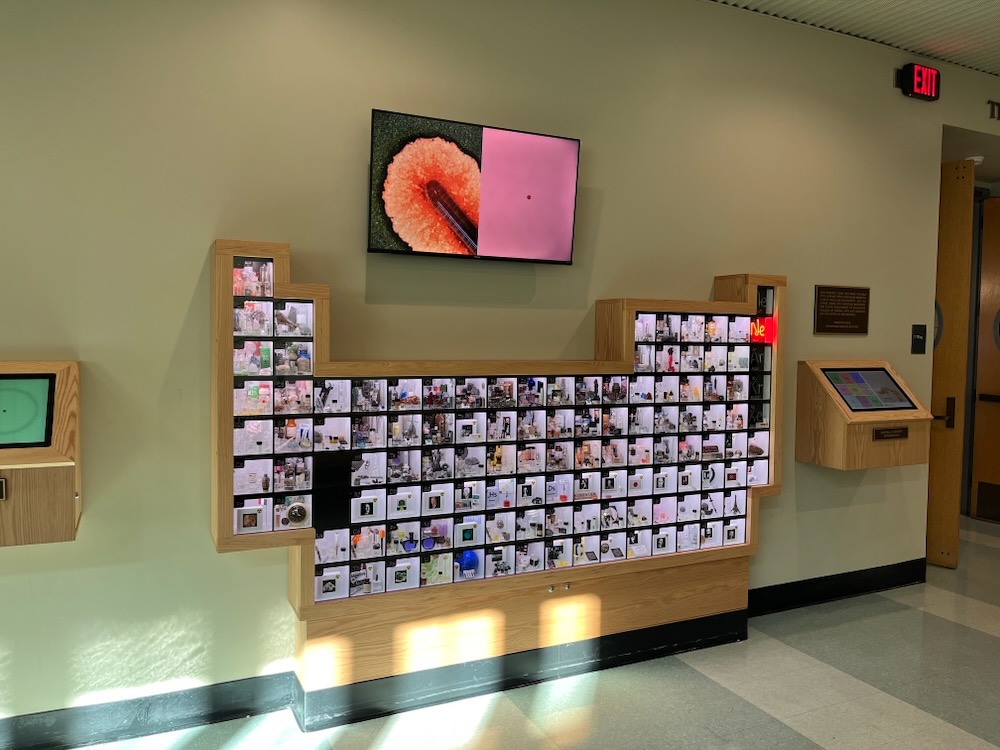
At some point he had the idea to display his collection properly. And voila, the Interactive Periodic Table Mini-Museum was born. Please don’t think for a second that this is some slapdash thing either. This is a professionally constructed, programmed, and presented wall of science.
It is lit from inside with strings of LED lights that can be manipulated to highlight groups of elements like the noble gases or to talk specifically about a single element and the things contained in its cubby. It’s pretty rad.
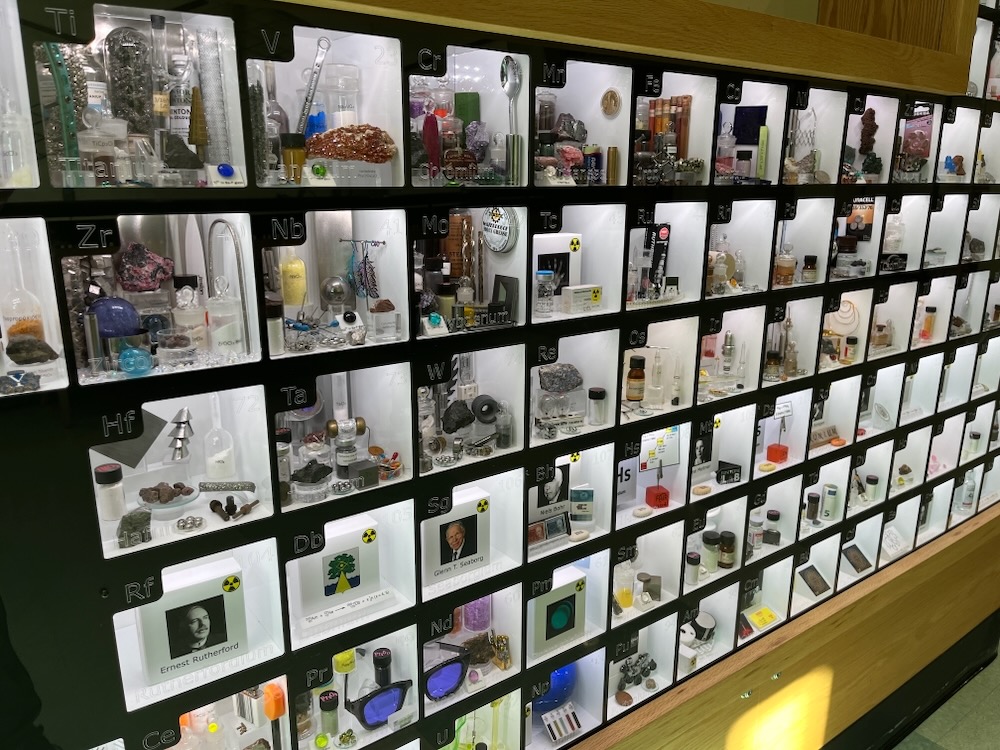
Take, for instance, the antique domino in the nitrogen cubby (it’s in the plastic) or the pair of sunglasses cut in half and spanning the praseodymium and neodymium cases (both elements are in the lenses).
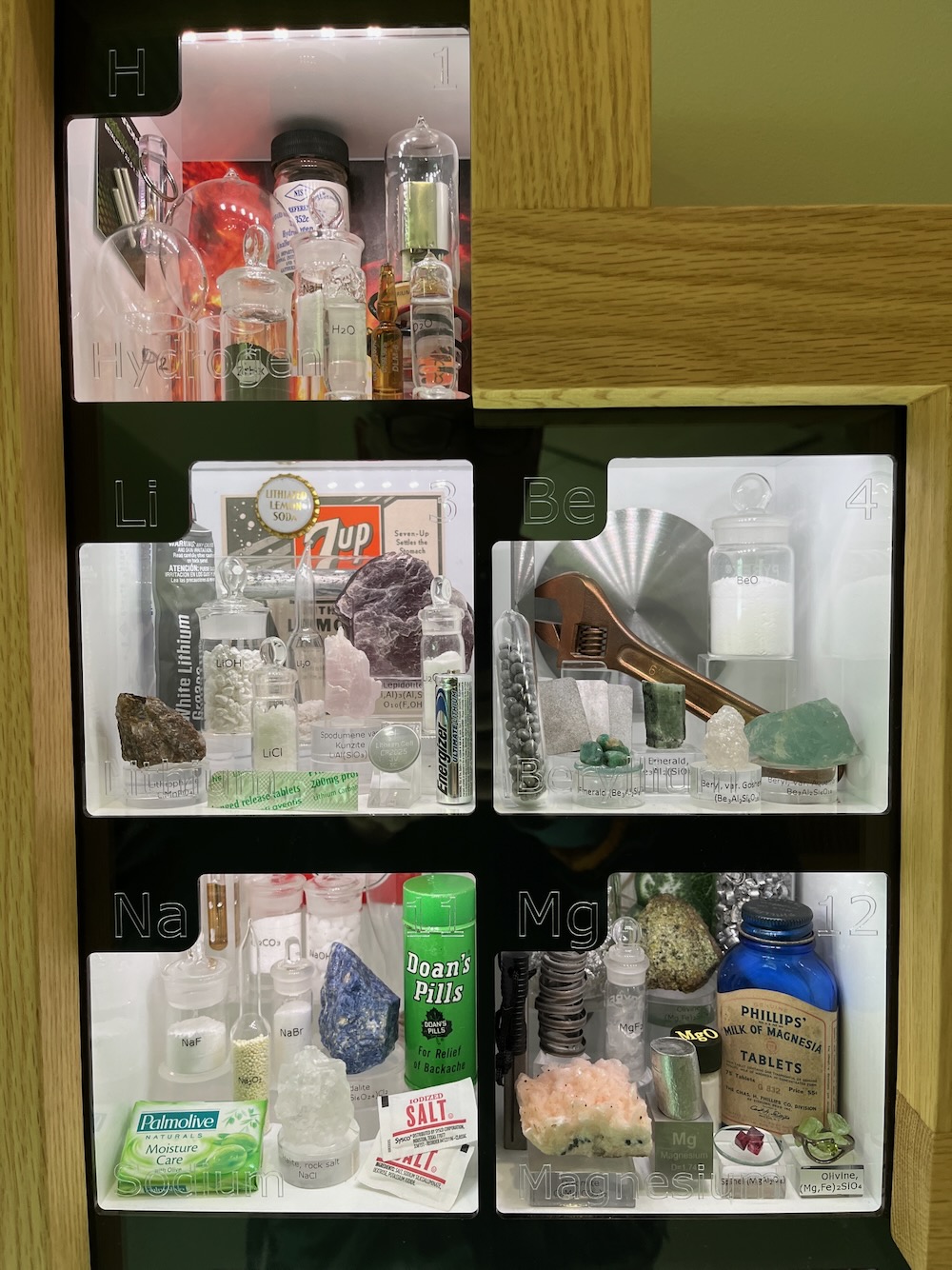
“This is the right place, because now one can show off each artifact, share its delights, and it tells a story in context,” he says. “I wanted the display to house more than just pieces of metal and bulbs of gas. I wanted to connect each element to the natural world, our daily lives, and the work that we do in research labs, from gold-coated contacts, a bottle of Selsun Blue, beautiful minerals, and iconic reagents to chemical compounds unique to the research of members of our department.”
As I’ve said, this isn’t exactly unique. Many universities and companies have similar displays – apparently the one at the University of Oklahoma is an actual museum that draws more tourists than just the people like me.
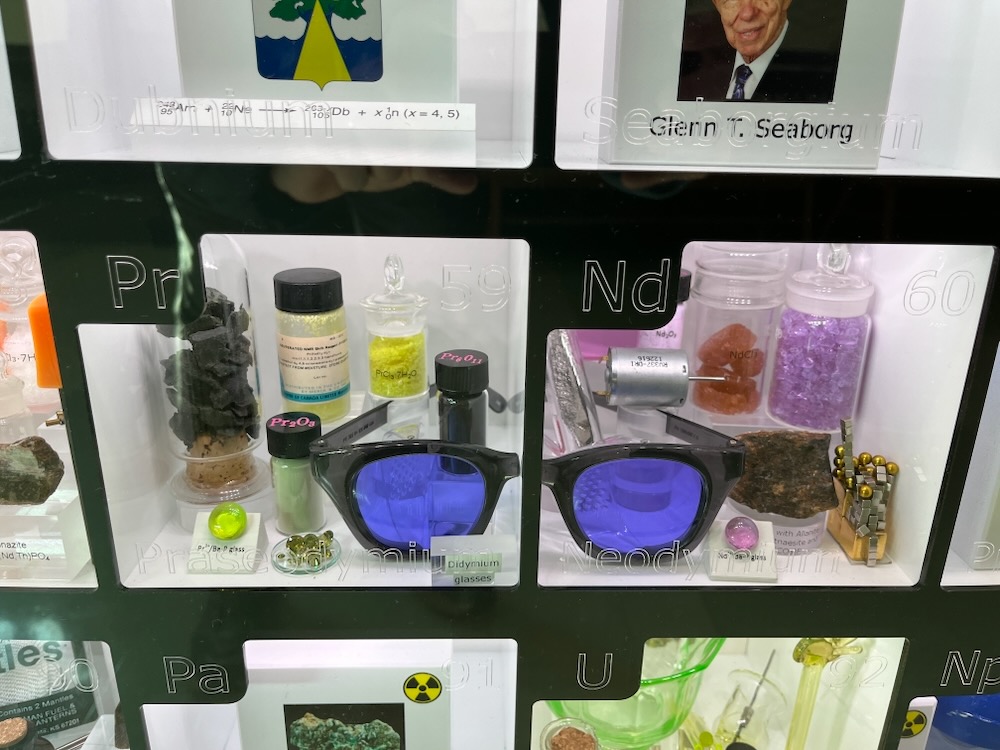
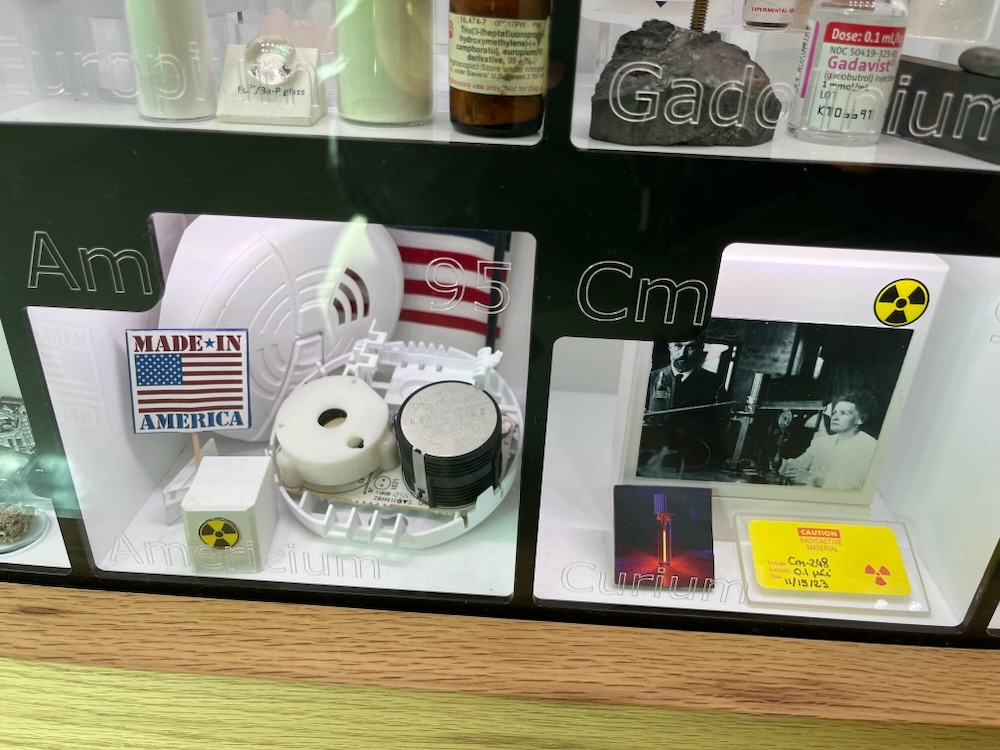
UConn’s is smaller – focusing on fewer things per element. It’s clean and pure.
In 2017, not long after becoming department head and having lined up emeritus professor Ulli Mueller-Westerhoff as a major donor, Brückner had the first conversations with a European company specializing not only in making periodic table cases but also providing samples for the display.
Of course, Brückner knew he needed only a fraction of the number of samples other places might to fill the holes in his collection, like an antique bedside alarm clock with radium-painted numbers that glow or a sphere of volatile liquid bromine.
Wait. There’s a company that literally puts these things together for people? Geeze, how many of these displays exist in the world for a company to exist to supply it? I’m slightly soured on this whole thing, Brückner.
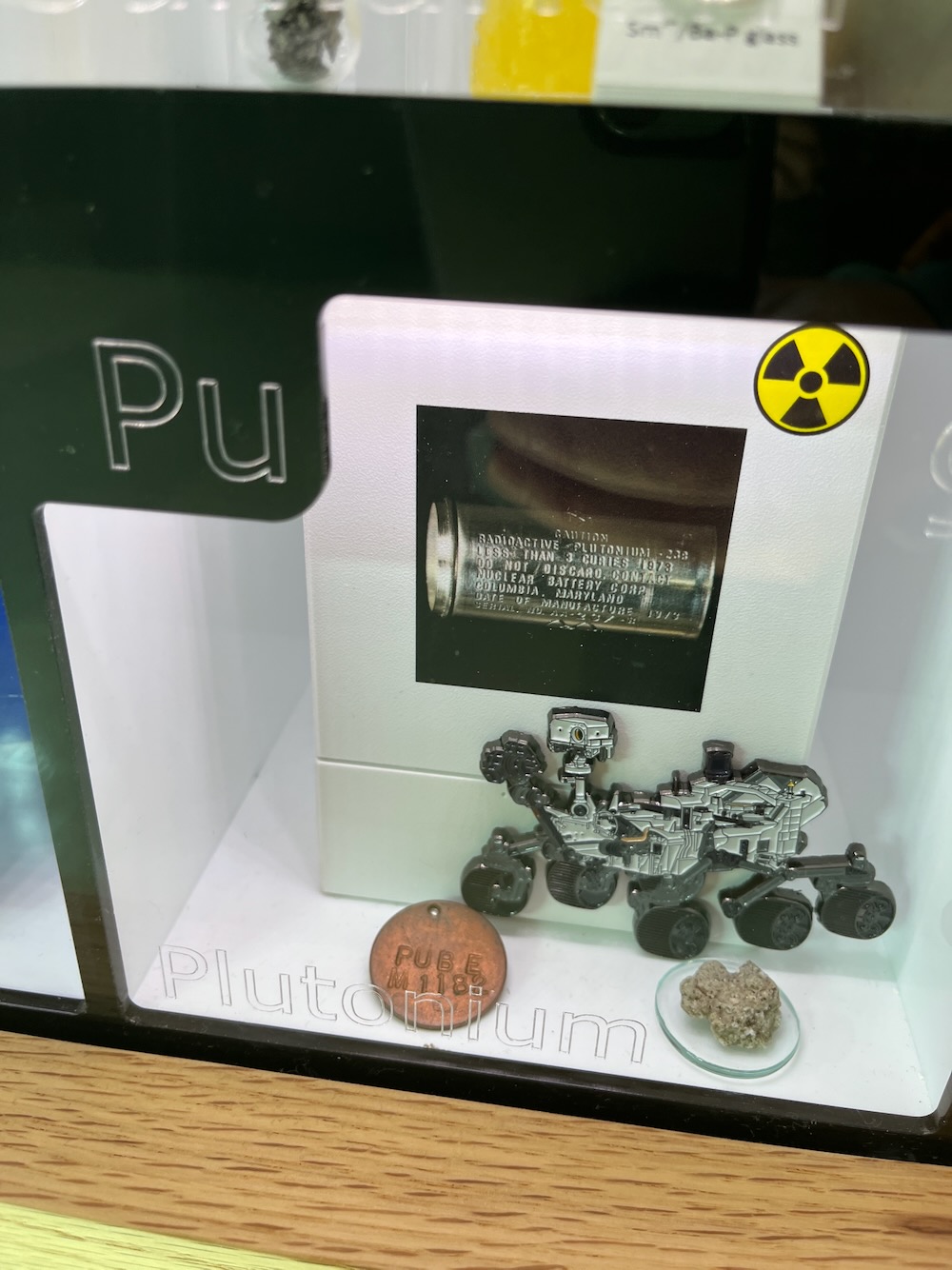
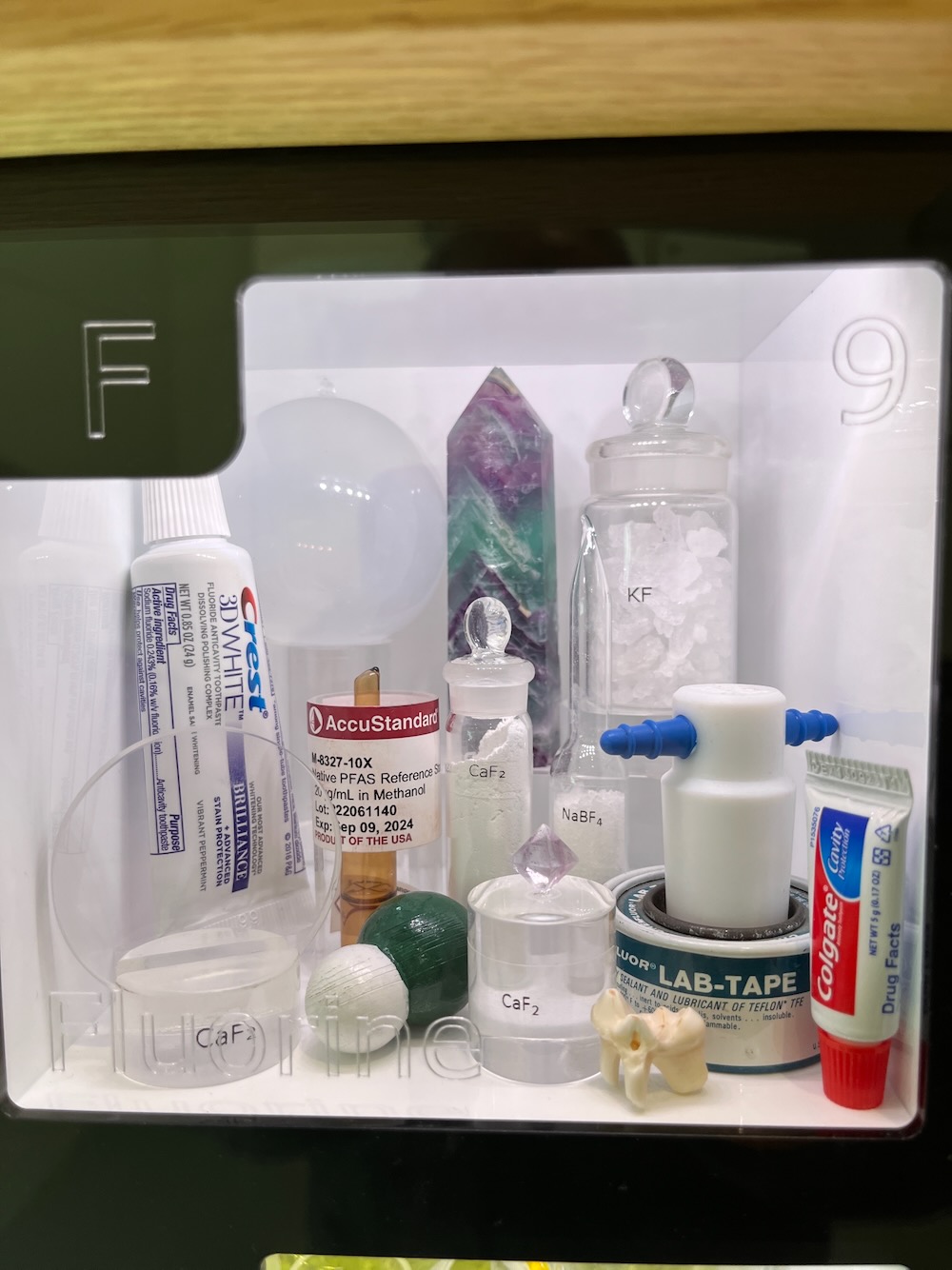
Anyway, I guess it’s fairly rare to have that company build a display that is in the same shape as the actual periodic table, so that’s what makes ours in Storrs cool. Interactive kiosks next to it “expand” each display with background information and other examples of that element.
Even with all this stuff in place, the mini-museum took several years to come together. And Brückner kept collecting samples.
He mentioned the project to an alumnus who works at Boston Scientific and donated coronary stents and heart valve frameworks made from a nickel and titanium alloy. He unsuccessfully solicited local hospitals for an empty bottle of an imaging agent that is gadolinium-based but eventually procured a full bottle from a graduate school friend who is co-director of an imaging center at Harvard Medical School.
“There are items in there from colleagues long passed, there are items there from current colleagues, there are items from alumni,” Brückner says, noting that when he told people what he was doing they were eager to be a part of the story – his dentist offered a titanium-based dental implant.
“We have a nickel-iron meteorite from outer space in there, items fished from air, and things from the bottom of the ocean,” he says. “There is a piece of fused sand from the first nuclear explosion, the Trinity hydrogen bomb test in New Mexico. It arguably contains some of the radioactive fallout, elements not otherwise accessible or safe to handle.”
I see a few of you nerds out there shaking your head saying things like, “what about uranium?” There’s a green uranium glass bowl. Oh yeah, “what about einsteinium or fermium, those man-made type elements?” Yeah. They’re not here because they can’t be, but they are represented and explained at least.
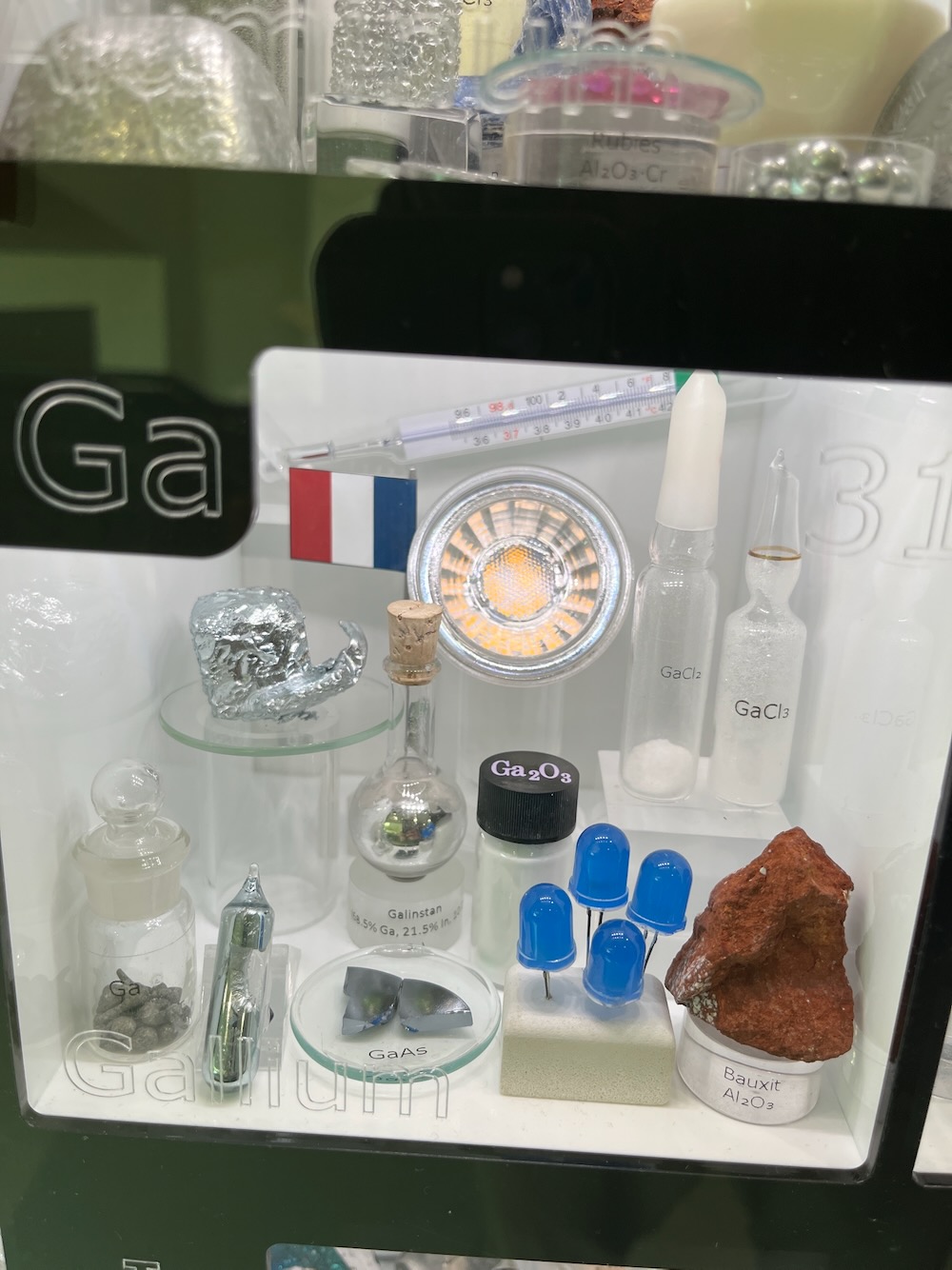
I texted my son Calvin asking him his favorite element. He said Gallium.
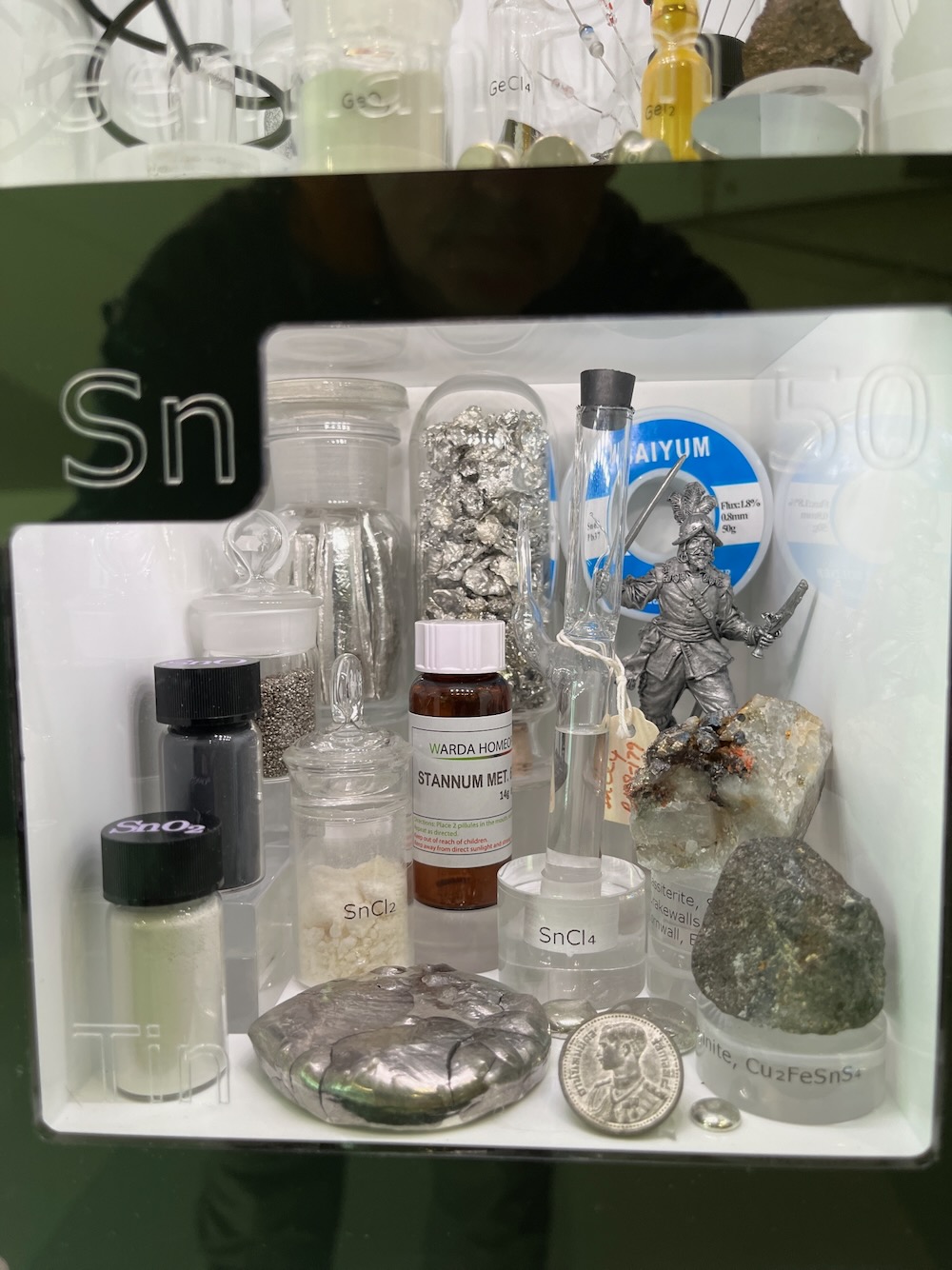
I asked my wife Hoang the same thing. She said Tin. If you know, you know.
You had another questions?
“Yeah, why are you calling this a museum, if only a ‘mini-museum’?”
Well, because Brückner says so.
“I would also like it to be an educational tool,” he says. “It can be a centerpiece for outreach activities to the general public. It’s like a mini museum for anyone from elementary school students to adults of any age. Anybody could find some items in the display they can relate to and see the fun in this.”
So there.
And he’s right. This is the kind of thing with which an engaging grad student or professor could grab and hold the attention of anyone at any age. Well, except maybe those InstaGeniuses and TikTok Clowns who don’t understand there are chemicals in literally everything, everywhere, at all times. And some of them are really quite cool.

UConn Chemistry Department
CTMQ’s Museum Visits



Leave a Reply