
A Proper Madeleines Has Ridges
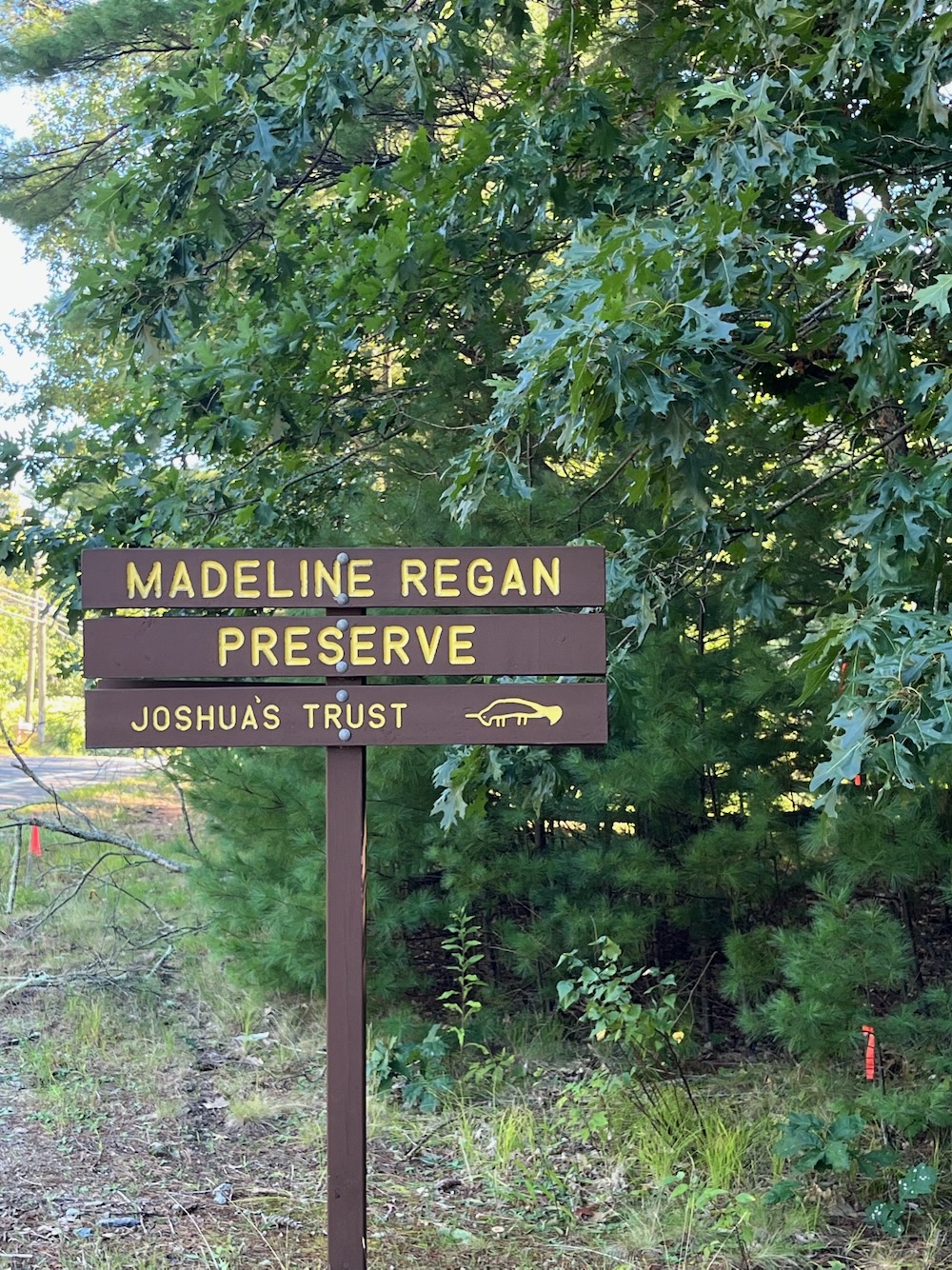
Madeline Regan Preserve, Tolland
September 2026
This is a Joshua’s Trust property.
With luck, your household will have a person who hikes and/or enjoys geology and a person, who might be the same person, who likes baking and/or eating and appreciating baked goods. If that’s the case, then you already know that a proper madeleine will have well defined ridges and a proper esker may also have a well-defined ridge. Make sense? Yes? Good.
Wait. No? Oh. Here’s a madeleine:

And this is a well defined ridge along a trail at the Madeline Regan Preserve in Tolland:
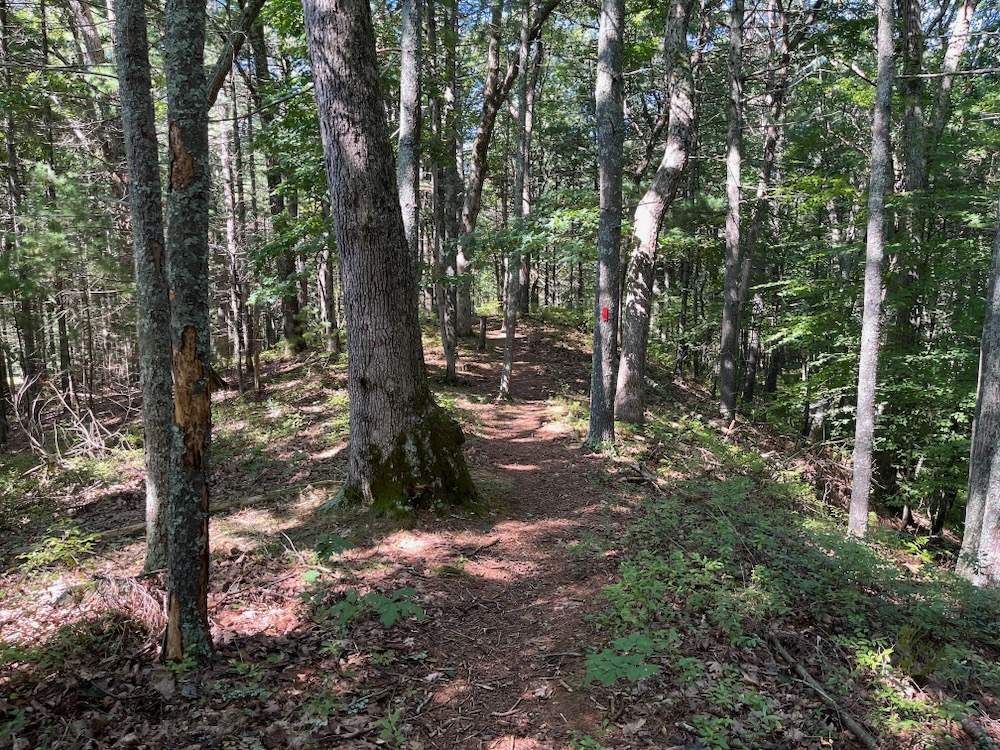
But let’s not get ahead of ourselves. (Yes, my wife has a madeleine baking mold pan thing.) There’s a lot going on here at the relatively small property that is squeezed in between residences off of Route 74, rather near I-84, but a world away. This preserve has interesting history! fascinating ecology! cool geology! (But no bakery).
The key feature of this new preserve is right at the beginning of the trailed walk: a half-mile section of the Connecticut Path, which originally served as an Native American trade route and was later used by Thomas Hooker and other European settlers as they moved from the Massachusetts Bay Colony into the rich farmlands of Central Connecticut in the early 1630s. There are pieces of this old road that have been incorporated into trail networks all over (mostly) eastern Connecticut, but it’s always cool to find new sections like this one.
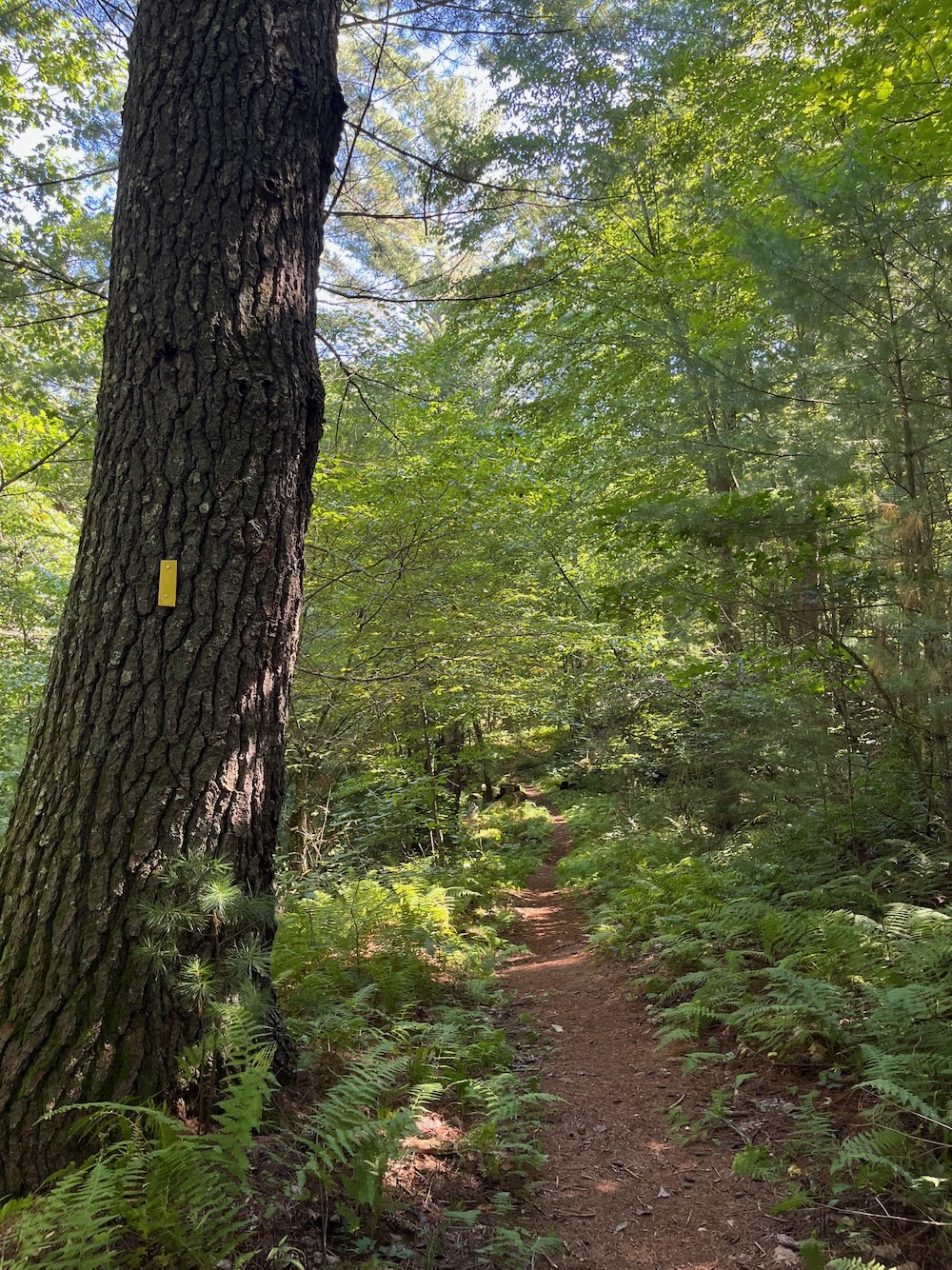
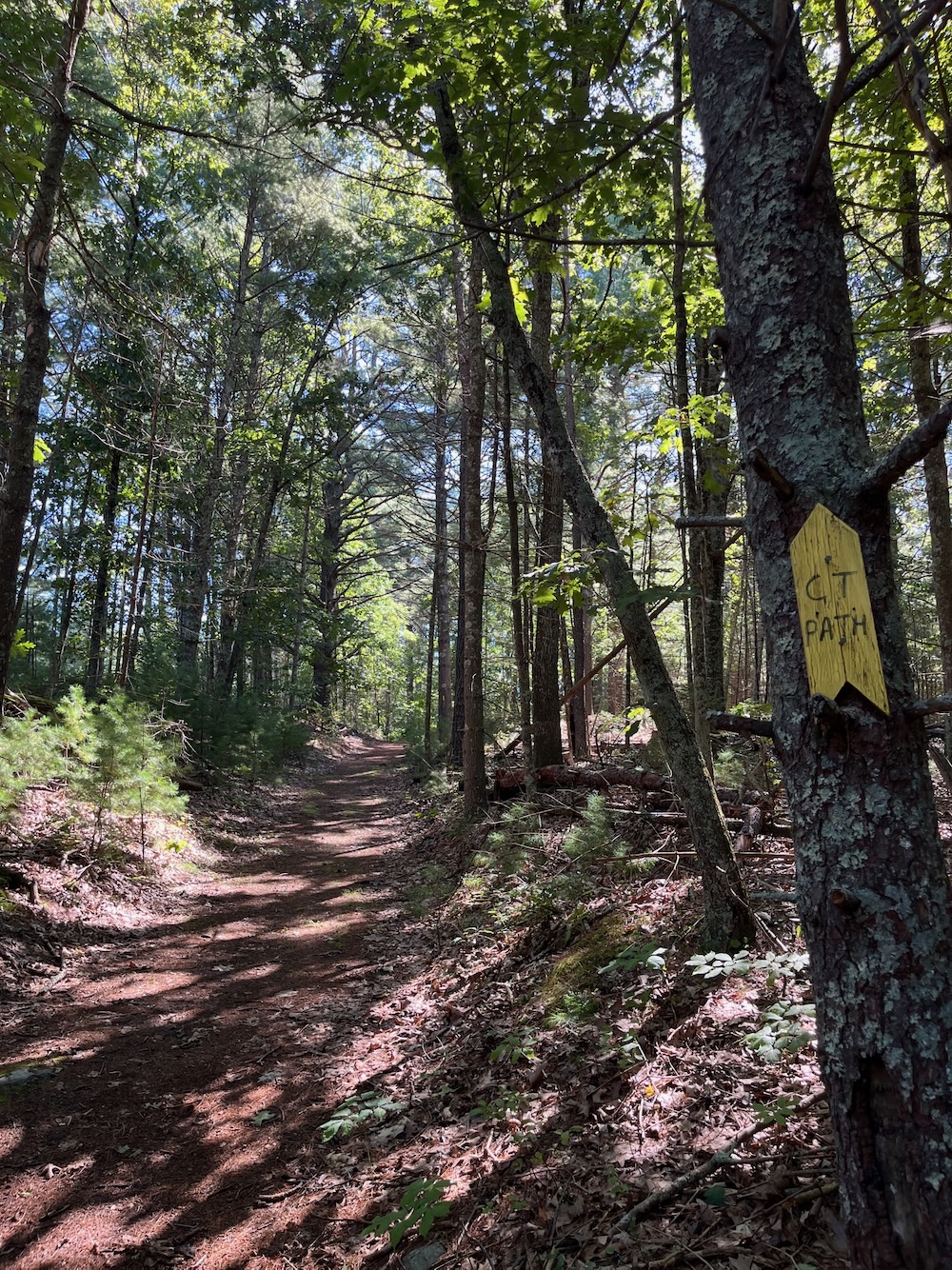
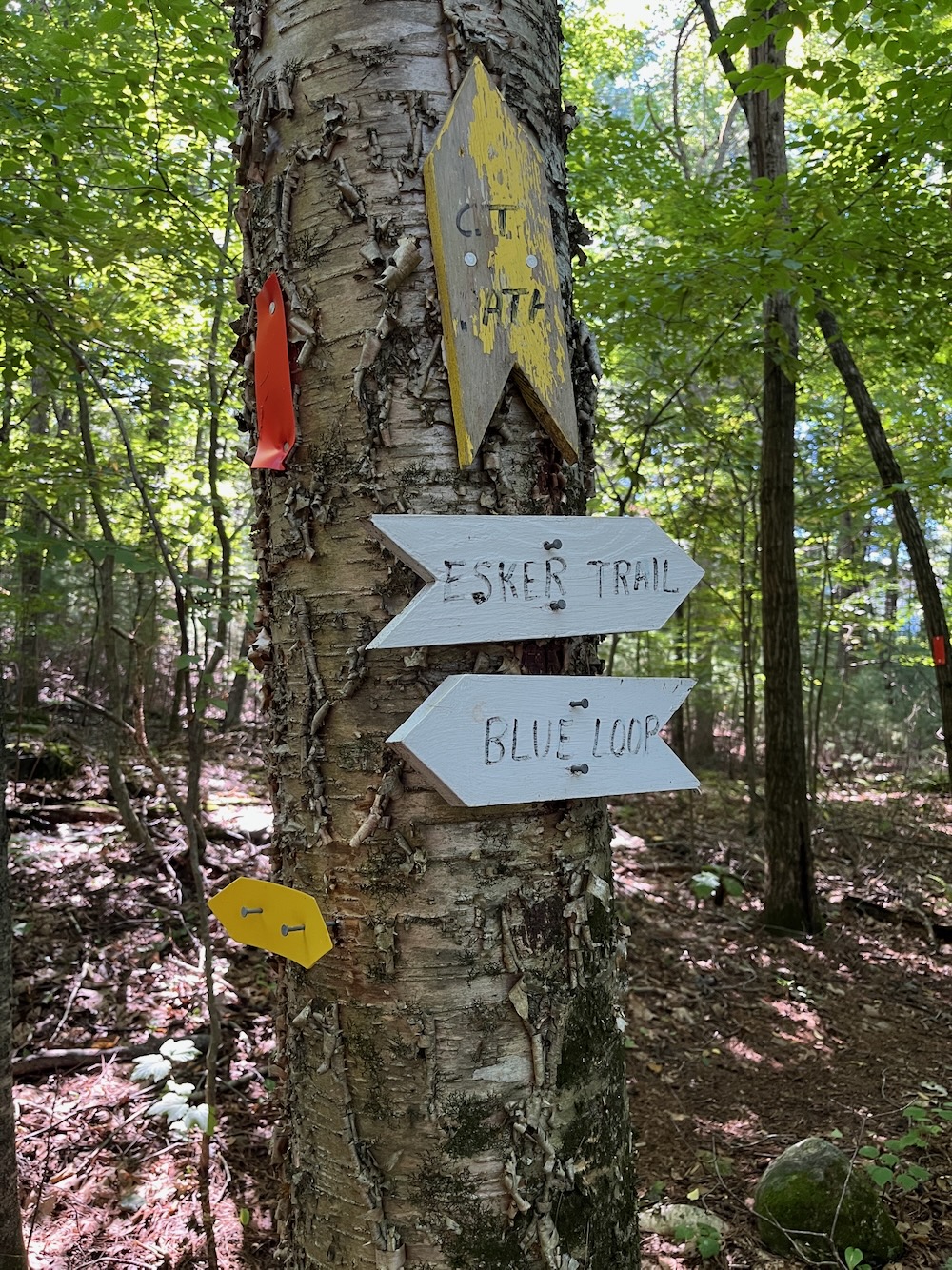
The Trust had cleared that path a while ago, but it wasn’t until 2021 that they added the connecting two loop trails. The entire trail system can be negotiated as a figure eight loop by first traversing the Connecticut Path (yellow blazes), then continuing onto the loop trail (blue blazes) and finally onto the esker trail (red blazes).
There are some informative signs here that will catch you up a bit on the Connecticut Path and a pitch pine restoration project. Like I said, small 29-acre property, lots goin’ on. And let’s take a moment to thank the Regan family for their donation (and bargain sale of the full parcel) to the Trust.
The old road runs the length of the property and originates near the hiker’s lot. All hikes must start on the yellow-blazed trail which follows the approximate route of the old Connecticut Path route as defined by the topography.
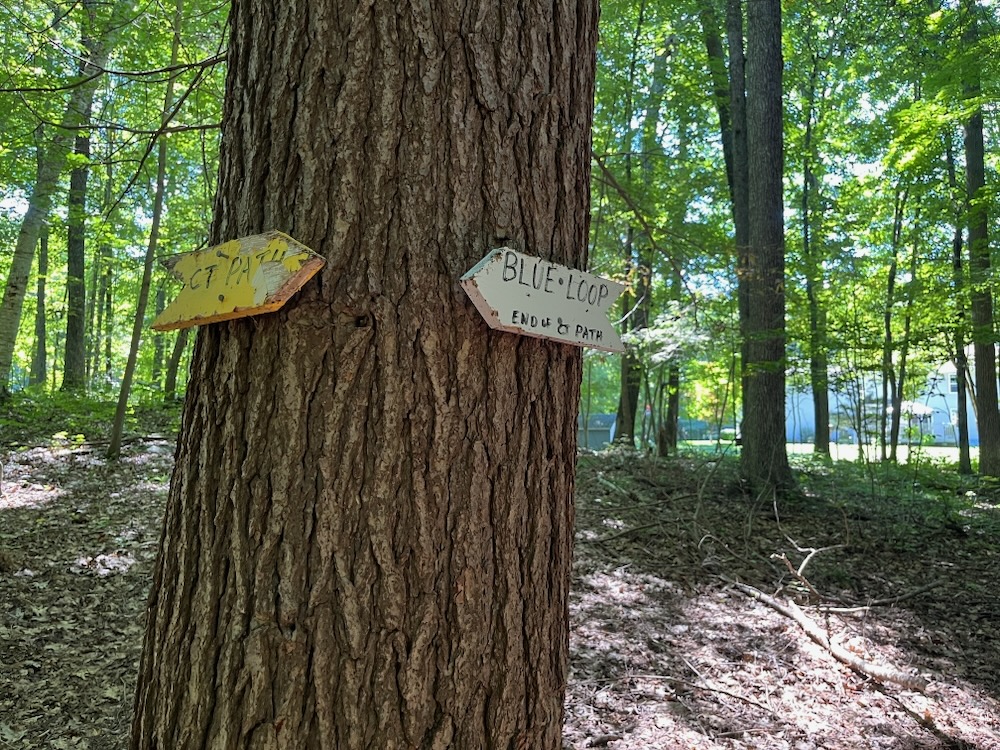
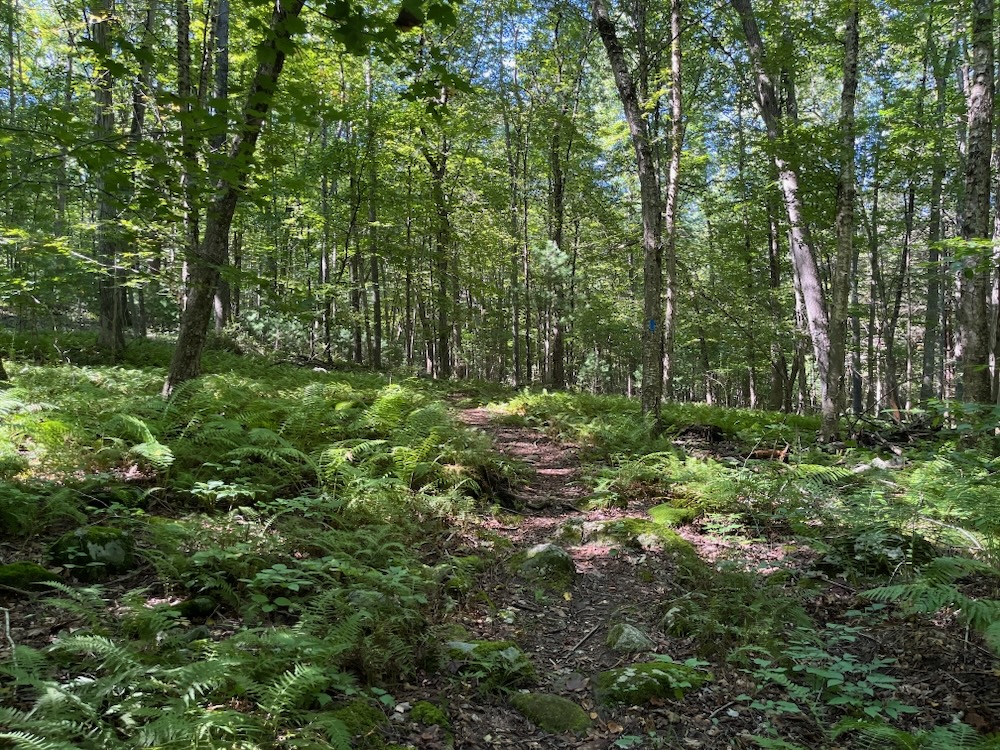
After walking the yellow trail all the way to the eastern end of the parcel, the blue trail heads left (north) and the old Connecticut Path melds into someone’s backyard. The blue loop introduces some rocks and wetlands to the proceedings, but its sole purpose is to loop the hiker back around to the middle of the yellow path and then on to the Esker Trail.
The Esker Trail climbed a bit after crossing the Connecticut Path to a sort of ridgeline on the esker. If you’re not a baking, hiking, geology fan, an esker is a linear gravel deposit laid down by fast-moving glacial meltwater. You get a classic kettle hole here too, formed when a large block of glacial ice buried in the gravel melted and left a void. It doesn’t matter if you’ve hiked a million miles and have read this paragraph five times, you’ll still be a little surprised when you’re suddenly high up on this seemingly random ridgeline behind some backyards in the middle of a pine forest.
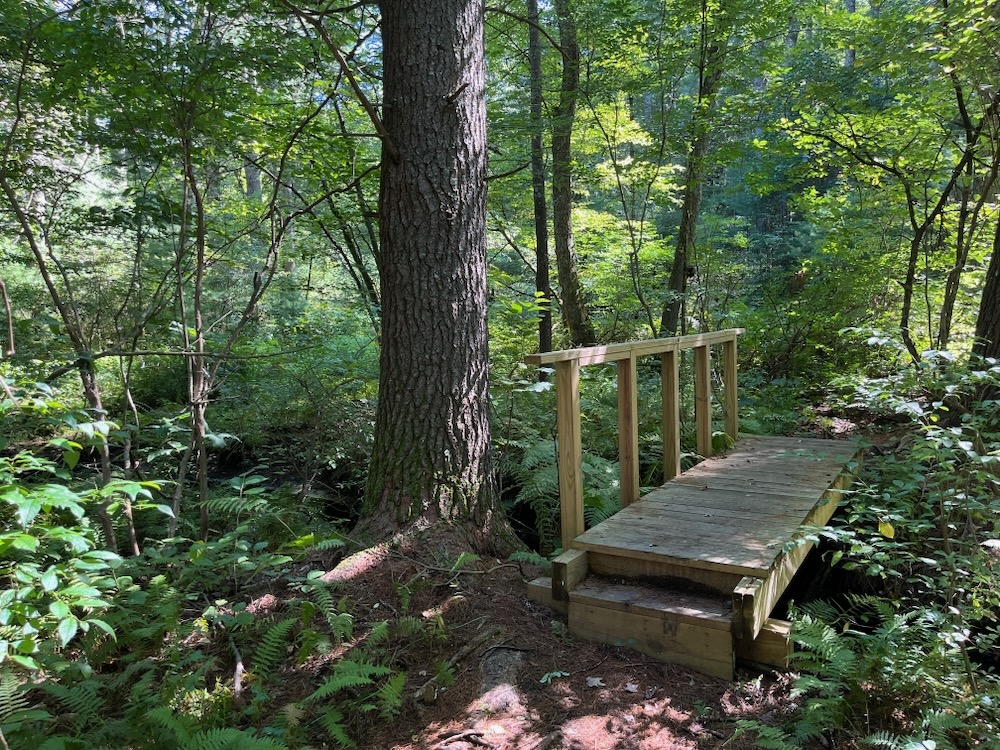
And if that weren’t enough, there is hope here that the pines aren’t just any pines. This preserve is the site of “an ongoing conservation project to encourage a climate-resilient habitat through the use of prescribed burns,” according to Joshua’s Trust. Upon discovering six healthy pitch pine trees among many dying ones in the white pine-dominant forest, the Trust and ecologists set into action “an ambitious multi-phase project to restore a habitat which enables the living pitch pines to receive the full sun needed to begin recreating the original pitch pine barren, a fire-dependent ecosystem that is disappearing as we actively suppress wildfires.”
Already, in just a few years, the forest has been transformed. With grant money, the trust cleared tons of brush and piled a bunch of piles and had a controlled burn. White pine dominates in Connecticut, but pitch pine stands are an important – and nearly disappeared – habitat. I’m sure the locals are a bit confused by purposeful “forest fires,” but hopefully their grandchildren will get to enjoy a patch of land dominated by pitch pines, scrub oak, blueberry bushes and the other species that thrive in such ecosystems.
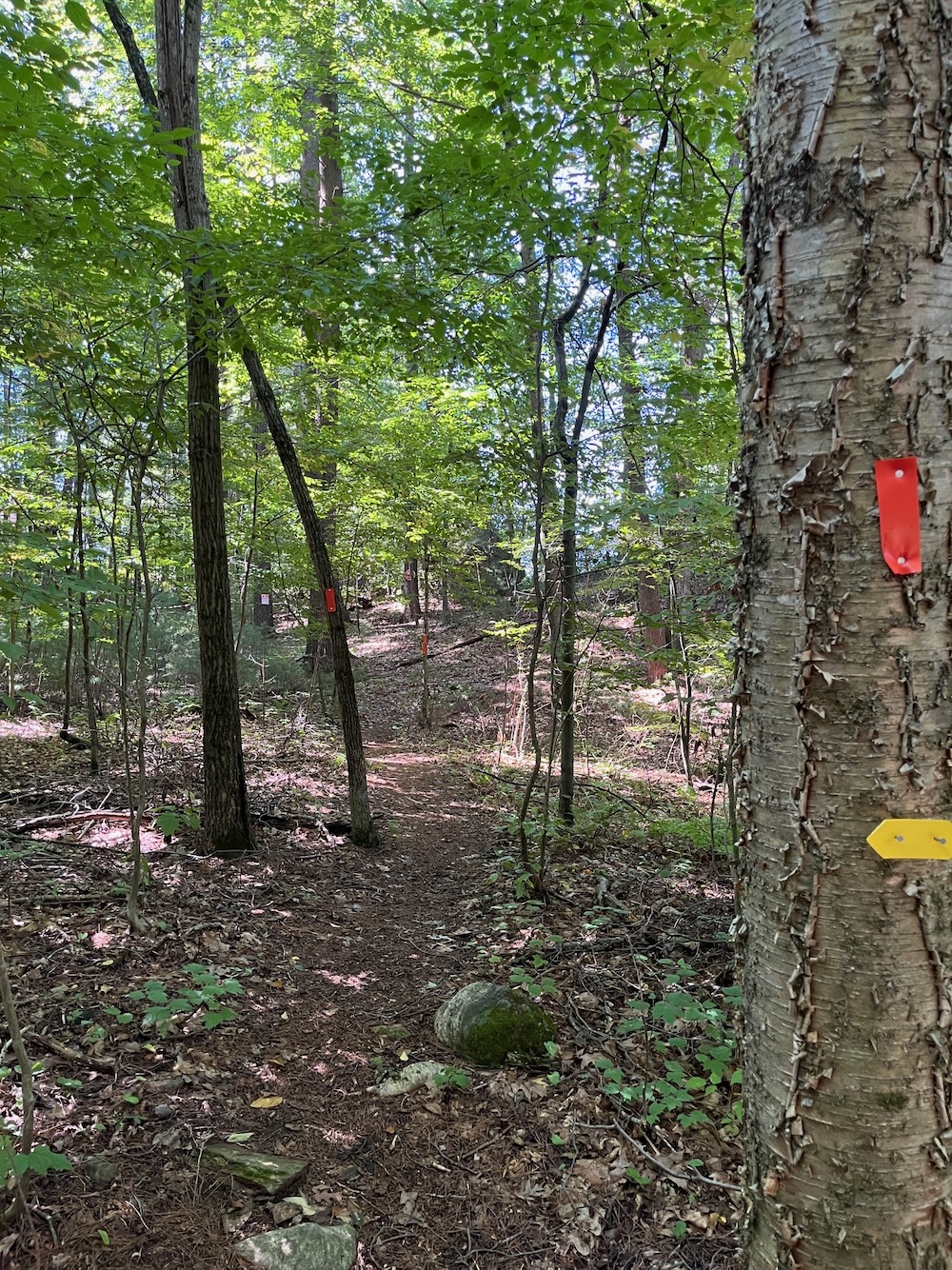
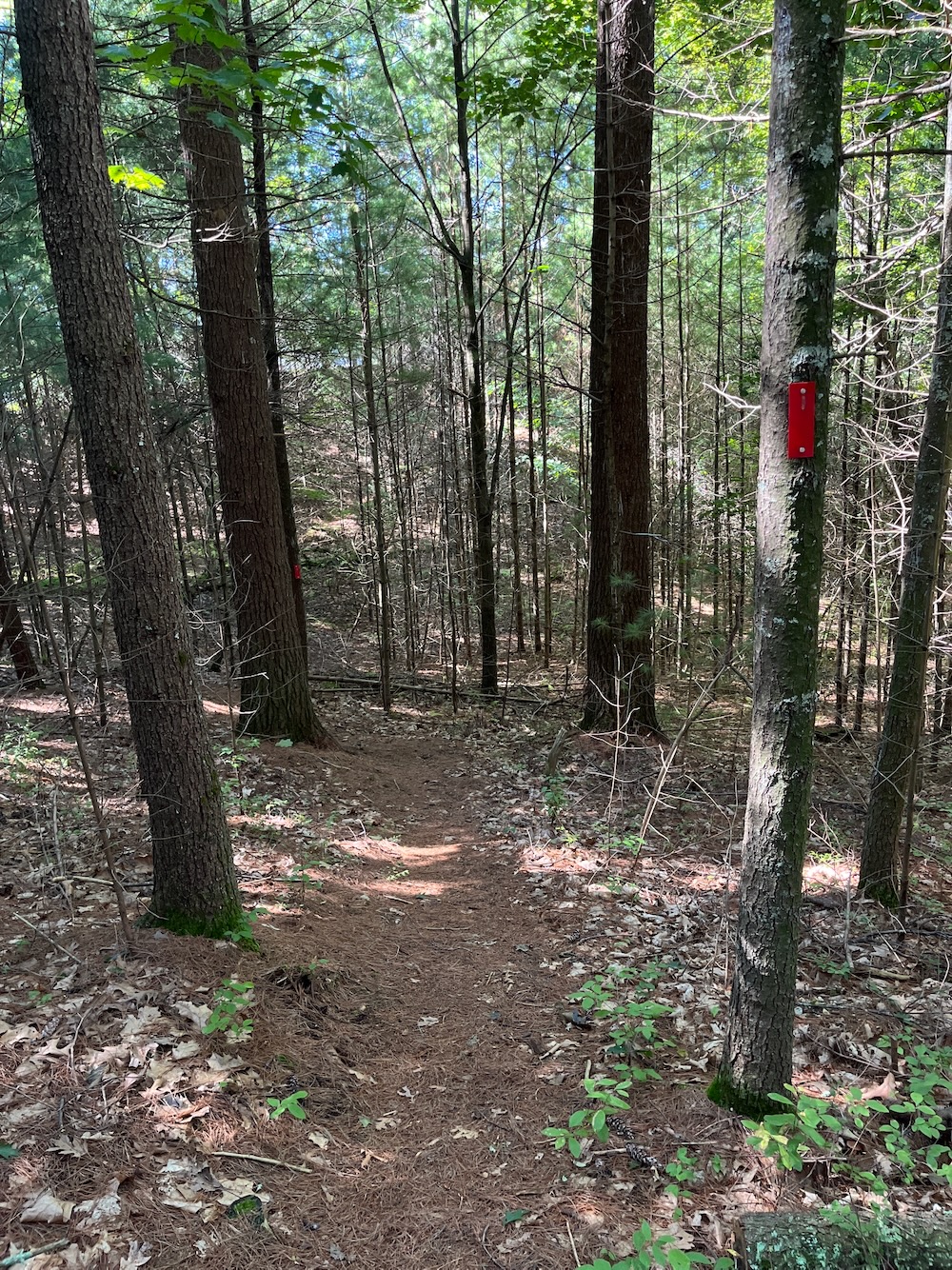
You see? This is a small property with a short figure-8 trail, but that doesn’t take away from how cool it is.
Now, off to convince my wife show me how to bake up some madeleines this weekend.

Joshua’s Trust
CTMQ hikes Joshua’s Trust’s Trails



Leave a Reply