
It’s Climate Controlled!
Nathan Hale Heritage Center, Ashford (Location)
November 2025
Connecticut museum visit #549.
That’s right folks, this museum is climate controlled!
Of course, so are hundreds of other museums, but why does this fact rise to the level of sidewalk signage?
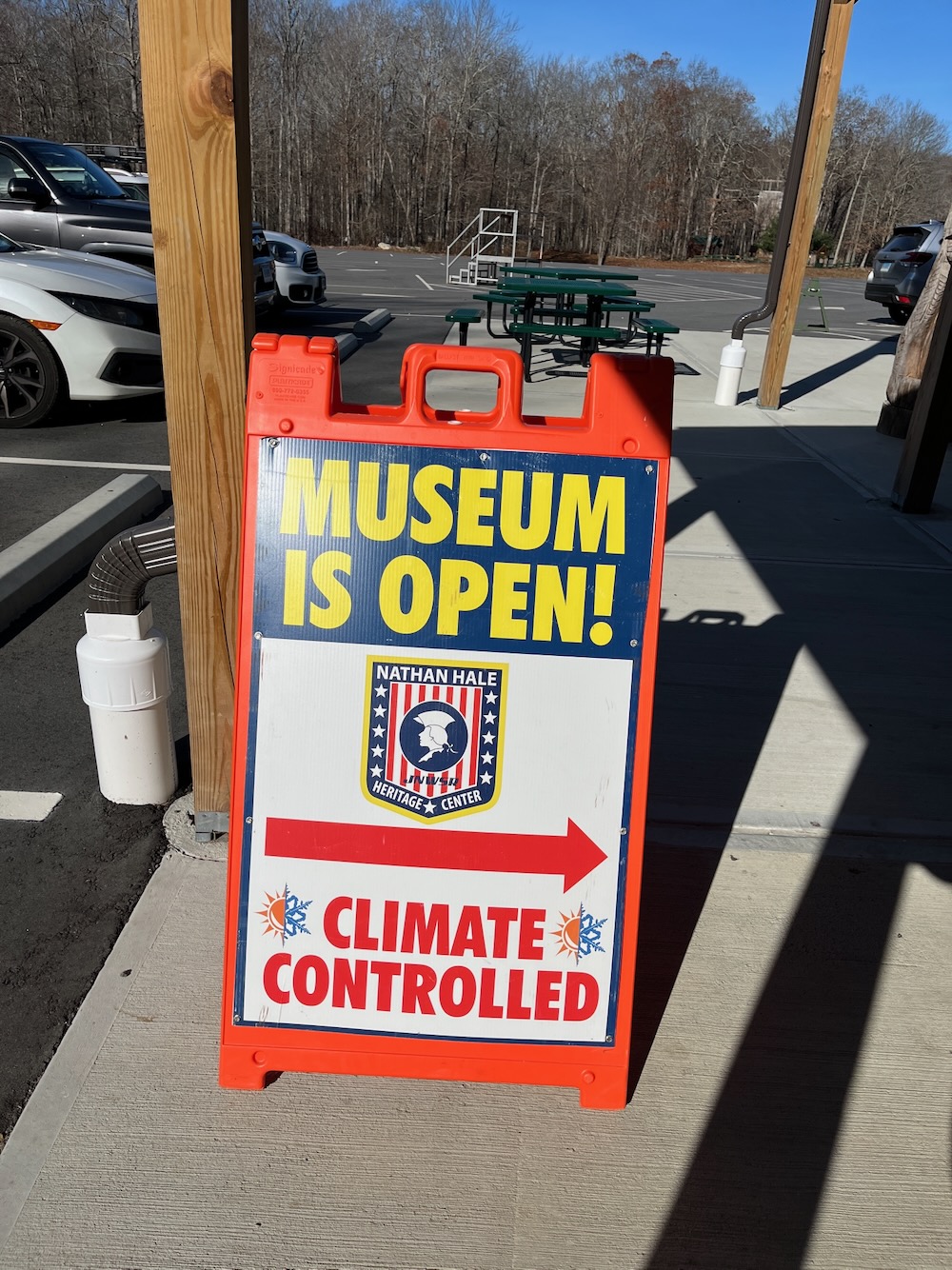
I’ll tell you why. Because it’s at the June Norcross Webster Scout Reservation, and if you know anything about scout camps, nothing is ever climate controlled. That’s kind of the point of camping. I’m imagining a bunch of hopelessly sweaty 13 year olds suddenly deciding one July afternoon they’d really like to learn about the history of this camp, just to get some of that sweet, sweet AC.
I was a boy scout and I loved summer camp every year. But I’m sure I would have loved some controlled climate too.
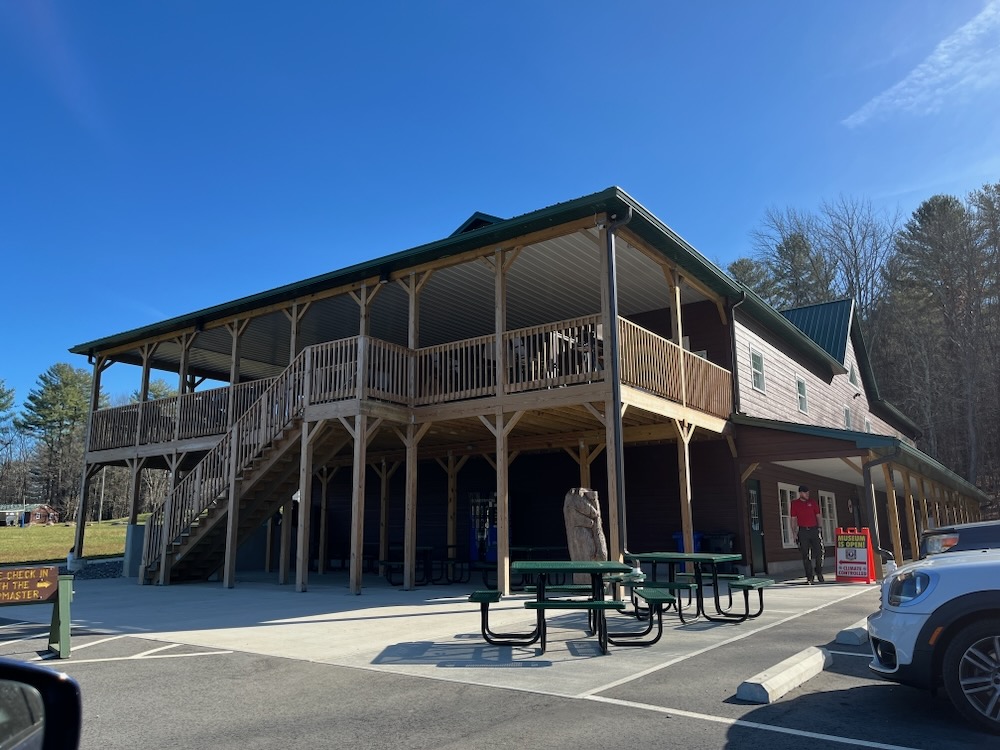
Anyway, The Nathan Hale Heritage Center opened in 2024. The building is officially called the Peter Perry Welcome Center, so that means this place is the Nathan Hale Heritage Center Scouting Museum in the Peter Perry Welcome Center at June Norcross Webster Scout Reservation. Never forget that.
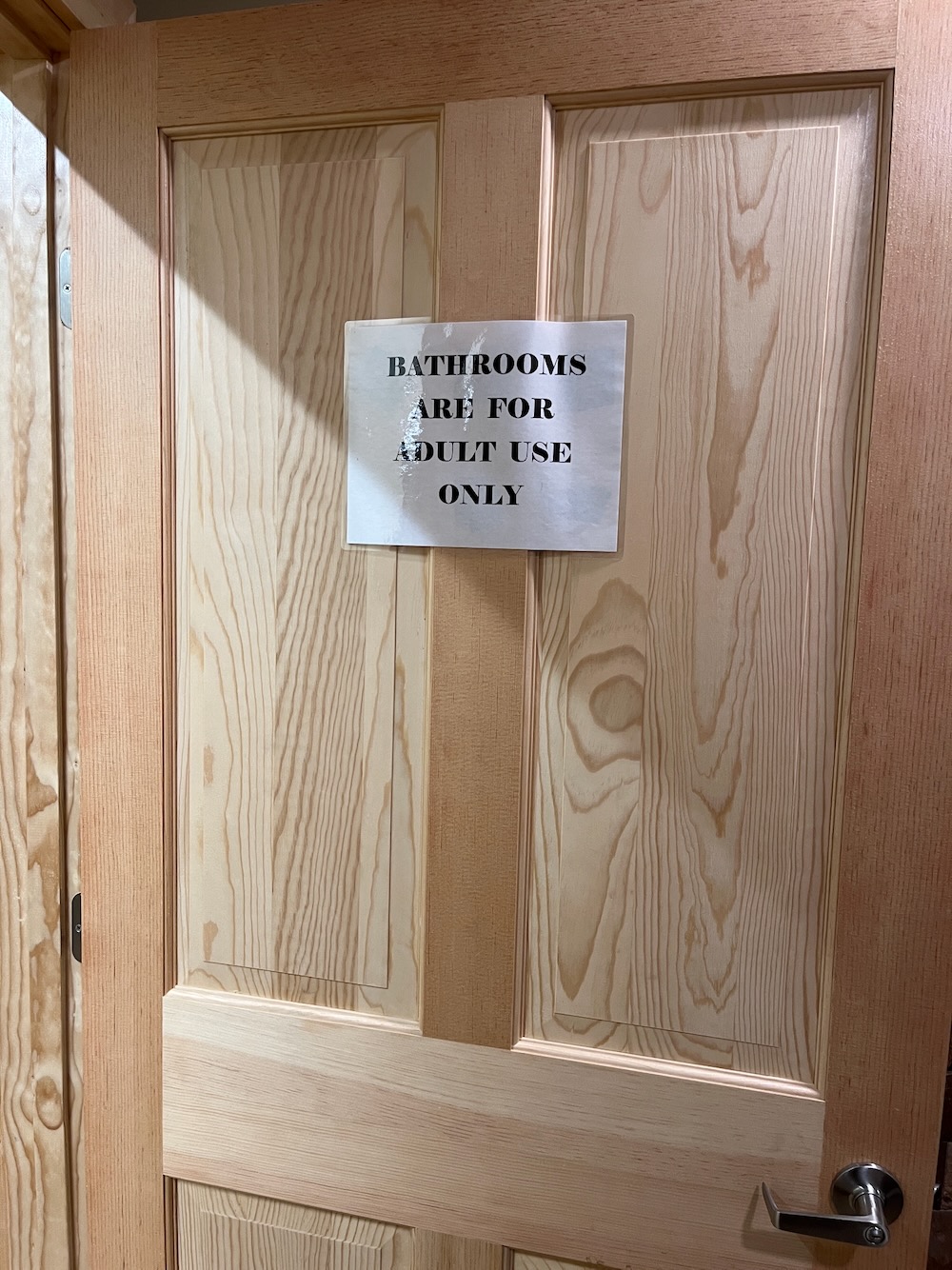
Rather hilarious at a scout camp
The building in new and shiny and smells nice. Peter Perry donated the money for it and his surviving family all support the mission. The large building in the center of the camp houses offices, a trading post, a health center, a giant deck, an apartment, meeting rooms, and, of course, the climate controlled museum.
I knew the museum existed but was rarely open, at least for random old men to visit. So I signed up for the camp’s email list and was rewarded after a couple years of emails with an invitation to an open house! The museum would be open to the general public for two hours. I was off to Ashford.
Because that’s what I do.
And that’s what I did.
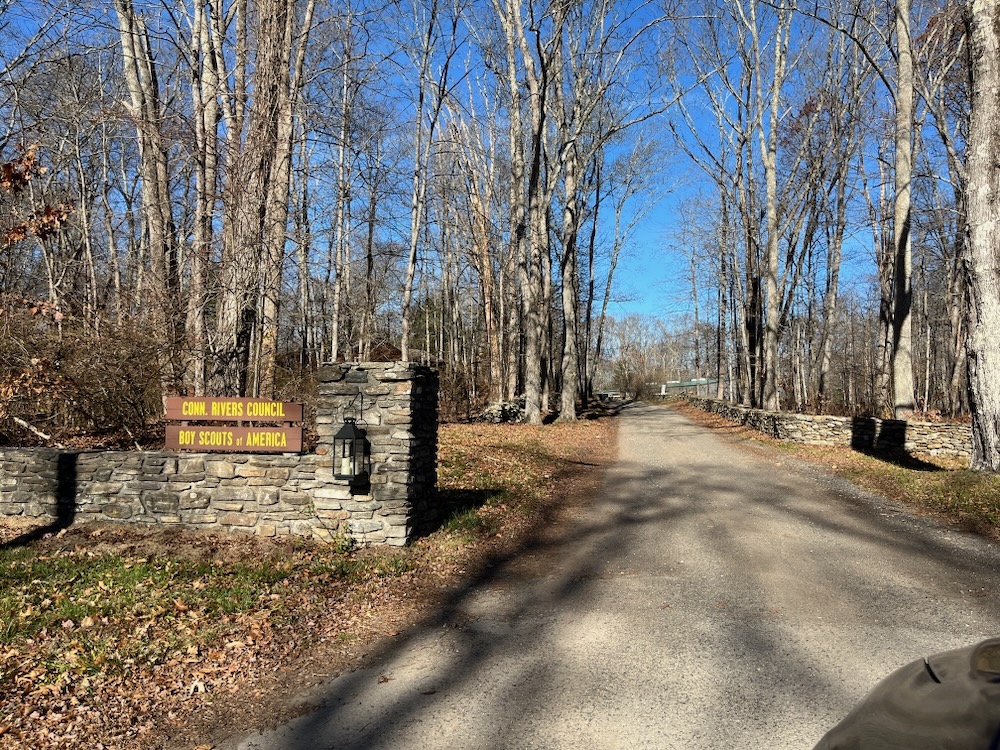
The road into the camp is pretty much a single lane dirt road. Then, after a few minutes, it becomes paved and took me to a large parking lot in front of the camp’s centerpiece: the new Perry Welcome Center.
I parked and two guys in a pickup truck pulled a u-turn and asked me if I was looking for the campmaster. Um. No. I’m good.
Did I look like I was lost? Was it because I didn’t have a kid with me? Yeah, it was probably that. So good on them? I think?
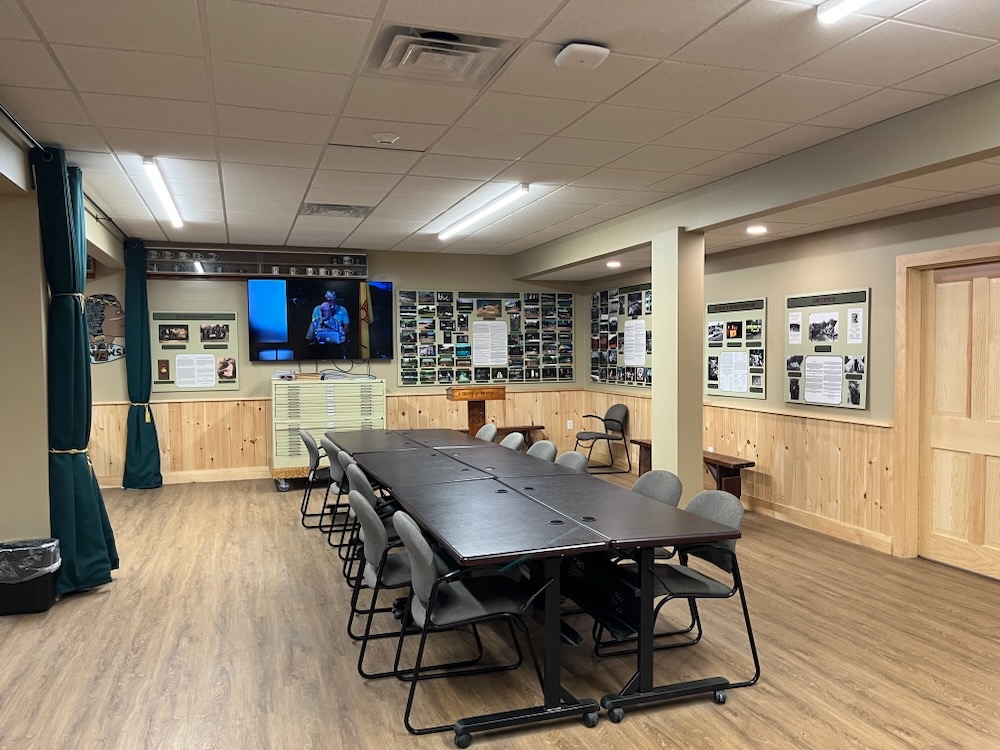
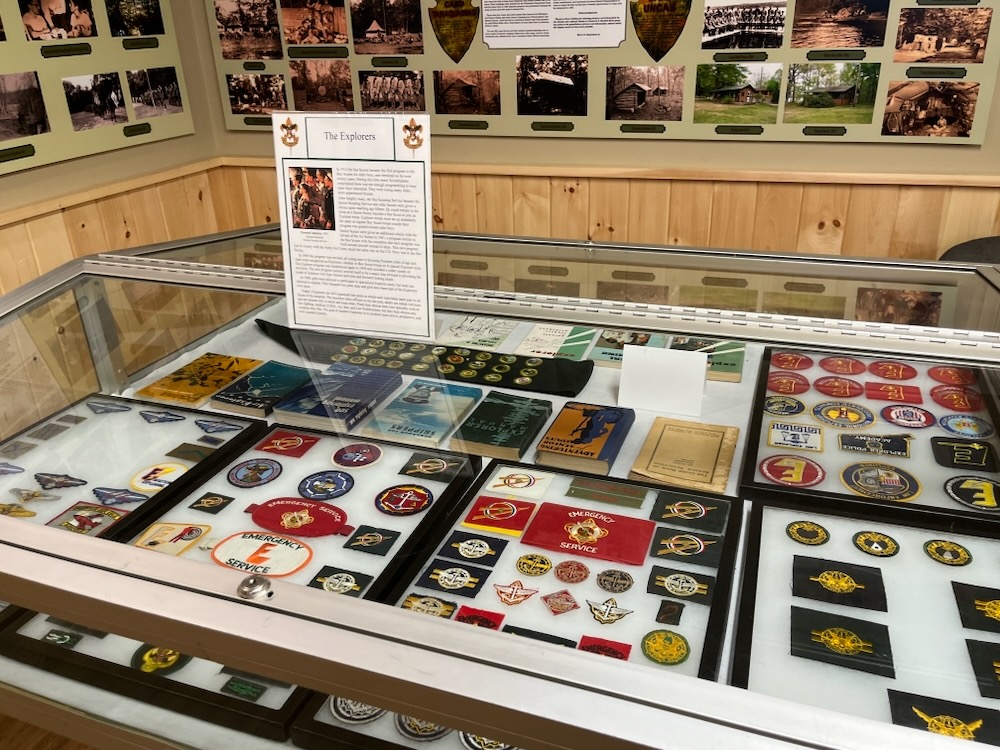
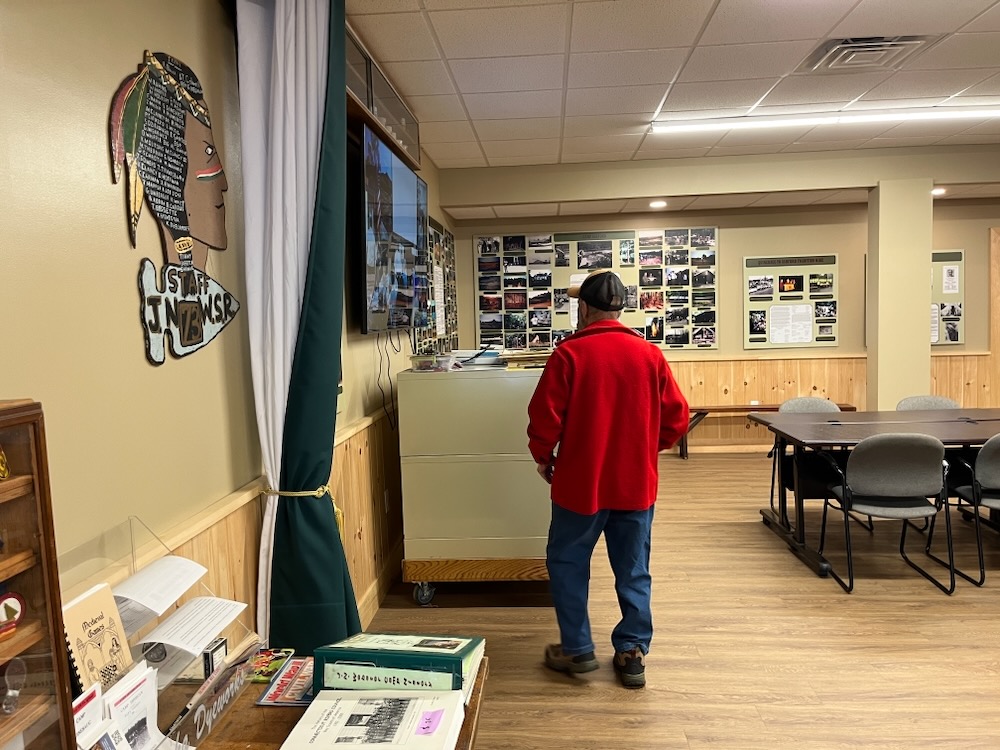
The museum here is one large room with a few display cases and lots and lots of wordy signage.

I was immediately intercepted by a nice guy who apparently oversees the museum. He certainly oversaw my visit to the museum. He meant well and was full of knowledge and history, but my man did not leave my side. Like, if I had wanted to read all of these wordy signs, he would have probably read along right there next to me. It was a bit much.
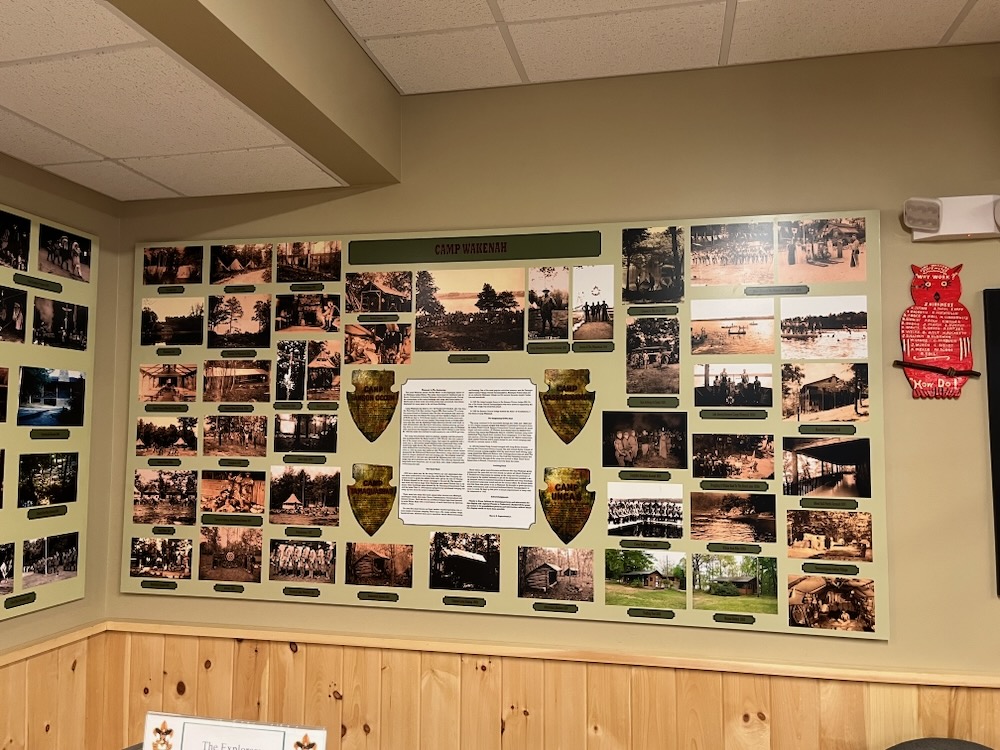
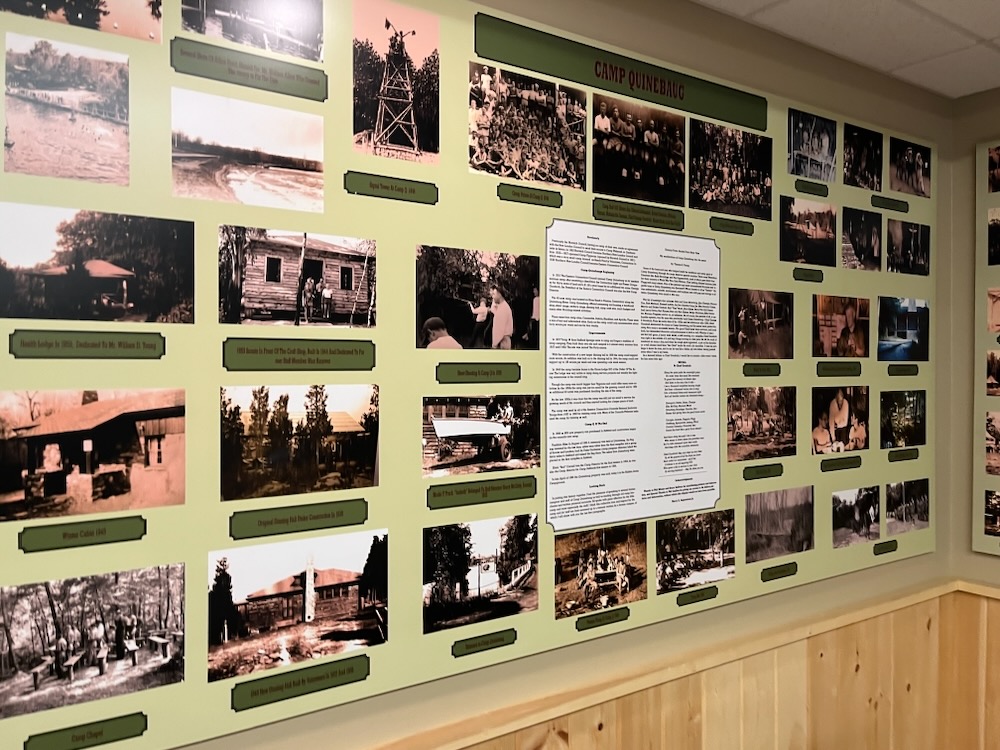
We exchanged pleasantries and I gave my scouting bona fides to him. He seemed satisfied, although was surely a bit confused since I was not even a scout in Connecticut and had never been to this camp. Nor had I ever been to Camp Wakenah in Salem or Camp Quinebaug down in Preston which, as I think I understand it, was the precursor to this camp in Ashford. The prior camp closed in 1962 and in 1963 a bunch of scouts hiked the final campfire’s ashes from Quinebaug the 30 miles to June Norcross to use in the first campfire here. So that’s cool.
There are long passages about now-gone scout camps of eastern Connecticut. I did not read them. I can’t pretend I was all that interested in that stuff, but every now and then my new best friend would point out an old picture and tell me a story about it.
One in particular featured a native American in full regalia from the 1930’s. This guy would make scouts build an entire camp from scratch, including housing, in order to earn the “Indian Craft” merit badge.
But honestly, I was interested in things like “how many boy scout camps were/are named for a woman?” I was told, “not many, that’s for sure. June Norcross Webster was a very succesful woman, and while “boy scouts” now include girls, that certainly wasn’t always the cost.
June Norcross was born north of the border in Monson, MA in 1885. She was an illustrator and after moving to New York City, became quite successful after starting a greeting card company. In fact, The Norcross Company were the first to mass produce Valentine’s Day cards. She went on to marry her high school sweetheart, John Webster, who owned a sawmill in Berlin. (Connecticut, not Germany.)
She made her money, then retired on a lake in Columbia. (Connecticut, not South America, although that’s spelled differently.) She had set up some foundations and trust money that ultimately helped out this camp in Ashford, which named itself after her in 1966. Which, again, I can’t imagine too many boy scout camps were named after women in 1966.
There is one other historically important person to this camp. The land here was the historic homestead of Revolutionary War hero Lieutenant Colonel Thomas Knowlton. His family moved to Ashford when he was eight and later, he spent years in military service. In 1762 he participated in the Battle of Havana, Cuba and was lucky enough to survive and return to Ashford. (Of Israel Putnam’s Company of 107 men, only 20 returned home, due mostly to tropical diseases). Later, Knowlton married Anna Keyes of Ashford and bought a farm on the present site of the Norcross Webster camp.
It was from here that Knowlton grabbed his musket and powder horn and joined his militia company at the Battle of Bunker Hill. The Ashford Company had no captain so they drew ballots and Knowlton was unanimously chosen. He fought a few battles during the Revolution.
During the Siege of Boston in 1776, Knowlton was sent by Washington to burn the remaining buildings at the base of Bunker Hill, and to capture the British guard. Knowlton accomplished this mission without firing a shot or losing a man.
In New York on August 12, 1776 Knowlton was promoted to Lieutenant Colonel. In September he was put in command of an elite hand picked independent corps which was under the direct command of Washington. This unit was called the “Rangers”, or “Knowlton’s Rangers.” (Captain Nathan Hale was a member of this unit.) The date “1776” on the modern U.S. Army’s intelligence service seal refers to the formation of Knowlton’s Rangers.
On September 16, 1776 Knowlton’s Rangers were scouting in advance of the main army at Harlem Heights, New York when they stumbled upon the Black Watch. A skirmish began which ended with Knowlton being mortally wounded. Knowlton was carried off the field to prevent capture. He is reputed to have said, “You see my son, I am mortally wounded; you can do me no good; go fight for your Country.”
Washington upon hearing the news stated, “The gallant and brave Col. Knowlton, who would have been an honor to any country, having fallen yesterday while gloriously fighting.” Knowlton was buried with military honors in an unmarked grave at 143rd St. and St. Nicholas Ave. Well that doesn’t sound so honorable.
After this museum I went hiking at Knowlton Hill off of Knowlton Hill Road. Just sayin.
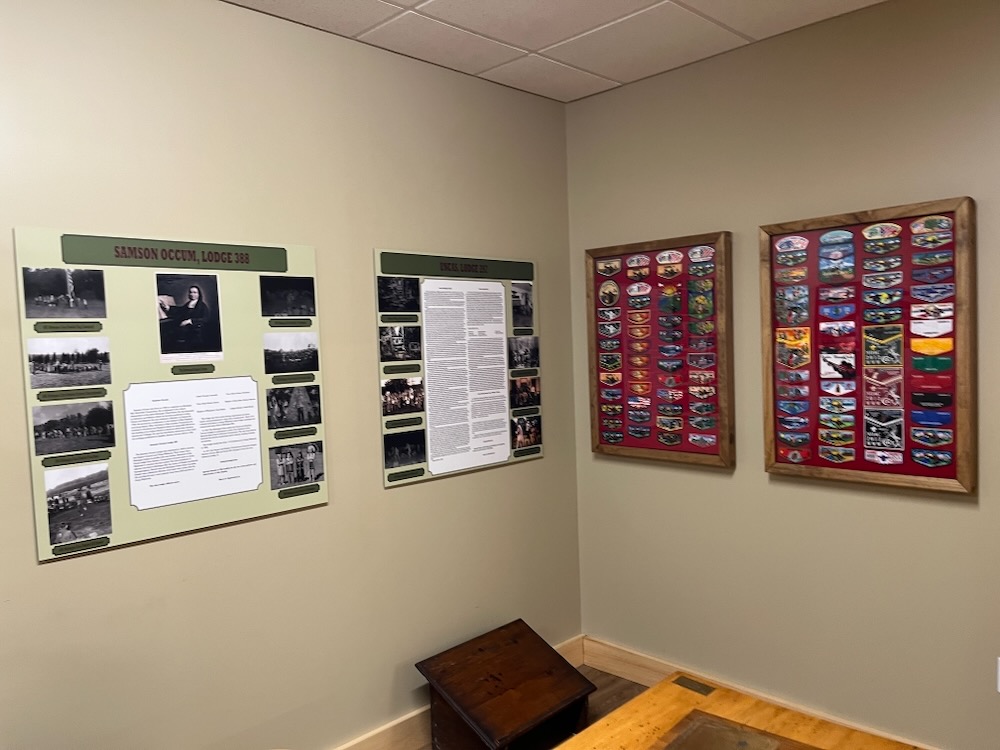
There you have it. Sorry I don’t have more about the museum proper. Guys who went here as a kid will find a nostalgia I didn’t, with patches and mugs and stories and pictures. It’s great for that!
The June Norcross Webster Scout Reservation stands as one of New England’s premier Scout camps, welcoming thousands of Scouts each summer from across the Northeast. “The camp offers a full range of adventures for Scouts BSA, Cub Scouts, Venturers, Sea Scouts, and Fire Service Explorers. It remains a traditional Scout camp—while evolving to meet the needs of today’s youth—ready to inspire and serve for the next hundred years.”
And maybe CTMQ, Jr. will have to revisit then. Let’s hope the AC still works.

June Norcross Webster Scout Reservation
CTMQ’s Museum Visits



Leave a Reply