
Pootatucks, Nazis, and Russians, Oh My!
Old Town Hall Museum, Southbury (Location)
June 2025
Connecticut museum visit #546.
I popped in the Ol’ Town Hall Museum in Southbury during the Connecticut’s 2025 Open House Day.
Oh, wait. I popped in the OLD Town Hall Museum in Southbury.
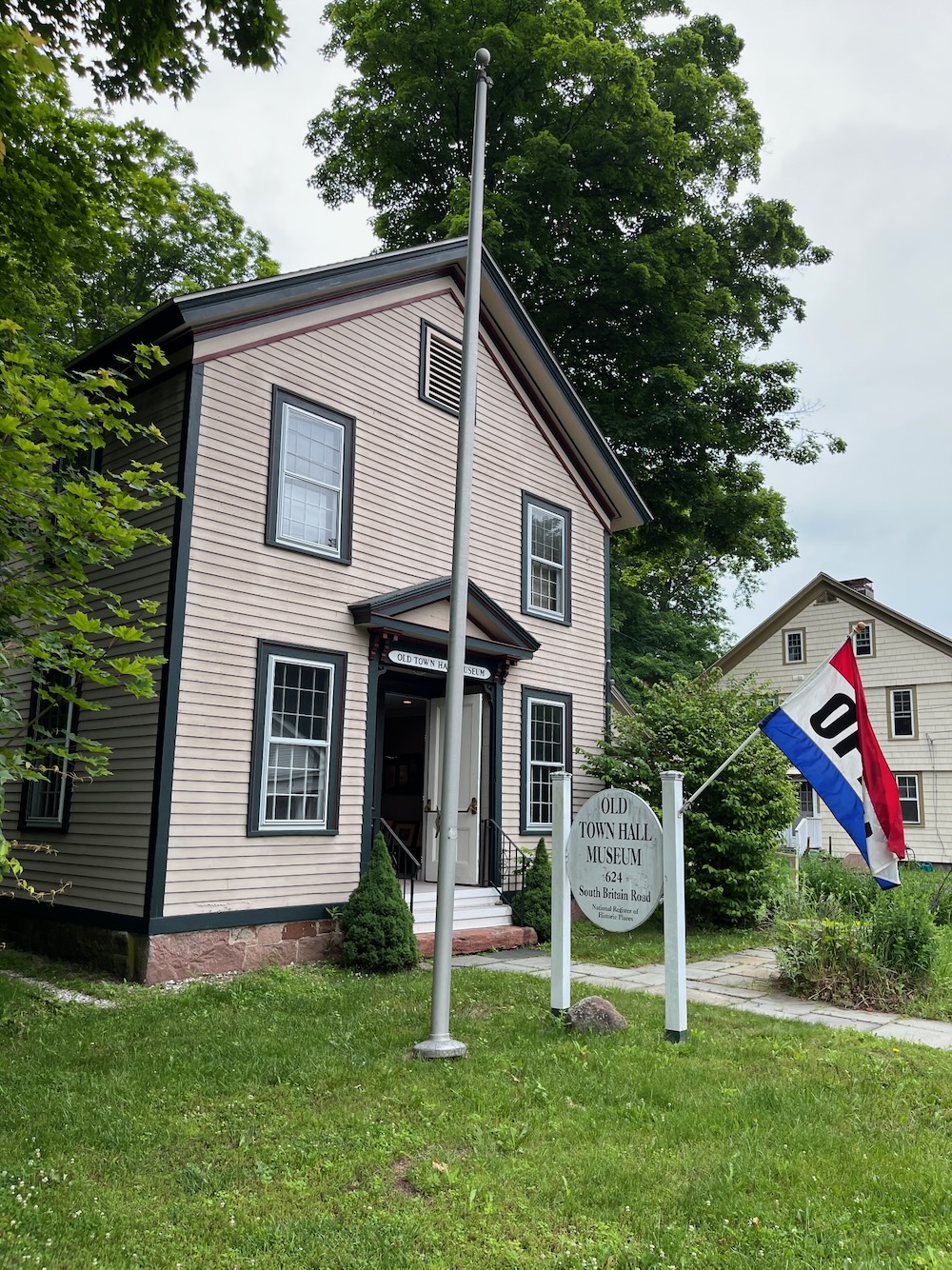
It’s on the smaller side of town history museums, but it’s not the smallest. It contains a random smattering of local stories and artifacts and there were several story boards containing centuries of Soutbury history.
It being Open House Day, they had cookies too.
But this page is the CTMQ page to tell interested readers the history of the town of Southbury.
Oh, wait. This page is the CTMQ page to tell interested reader the history.
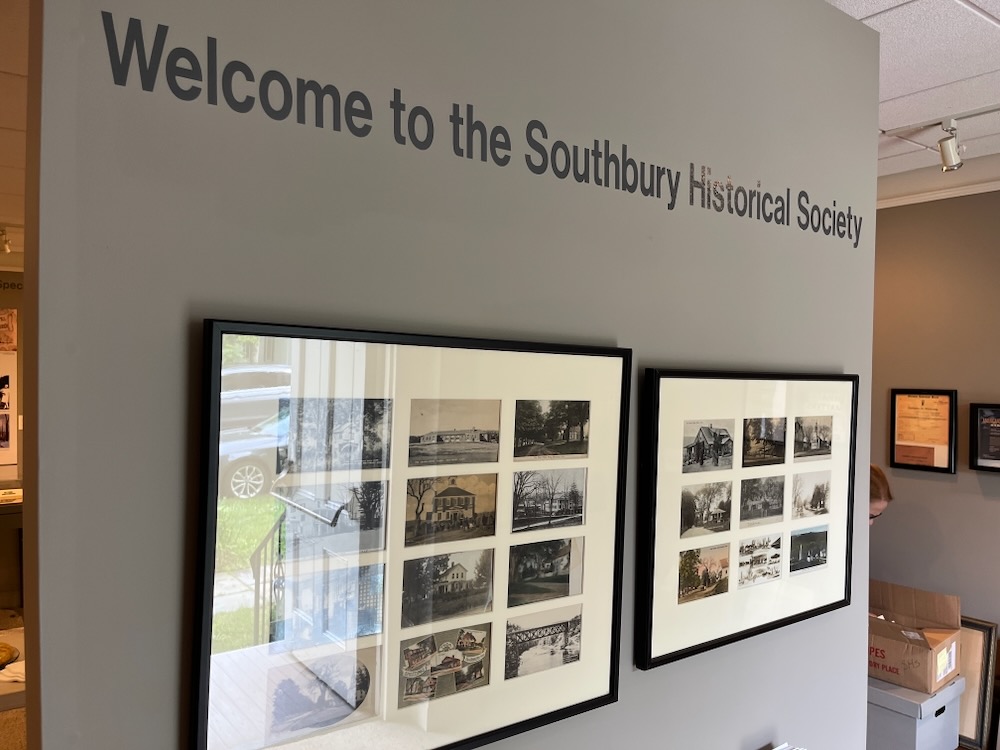
In 1673, a group of colonists from Stratford traveled up the river that we know today as the Housatonic in order to erect a new settlement in the Pomperaug Valley, which was negotiated with the Pootatuck Native Americans. After an initial day of exploration, these religious dissidents spent the night under a white oak tree on an old riverside path. That tree stood for many more years on Crook Horn Road by Settlers Park, in what was to become the Town of Southbury.
Another account says, in 1673 religious dissidents from the coastal town of Stratford, Connecticut Colony, negotiated the purchase of “Pomperaug Plantation” on that tributary of the Housatonic River. Several of the more prestigious families settled within the Southbury parish, when this new town itself was christened “Woodbury”.
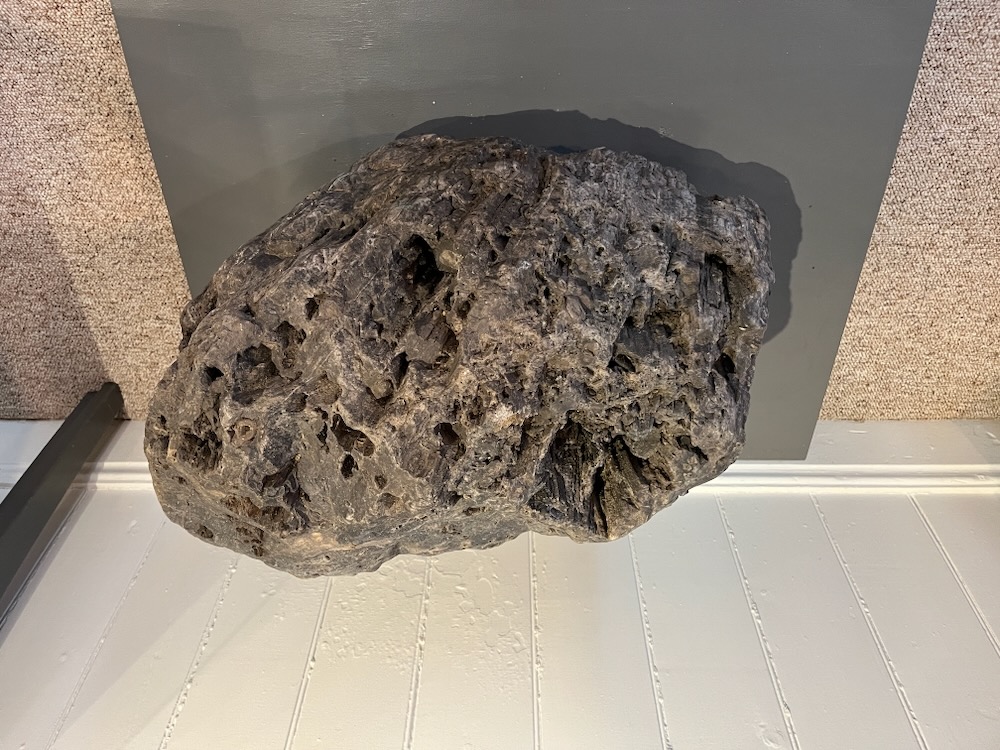
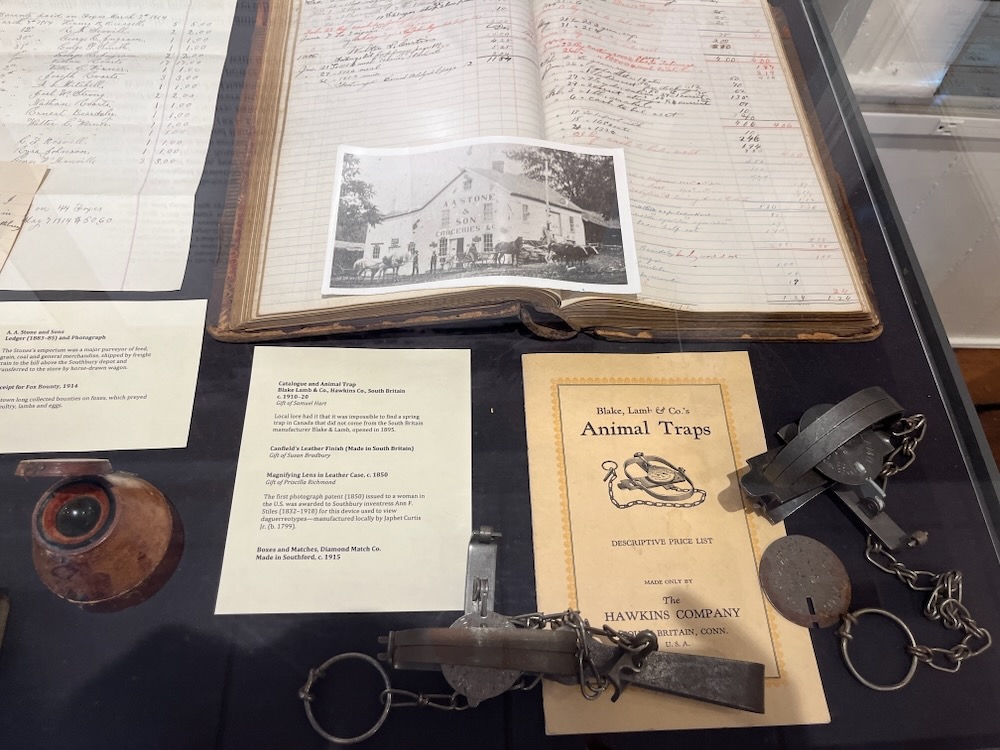
This is a piece of petrified wood found in town at some point somewhere.
I want to know what made them dissidents!
Anyway, in 1787 Southbury broke free from Woodbury and became their own town. Despite being on major rail lines and later, I-84, Southbury has always been a fairly quiet and small town. It does have two interesting stories tied to European events/people. More on them in a minute.
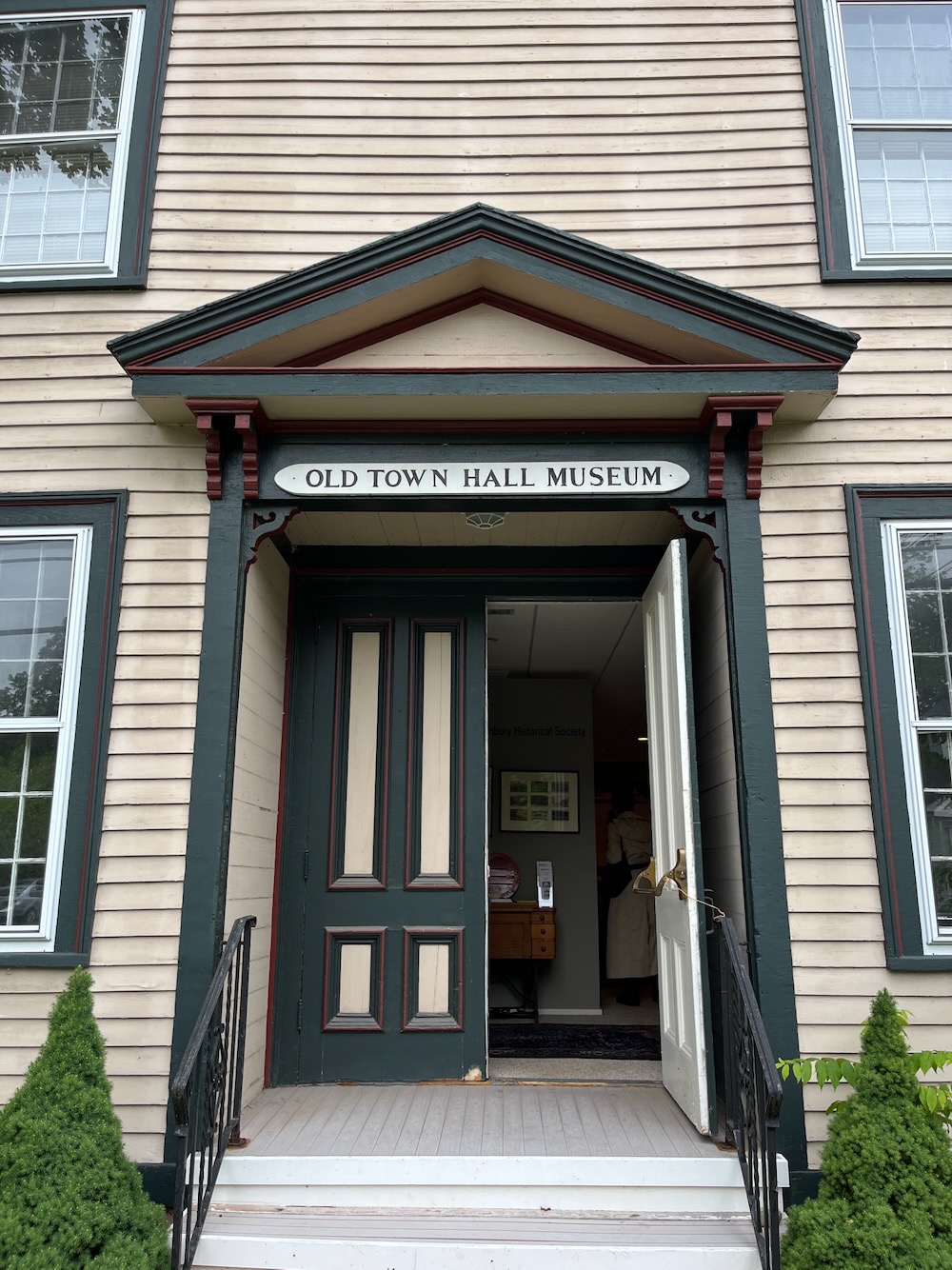
Let’s take a moment to appreciate this building… it’s in Southbury’s South Britain area and houses the Southbury Historical Society’s office, archives and collections, and serves as its museum. Built in 1873, the two-story wooden building functioned as Southbury’s Town Hall until December 31, 1963.
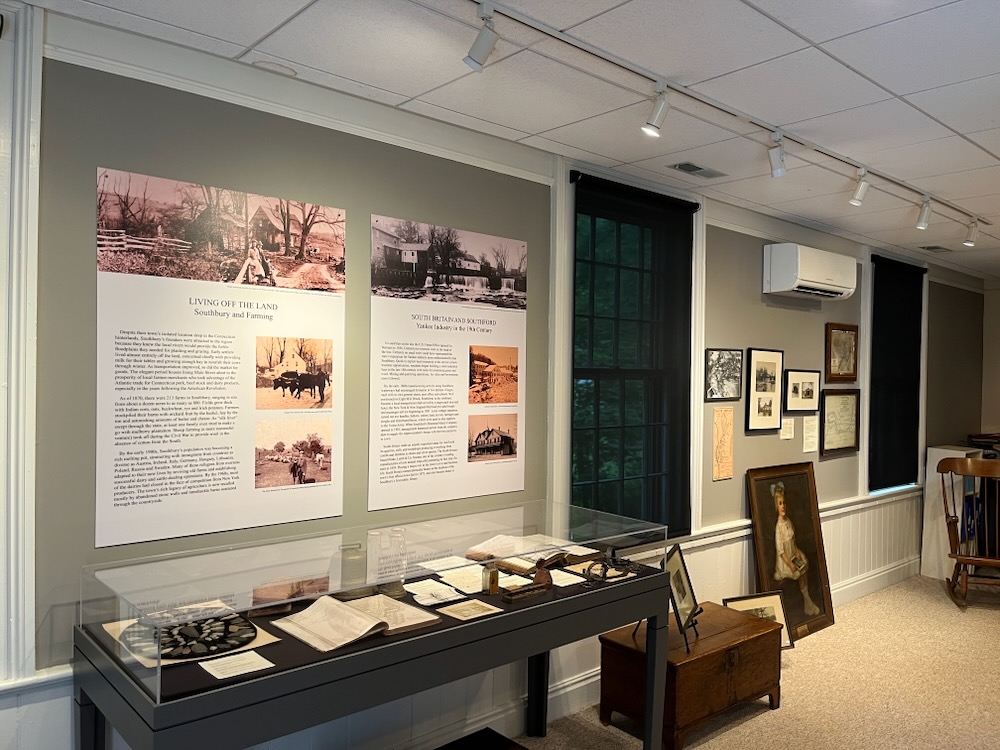
It’s not a large building at all, but the main floor of the building housed all the town offices as well as justice and small claims courts. Town meetings were held in the evenings, and the selectmen would meet and pay the town bills on Saturday afternoons when school was recessed. The second floor was used as a schoolroom and as a community meeting place where dances and other social events were held.
You’d think it would be cared for all along, but no. It was neglected and was nearly demolished in the early 1970’s but was saved by a volunteer effort. And here we are today.
In Southbury. Which was Pootatuck land… land that the Pootatucks kept selling to the white “settlers” over and over. Or, more accurately I guess, they kept selling hunting and fishing rights to the same spots over and over. One such spot was given for a brass kettle. Those of you familiar are now nodding… this is now Kettletown State Park.
As we all know, the fun “kettles for land” times rapidly disappeared and eventually, the settlers acquired complete rights to the area and, by 1758, any remaining Pootatucks had migrated northwest. In 1919, their original village was submerged when the Housatonic River was dammed to produce hydroelectric power, creating Lake Zoar. All that remains now in the Kettletown area of this once prosperous tribe is an occasional arrowhead.
Let’s jump all the way to the late 1930’s, when Southbury did a rather cool thing.
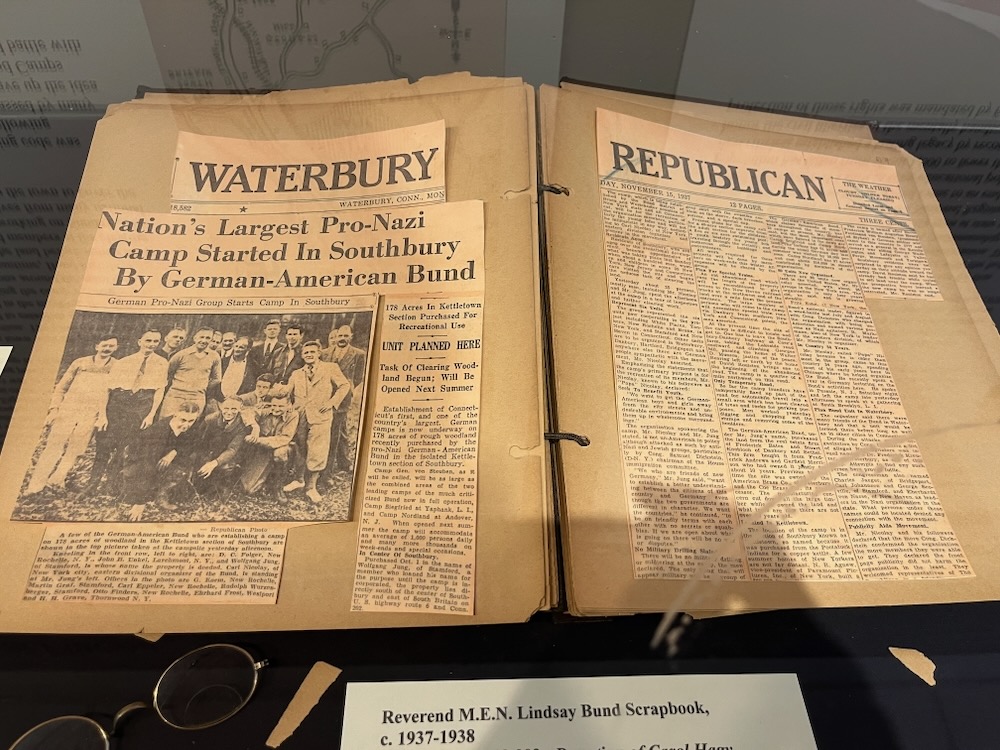
Some jackass named Wolfgang Jung purchased 178 acres of land in Southbury for the German-American Bund, intent on building a Nazi camp. Similar camps were popping up around the nation, in an effort to promote an anti semitic and pro-Nazi agenda. The residents of Southbury quickly united to fight back against this Nazi invasion of their town. Organized by the Reverend M.E.N. Lindsay, the Reverend Felix Manley, First Selectman Ed Coer and town leaders, the townspeople established a zoning commission whose first ordinance forbade land usage in the town for “military training or drilling with or without arms except by the legally constituted armed forces of the United States of America.” The ruling effectively closed Southbury to the Bund. Southbury was the only Government that stood up to Nazis before the end of 1937.
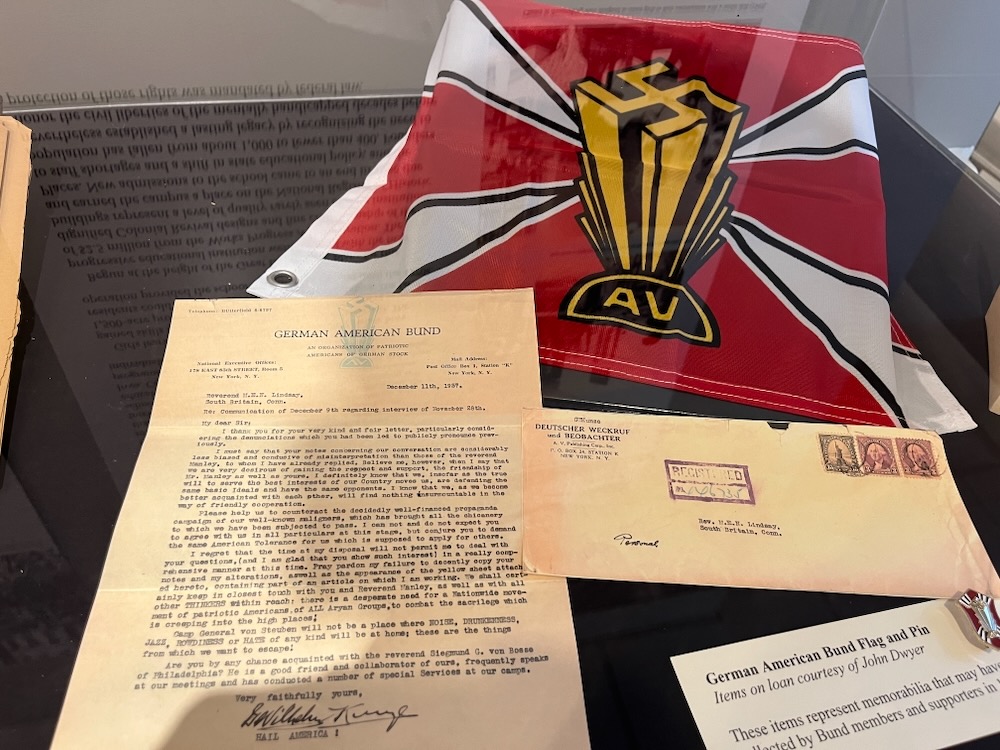
It was a big deal then, but was kind of lost to history until 2012 or so when a lot of newsclippings were unearthed about it. There’s a book and a documentary now if you’re interested. The meetings to develop the plan to kick the Nazis out started here at the Old Town Hall, but grew too large and were moved up the street to a larger church.
There’s also a situation in American in 2025 now where “German-American Bunds” are probably getting Presidential pardons or whatever, but I digree. Hooray for Southbury.
I mentioned there were unique “European” stories here. The other one surrounds Churaevka, in southwest Southbury.
The following is largely from Connecticut History:
In 1917, the Bolshevik Revolution violently overthrew the government of Tsar Nicholas II in Russia. Politicians, lawyers, and military officers who remained loyal to the Tsar found themselves rapidly chased out of the Crimea, across Siberia, and eventually out of the country. These refugees went about setting up new ethnic communities across the globe.
In 1925, two Russian writers, Count Ilya Tolstoy (son of author Leo Tolstoy) and George Grebenstchikoff founded a community in Southbury meant to house Russians fleeing persecution. Tolstoy, who found the area first, fell in the love with the way the Connecticut hills reminded him of the Russian countryside and set up a home in Southbury in 1923.
Grebenstchikoff purchased much of Tolstoy’s property in 1925, buying an additional 100 acres of property nearby the following year. He envisioned Southbury as a summer retreat for Russians living in New York and the surrounding area. It was customary in Russian culture during this time for the upper classes to have summer homes, but few immigrants could afford such luxuries on the salaries they drew after arriving in America.
Grebenstchikoff also envisioned his new settlement as a home for artists and writers. He wanted to create a cultural center for the development and dissemination of knowledge to enrich the lives of local residents. The village took the name “Churaevka” (a mythical Siberian village found in one of Grebenstchikoff’s stories).
Soon musicians, writers, scientists, and artists all began moving to Southbury. The village had its own print shop and used it to help spread the influence of Russian culture. Among Churaevka’s most distinctive features, however, was the St. Sergius Chapel—an onion-domed church with a double Russian Orthodox cross—completed, in large part, with the help of generous donations from Igor Sikorsky.
Yes. That Sikorsky.
I visited Churaevka years ago and while it’s no longer a Russian ex-pat artist community, it is a very unique little neighborhood high above the Housatonic River.
There’s more to Southbury than just Nazis and Russians and Pootatucks. But hey, this town history museum does focus on all three pretty heavily – and all three contain interesting stories. So that’s what you get here too.
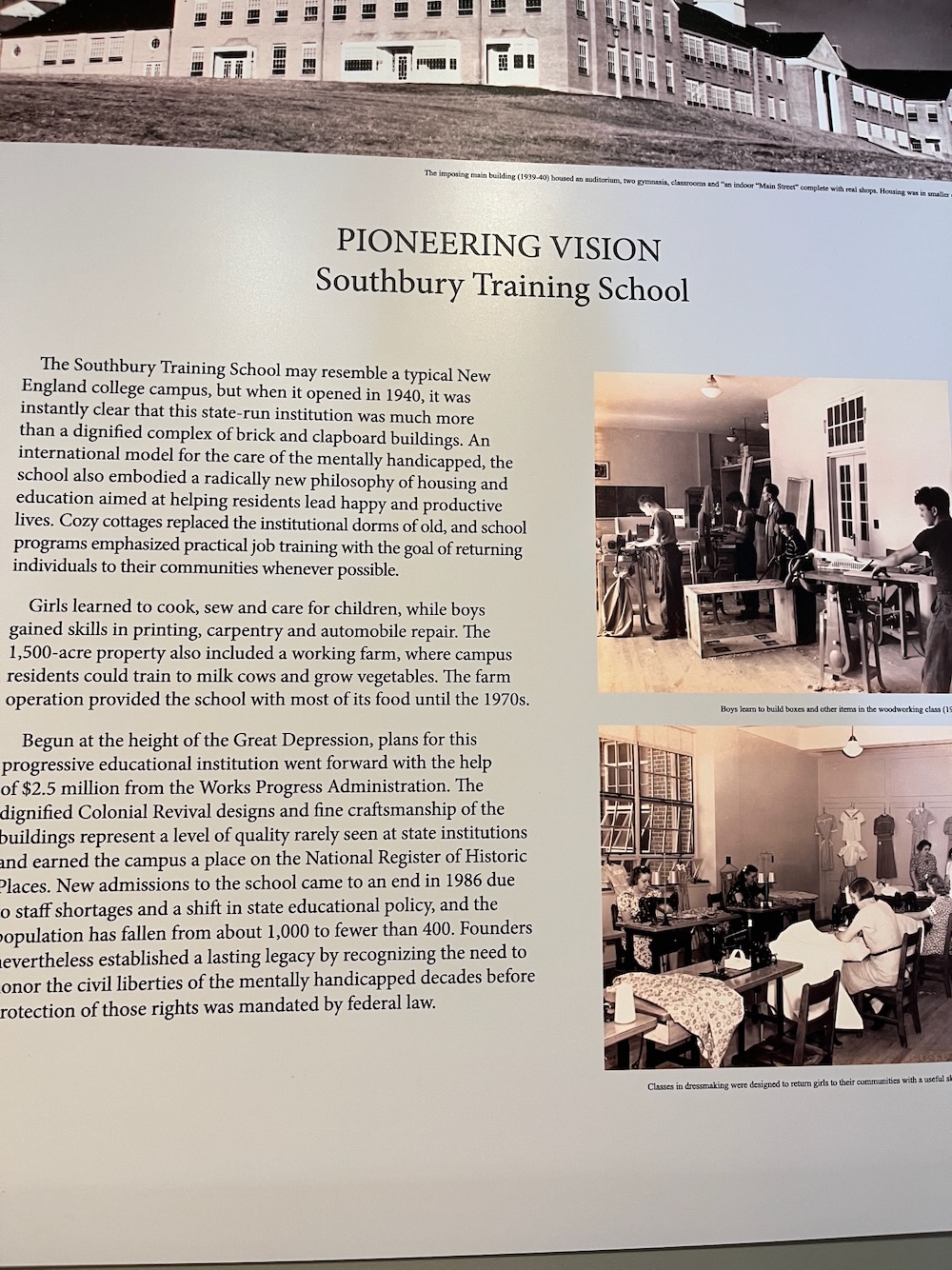
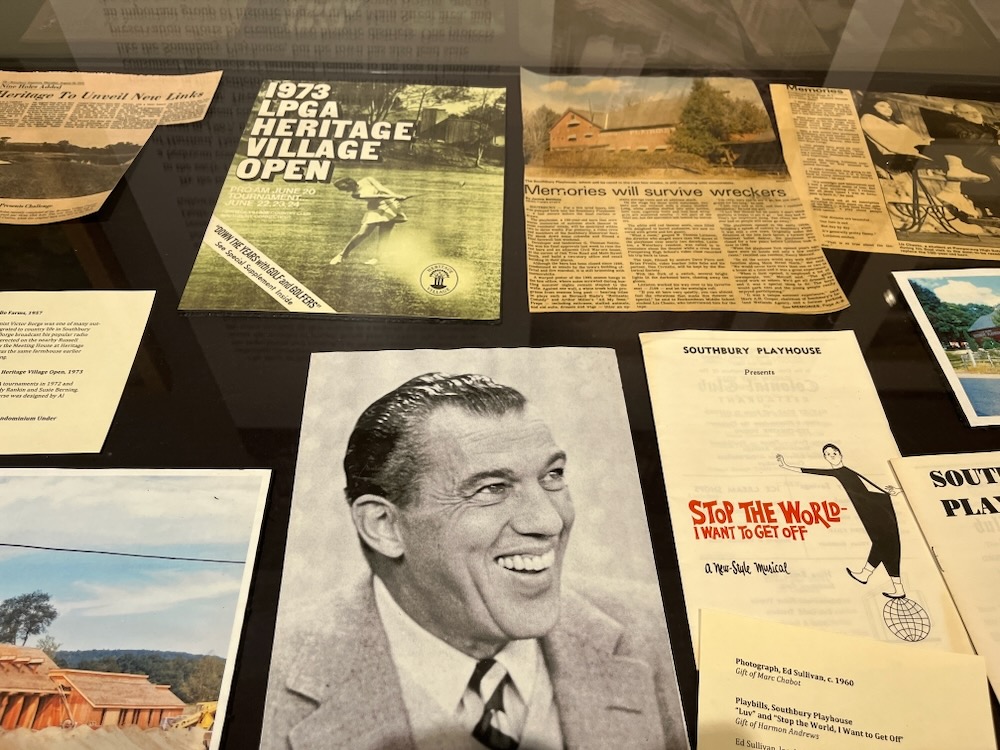
Oh yeah. Southbury Training School is here too – and it’s still operational and still houses over 500 special needs and disabled folks in 2025.

Southbury Historical Society
CTMQ’s Museum Visits



Leave a Reply