Like Clockwork
Plymouth Congregational Church Clock, Plymouth
October 2026
Longtime readers knew after reading the subject of this page, “Hm. I bet there’s something unique and interesting about this clock.”
Others of you probably think I care about church clocks. Spoiler – I don’t. Just this one, because longtime readers are right. They always are. Like clockwork.
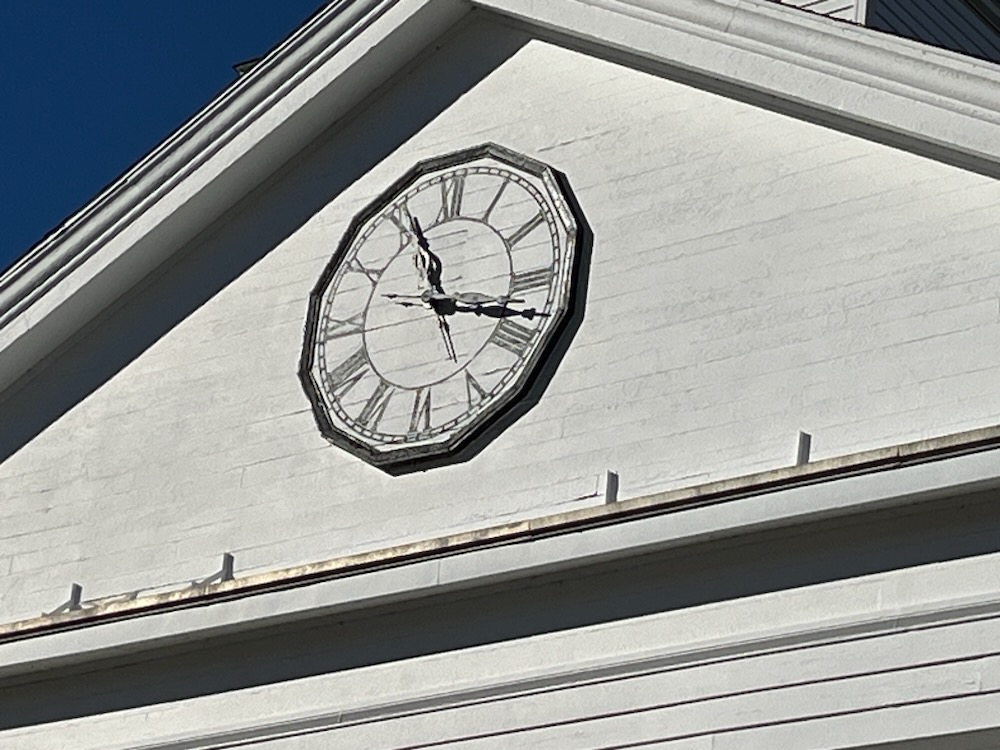
(It’s what’s inside that’s important here, but you get the point.)
This is a “world’s only!” Yes! For you non-longtime readers, I love hyper-specific Connecticut superlatives! The Plymouth tower clock movement is the only undisturbed original Eli Terry wooden gear tower clock in existence! Another source describes it as “the only Eli Terry wooden works tower clock in the world.” And that’s pretty rad.
There is, of course, the story of the clock and how it got here. There’s also the story how I thought I was here a few years ago, but I wasn’t. My confusion over some naming conventions threw a wrench into the clockwork cogs.
Over 200 years ago, Seth Thomas apprenticed under master clockmaker and inventor Eli Terry in Plymouth, helping to manufacture wooden clock movements. A section of old Plymouth separated from Plymouth and became Thomaston. Thomaston is named after Seth Thomas, the dang apprentice!
There is today a section of Plymouth known as Terryville, arguably a more well-known place name than Plymouth.
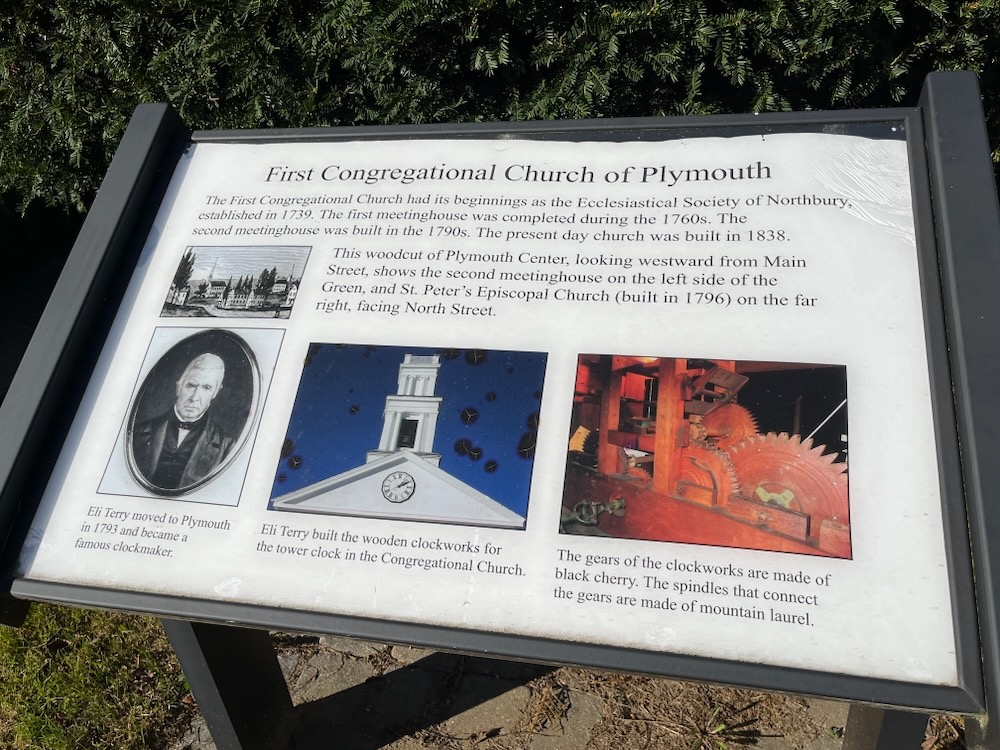
So when you go looking for the only Eli Terry wooden works clock tower in the world at the Congregational Church, don’t go to the white Terryville Congregational Church with the clock on the front. You want to go to the First Congregational Church of Plymouth, on the same road, in the same town of Plymouth, but not in Terryville which sounds like it was named after Eli Terry.
You see.
Perhaps this will help:
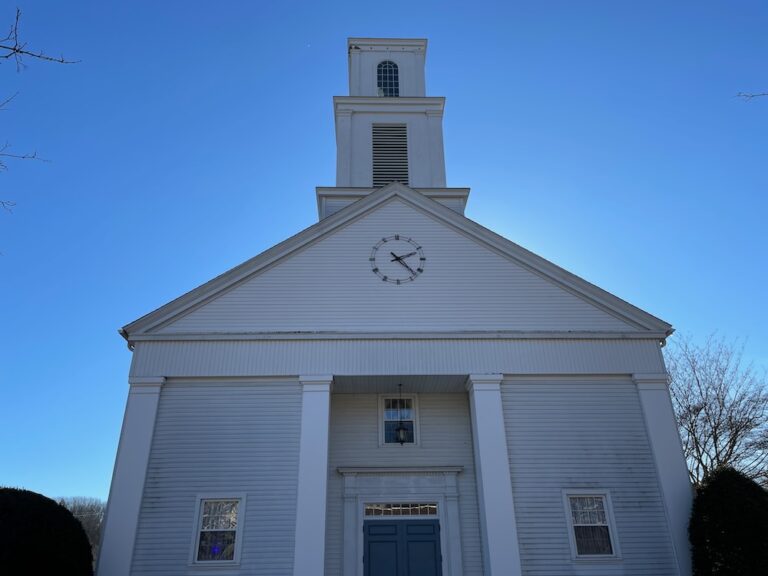
Wrong Congregational Church
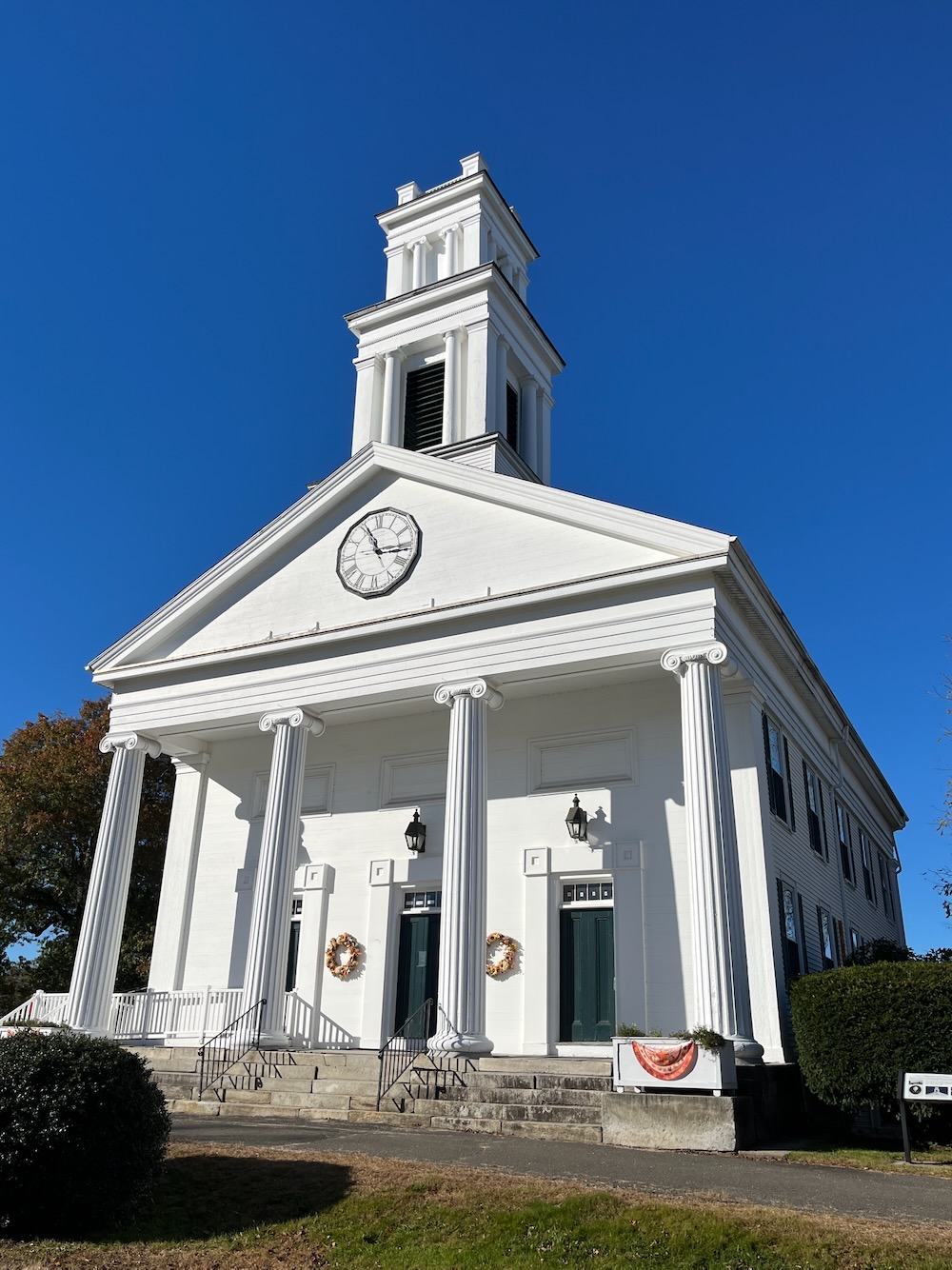
Right Congregational Church
I’m just glad I somehow caught my error and didn’t publish this whole thing having visited the wrong congregational church.
A full three years after my gaffe, I found myself back in Plymouth and at the right church. The First Congregational Church of Plymouth is beautiful. Classic. Stately. It is located on Plymouth’s small town green and did you know it has the only existing Eli Terry wooden clocktower clock works in the world? Yeah, but did you know that this isn’t the church the works and clock were originally housed?
You know how you thought your confusion was cleared up? Read on…
Eli Terry made only three tower clocks. His first, made entirely of wood, was donated to the Center Church on the Green at New Haven in 1825. The second movement was donated in 1828 to the Congregational Church of Plymouth Hollow (Later Thomaston Congregational Church, in Thomaston, not Plymouth.) The movement was removed from the church and donated to the American Clock & Watch Museum in Bristol. Terry’s third movement was donated to the Terryville Congregational Church in 1838. The movement was destroyed by fire in December of 1969. The movement from New Haven was removed from the steeple and reinstalled at the Plymouth Congregational Church in 1838, where it still runs today. In Plymouth.
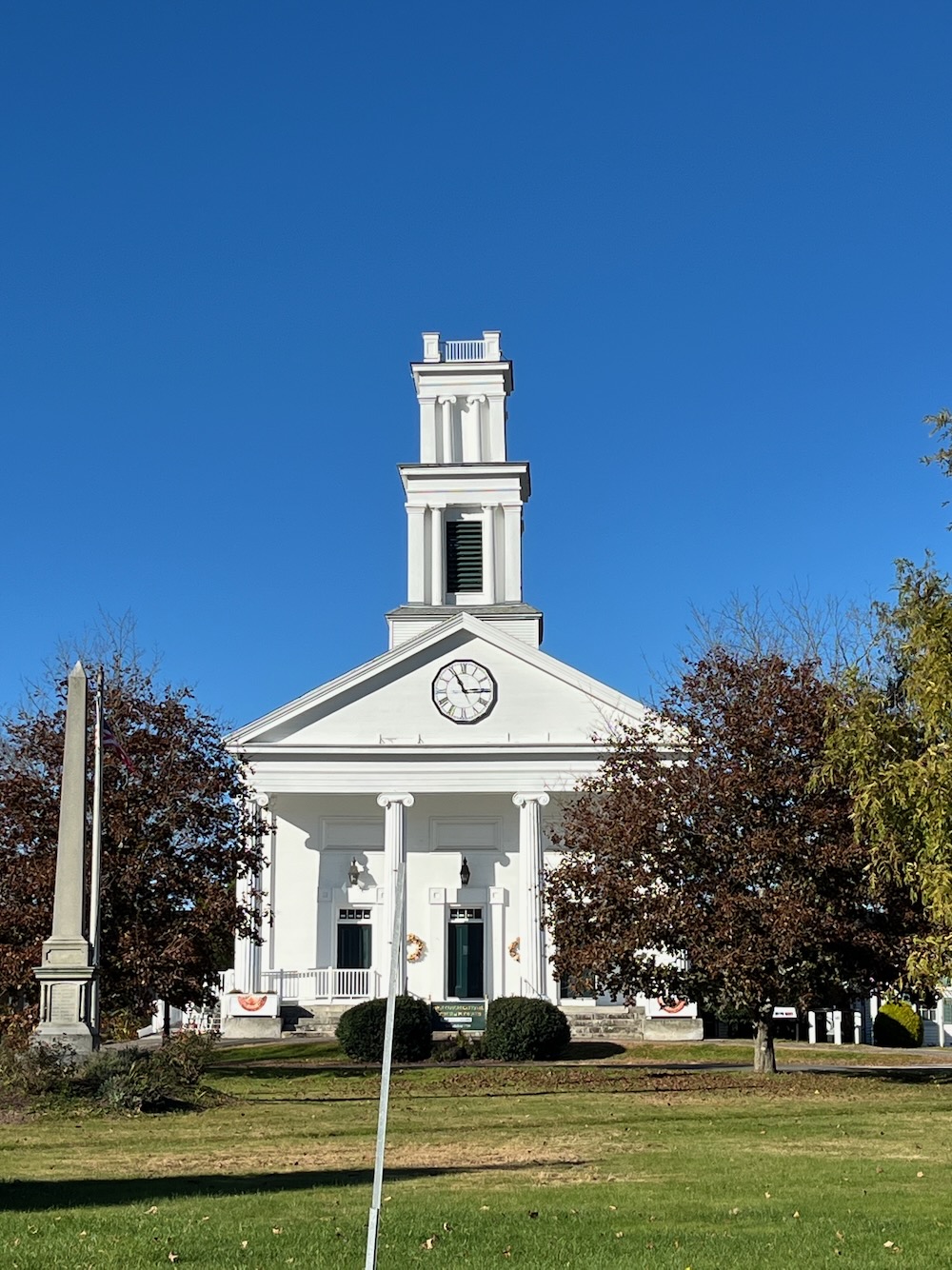
Yes, that’s right. The Terryville Church had one of these things too! And the one that keeps time today was originally in New Haven! (One of the written claims is that this was “undisturbed.” I think it’s been disturbed, but that doesn’t affect its standing in the world.)
I’m glad that’s all sorted out.
Sidenote: If you’re ever in the mood to hike Plymouth Land Trust’s Leach Stanton Preserve, the best (and more or less only) place to park is at this church.
It makes sense that this historic clock is here in Plymouth. The town owes its beginnings to the foresight of Eli Terry, Seth Thomas, and another clockmaker named Silas Hoadley. The manufacture of clocks gave Plymouth national recognition. As mentioned, Thomas moved across town (which then became his eponymous town) and Terry birthed Eli Terry, Jr. who moved his trade east into what is now Terryville. (That’s also where the Eli Terry, Jr. Water Wheel is, another “US Only”!)
And get this; Terryville is named after the son. Old Man Terry didn’t get anything! This is particularly crazy simply because Eli Terry, Sr. was one of the most important Connecticut-born people ever. That’s right. I said it.
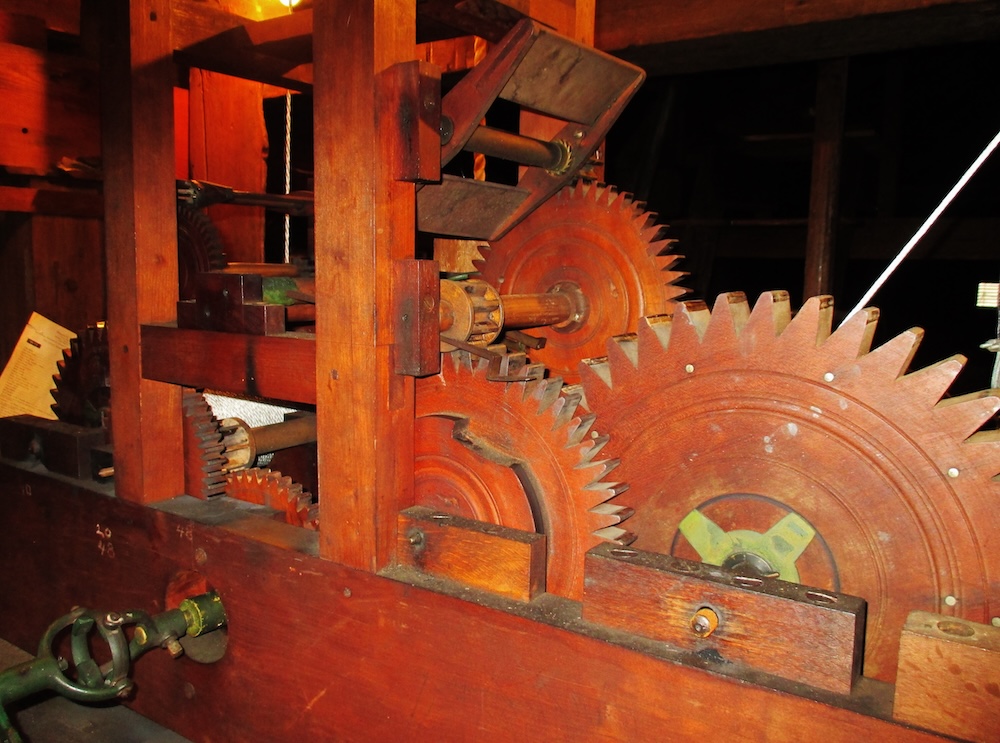
The original wooden clockworks! (Photo from the Plymouth Historical Society)
The following is from an old Hartford Courant article.
That’s because Terry pioneered the manufacture of interchangeable parts, i.e., parts that were exactly identical and could therefore be used in mass production. With interchangeable parts, there was no need to file or otherwise adjust each component so that it worked with the other parts; it was precisely and cleanly machined for a perfect fit.
The idea was the core of what came to be known as the American system of manufacturing. Interchangeability gave birth to the clock industry in Connecticut and, as it spread to other industries, mass production of all kinds of products everywhere. (For many years, historians gave equal or greater credit to another Connecticut resident, Eli Whitney, for inventing the American system. But evidence now indicates that the components he produced, for muskets, were not truly identical and hence not interchangeable.) A century after Terry made the first interchangeable parts, his breakthrough brought the assembly lines of Henry Ford and the manufacturing revolution that followed.
Terry was born in East Windsor. There he was apprenticed to the prolific and well-known maker of brass eight-day clocks, Daniel Burnap, who taught him how to make clocks the only way anyone then knew, using a foot lathe and hand-operated cutting engine.
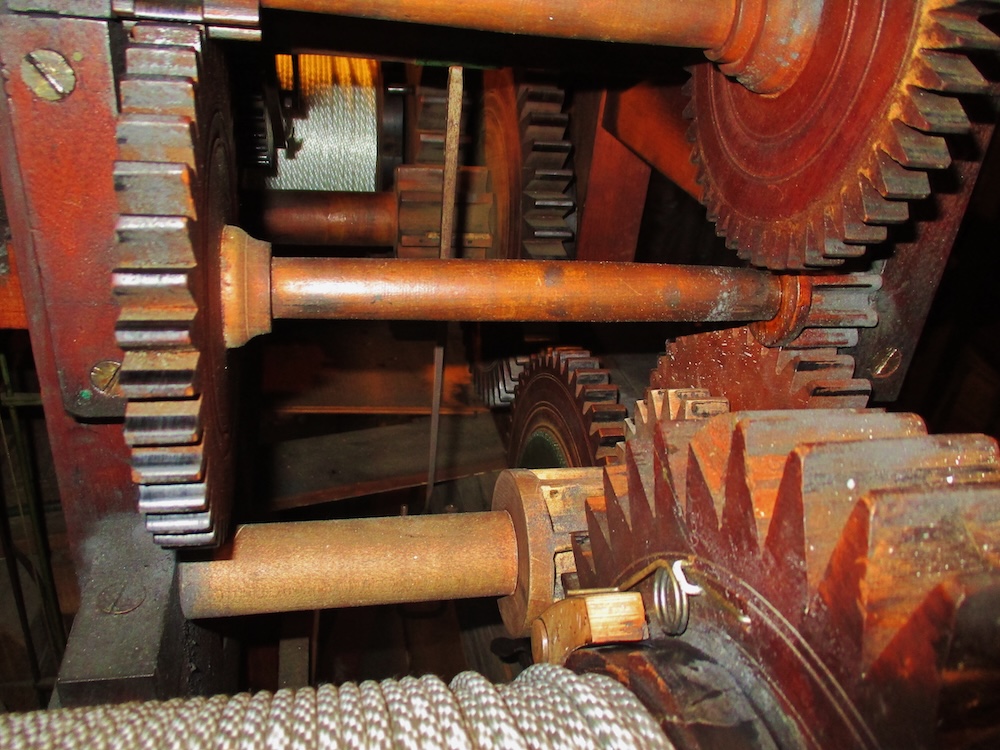
Awesome! (Photo from the Plymouth Historical Society)
In 1793, Terry moved to Plymouth and set up a shop to make clocks as Burnap had taught him. A decade later, seeking to increase his production, he opened another shop, this one using water power to run a saw. Water enabled him to increase his output dramatically. It soon led to a turning point for Terry and for industrial production.
That point came in 1807, when two Waterbury businessmen, Levi and Edward Porter, who had learned of Terry’s clock-making prowess, ordered from him 4,000 wooden, tall-case clock movements to be produced over three years. (At the time, wood was nearly always used in less-expensive movements.) The idea was, in nearly everyone’s eyes, ludicrous: no one could make that many clocks, not in many lifetimes.
Terry spent the first year experimenting with production methods and making machinery and equipment. He hired additional employees, including a young carpenter named Seth Thomas, who in 1853 would found the famous Seth Thomas clock company in what is now Thomaston (named after him). In year two, using his new gauges, patterns and machine tools, Terry turned out 1,000 movements. The final year, 1809, he produced a whopping 3,000, fulfilling his promise to the Porters and winning a place on clock-making Olympus.
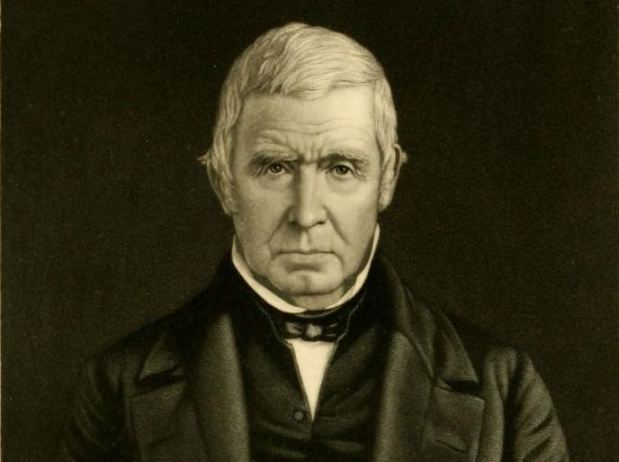
The man. (From Connecticut History)
Terry grew quite wealthy and continued making and selling clocks. Clockmaking went wild in Connecticut which then spawned other industries using the same interchangeability principals. This is how Connecticut became the hub of firearms, locks, hardware, and watches in the 19th century and then jet engines, aerospace components, submarines, and helicopters in the 20th century. Precision parts is our thing, in part thanks to Eli Terry, Sr.
Phew. All that from an old clock in a church tower in Plymouth.
And that’s why you read CTMQ. Hopefully, like clockwork.
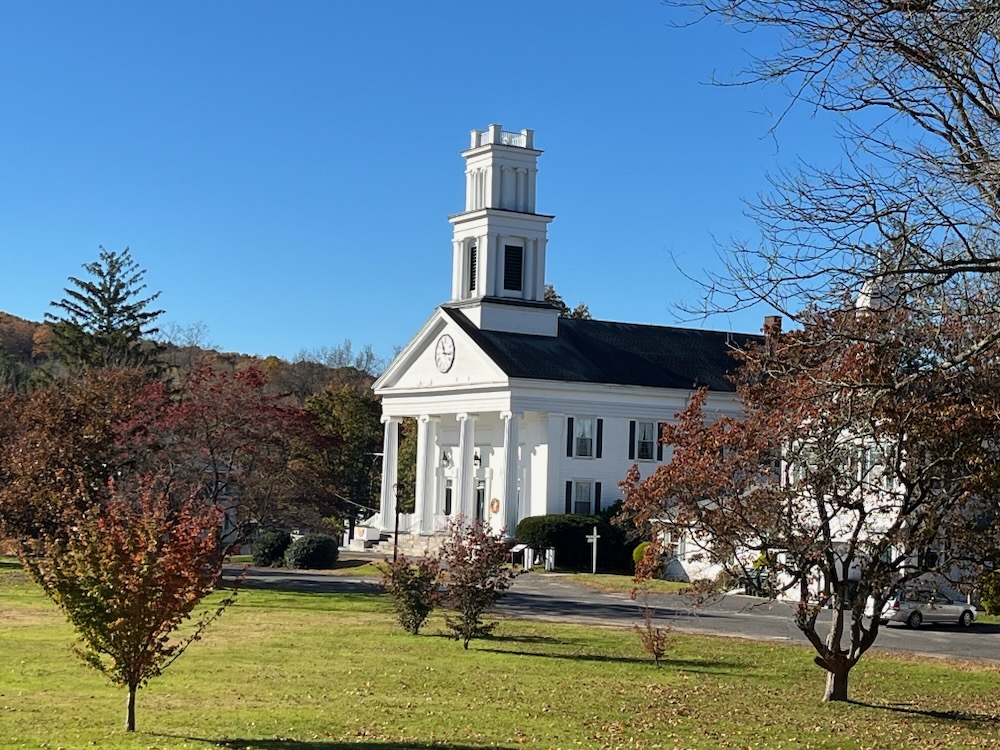

First Congregational Church of Plymouth
CTMQ’s US & World Firsts & Onlies



Leave a Reply