
From Quinnetukut to Connecticut
Institute for American Indian Studies Museum, Washington
April 2019
Connecticut museum visit #411.
I don’t typically start off with a picture, but I guess a picture with words is okay:
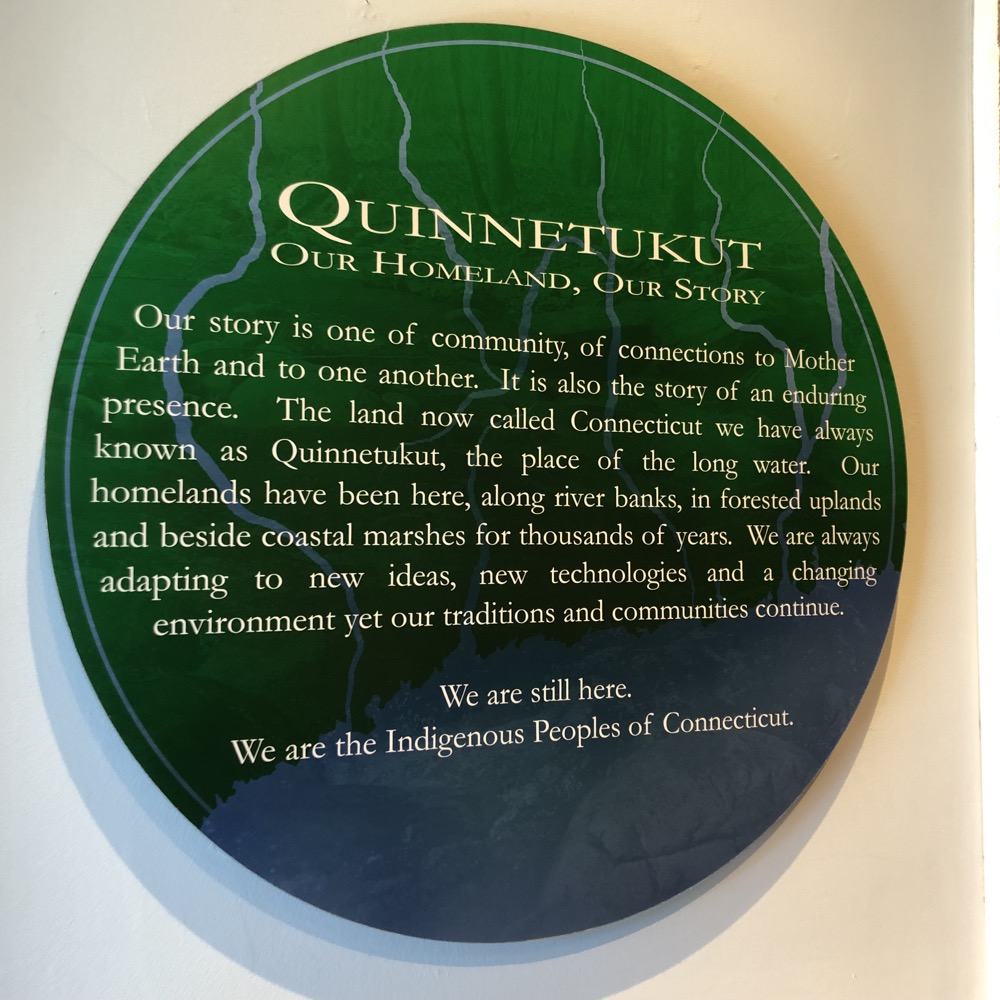
I like that. I like that the spelling seems to be a sort of compromise between the various slightly different spellings of the original Connecticut and that the explanation seems to purposely omit the “tidal” part of the generally accepted “long tidal river” description of the word.
I like the subtle defiance of the sign and the “don’t erase us” messaging. I like it all.
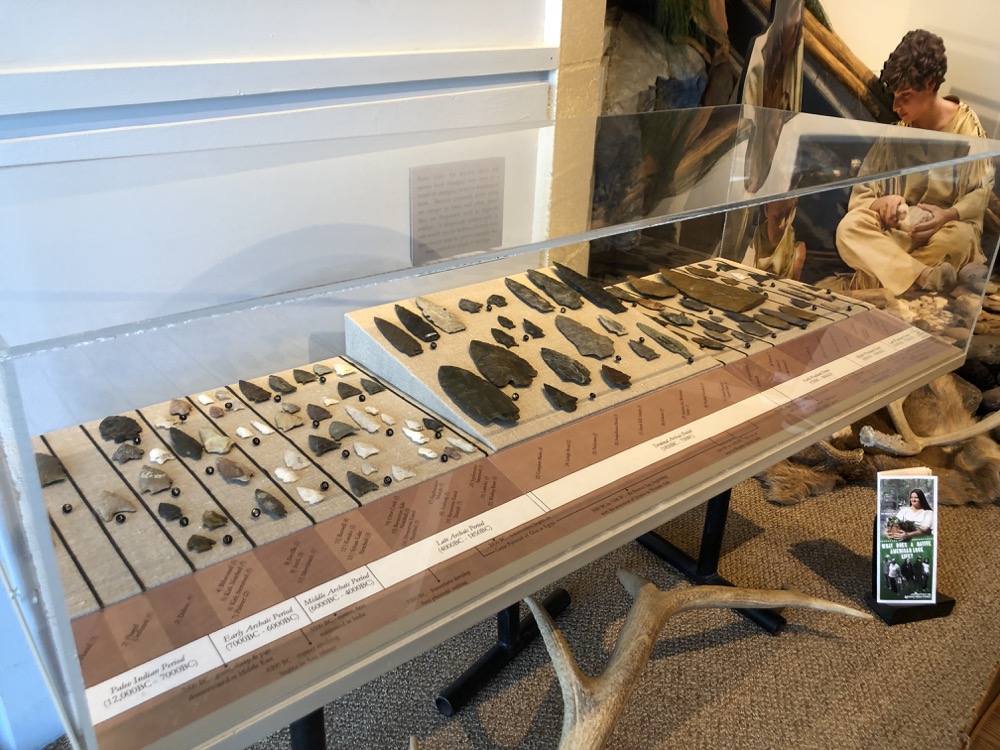
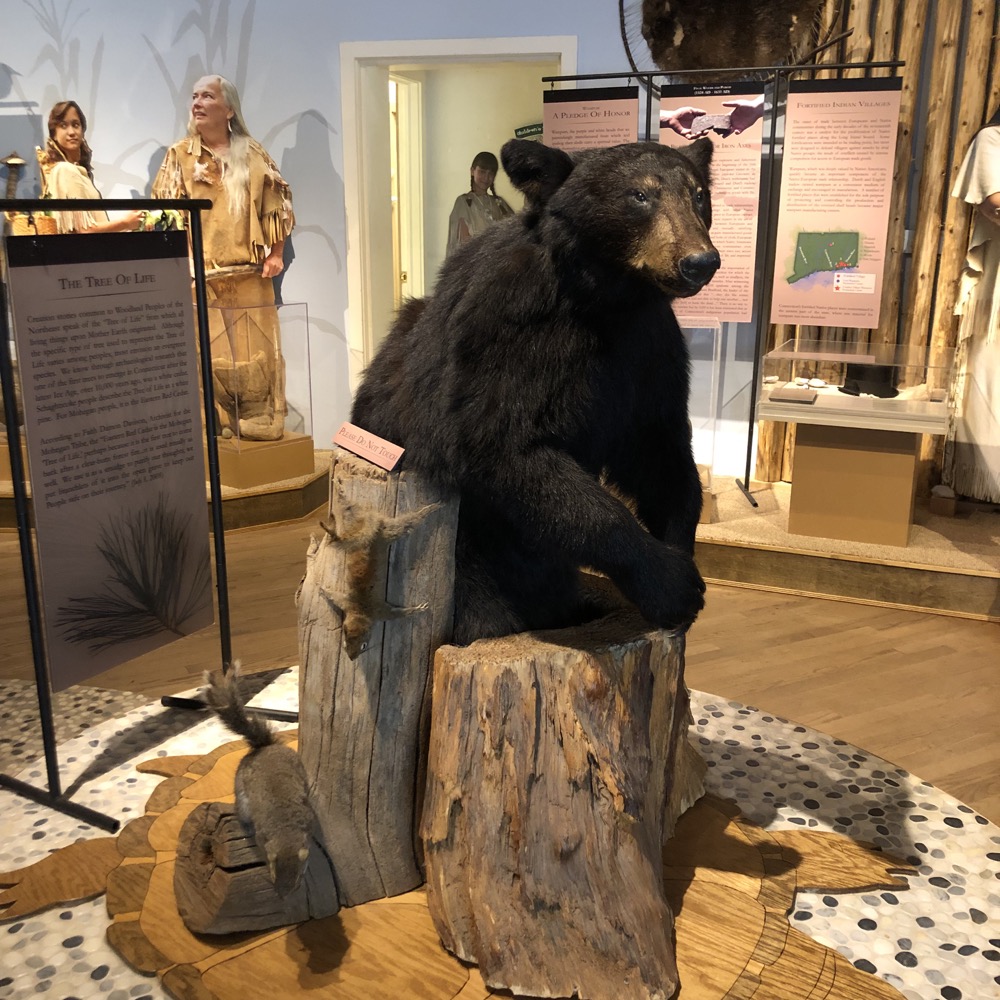
And it makes sense here, at The Institute for American Indian Studies in Washington. For the organization and their museum are not officially affiliated with any of the five Connecticut-recognized tribes (Mashantucket Pequot, Eastern Pequot, Mohegan, Schaghticoke, Paugussett) as they are a private and independent nonprofit organization.
See, the Schaghticokes would never have known about the “tidal” effects on the Connecticut River, but they’d have known it was long. Probably. Anyway, the IAIS takes its independence seriously and would like you to know that they are not only tribe-agnostic, but also that they receive no money or funding from those tribes or from any gaming facilities… or the state or town.
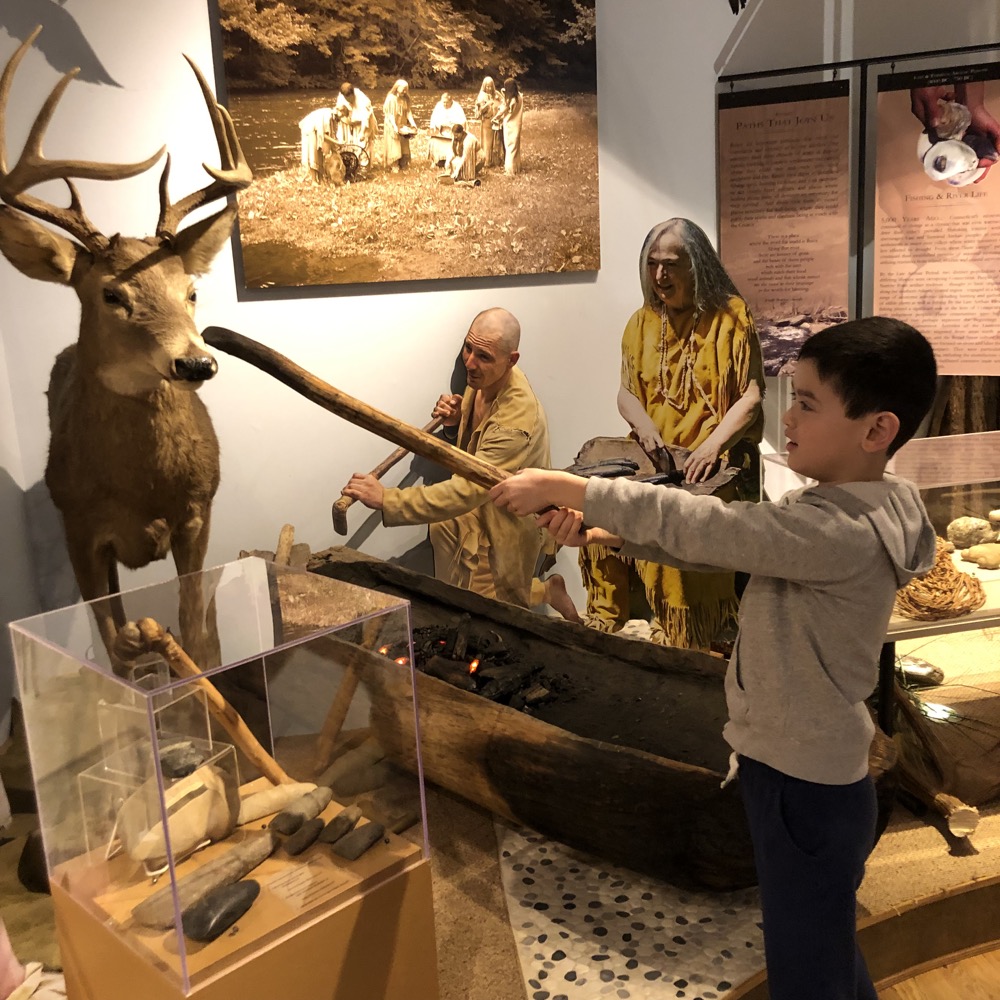
In other words, there’s justification for the fairly steep admission fee here. Its supporting the mission and it’s not like this is a crappy museum. It is, in fact, a rather nice museum… in addition to the other goings-on here.
The Institute for American Indian Studies (IAIS) began in 1975 as a collaborative research hub between Indigenous and non-Indigenous archaeologists and community members in western Connecticut. (It was formerly called the American Indian Archaeological Institute (AIAI).
Since their founding, IAIS has surveyed or excavated over 500 sites, including the remarkable discovery of a 11,000-year-old camp site, the Templeton Site—one of the earliest known archaeological sites in Connecticut. Excavations are done in consultations with local tribal groups.
Boop
Within its Research and Collections Department, the IAIS manages over 6,000 ethnographic (post-European contact) items and over 300,000 archaeological artifacts that represent hundreds of Native American societies throughout the western Hemisphere that range in age from over 12,000 years before present to the 21st century. Many of these ethnographic materials were collected by non-Indigenous settlers under unethical circumstances, and as a result, IAIS museum strives to return cultural artifacts to their descendent communities wherever possible.
Lots of these artifacts, I presume, are displayed in the museum. This isn’t some shambolic collection of arrowheads and beaver pelts. The museum has a clearly thought-out plan and the displays are as professional as you’re going to see.
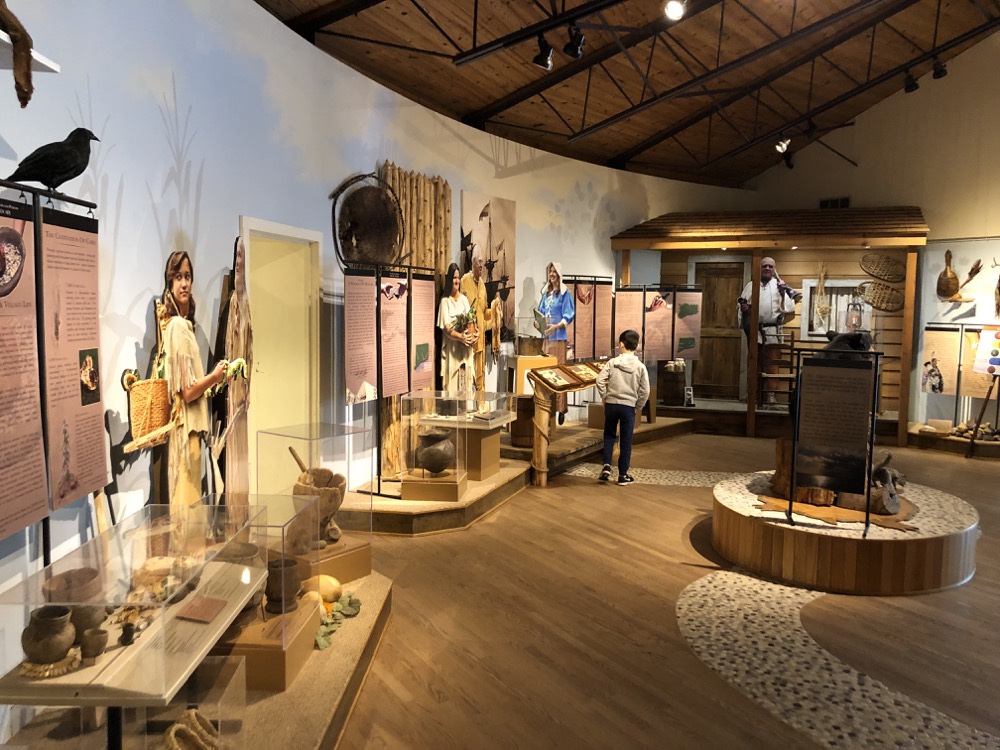
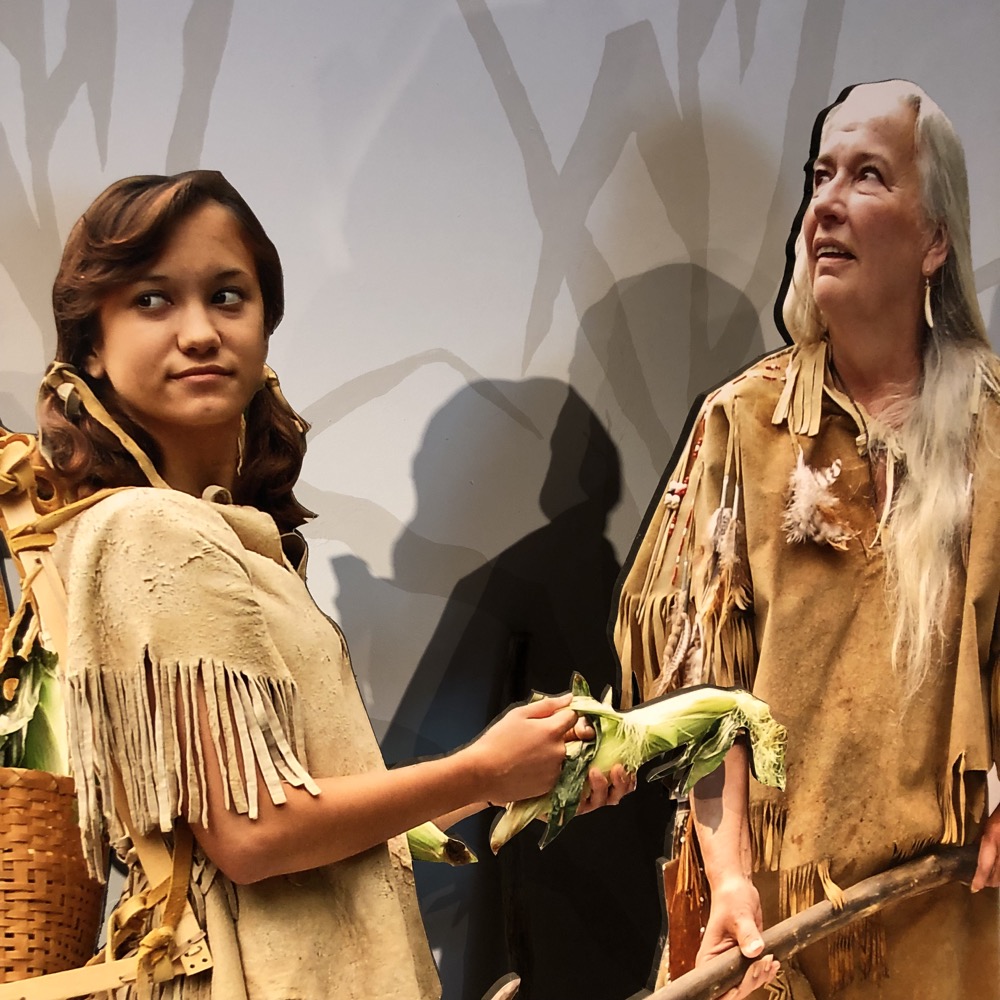
The artifacts are mixed with the stories of the people that inhabited Connecticut and elsewhere thousands of years ago – but what makes IAIS slightly different than other similarly themed museums is that they carry the Indigenous stories up through the present day.
And if you think about that… why wouldn’t they?
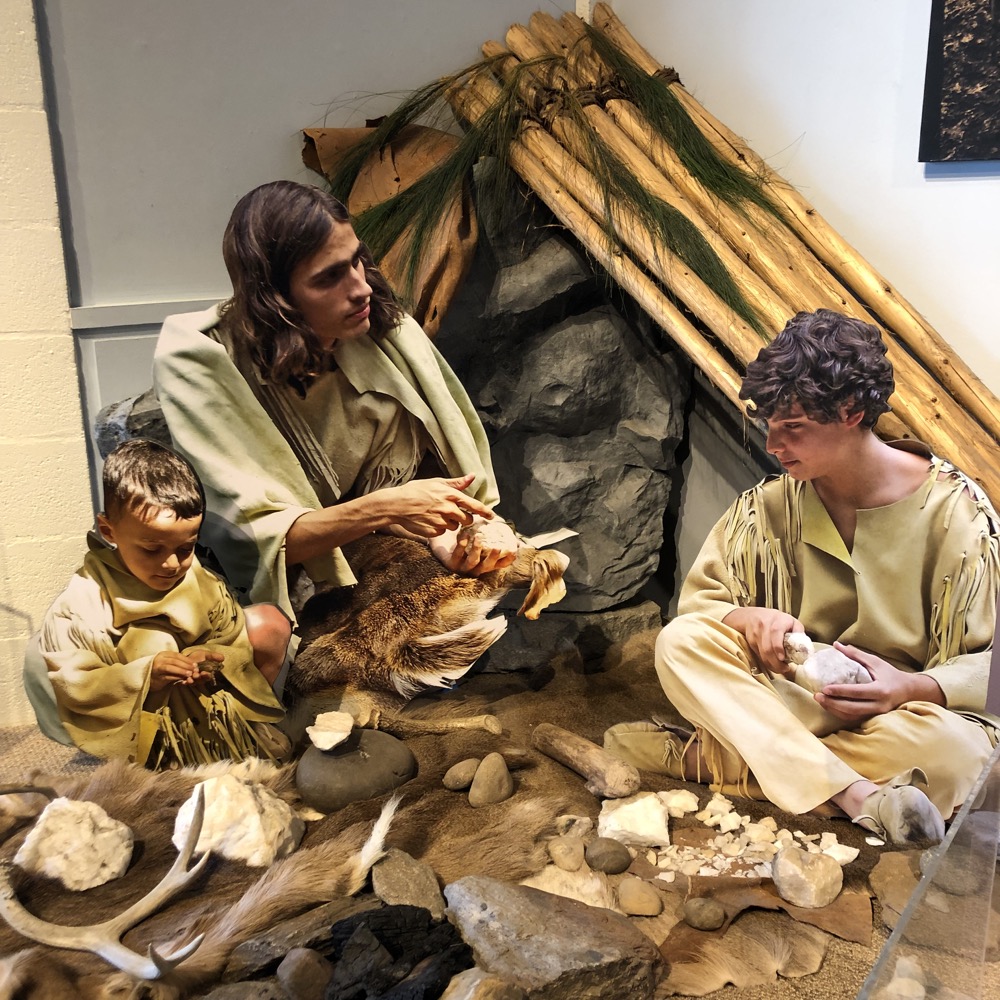
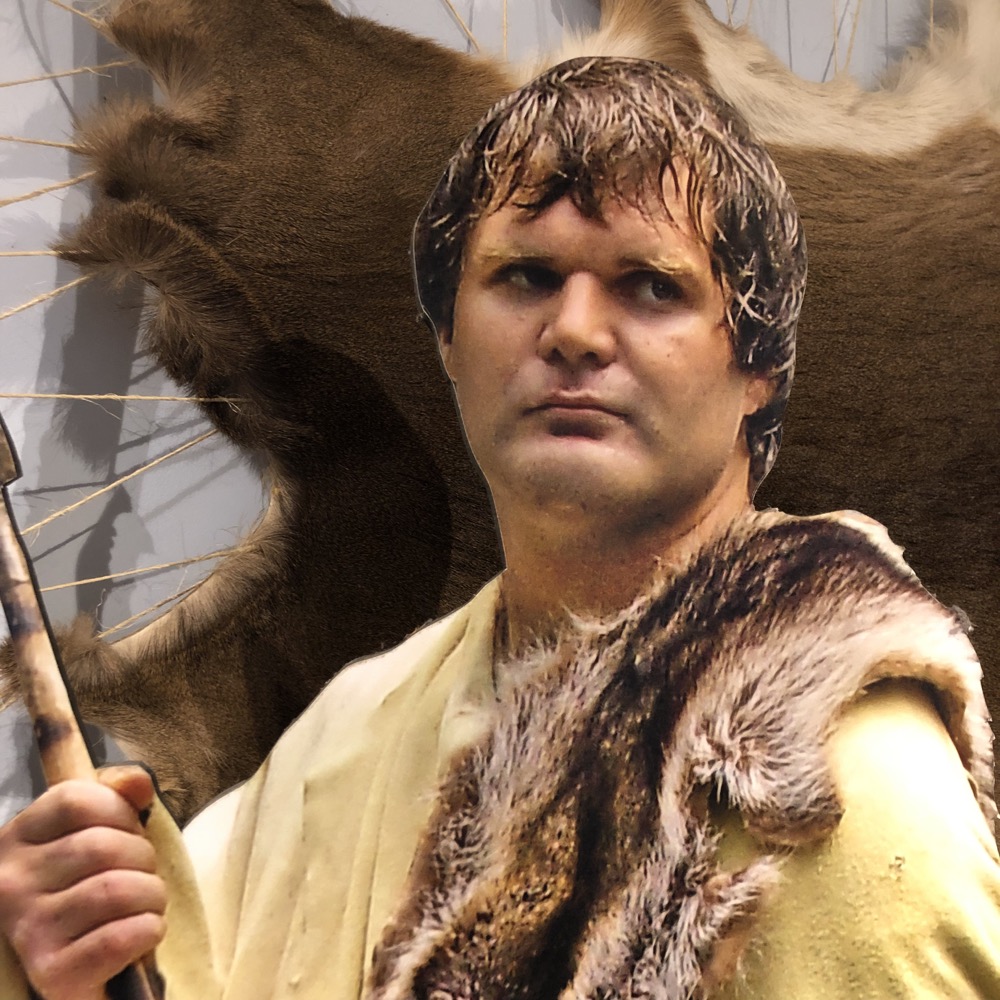
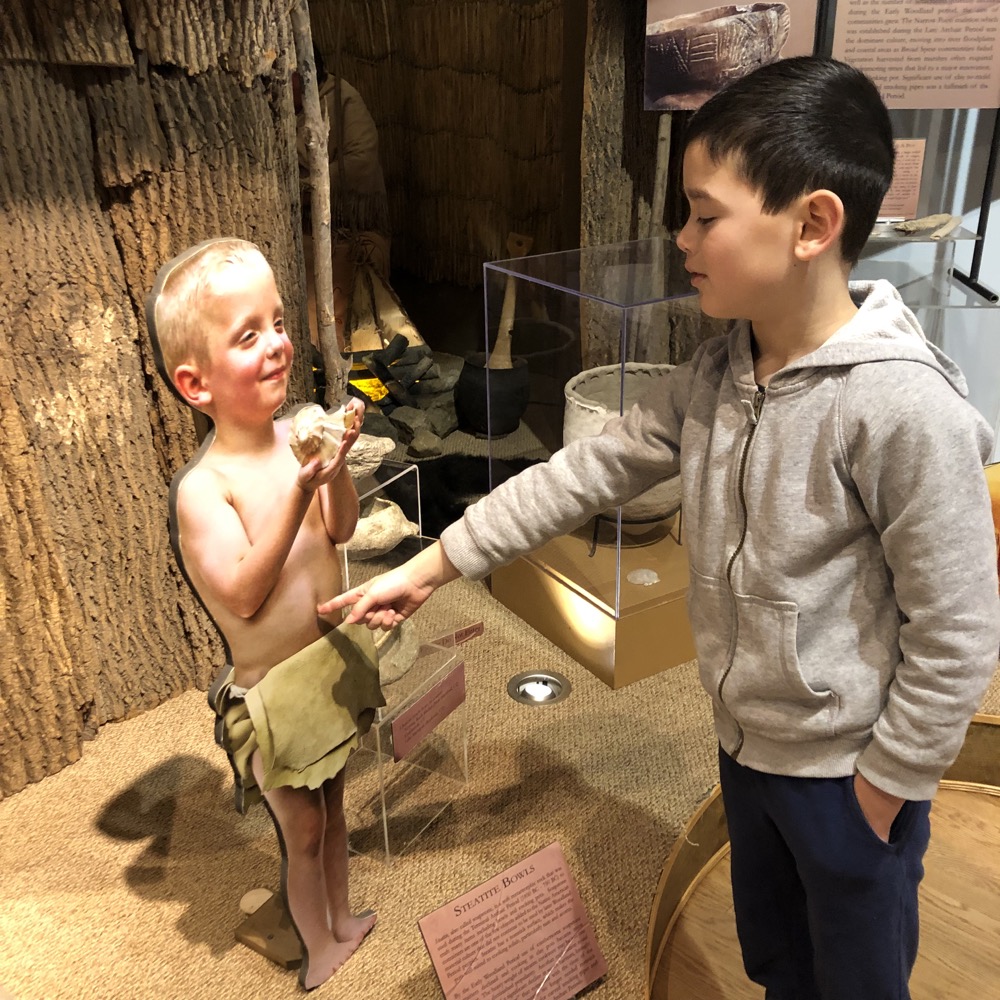
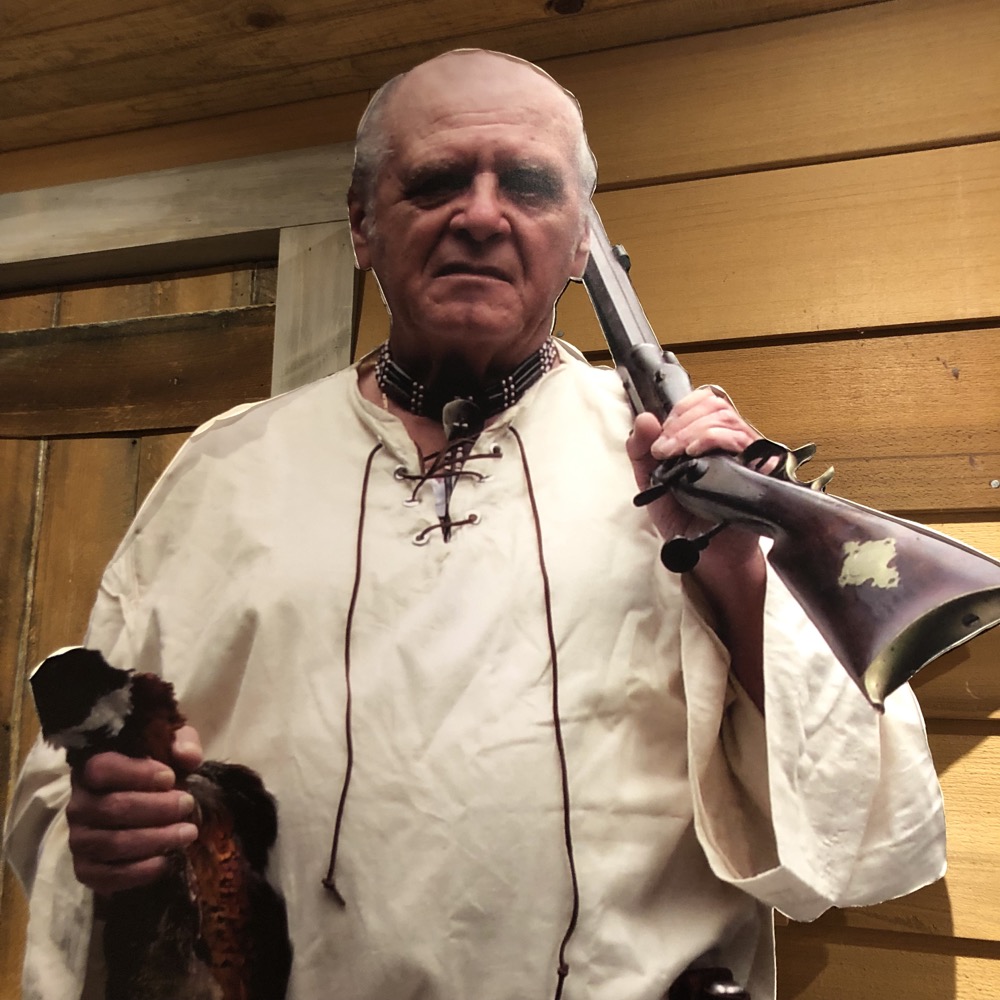
The core exhibition space focuses on Quinnetukut… to Connecticut. That is local Indigenous human history from the end of the last Ice Age through today. Which results in some (perhaps) surprising displays. I’ll admit that I found the fact that all the people portraying Indigenous people in the life-size photos appeared to be white like me. Europeans.
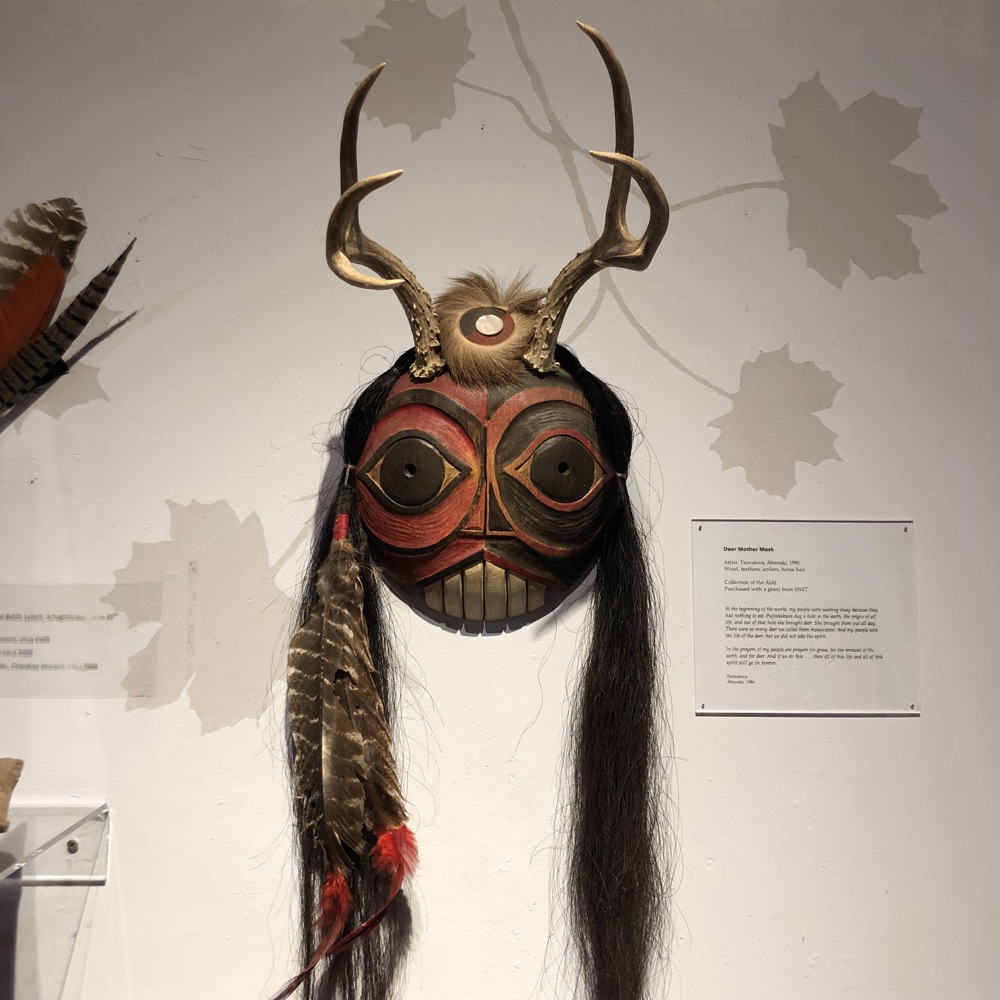
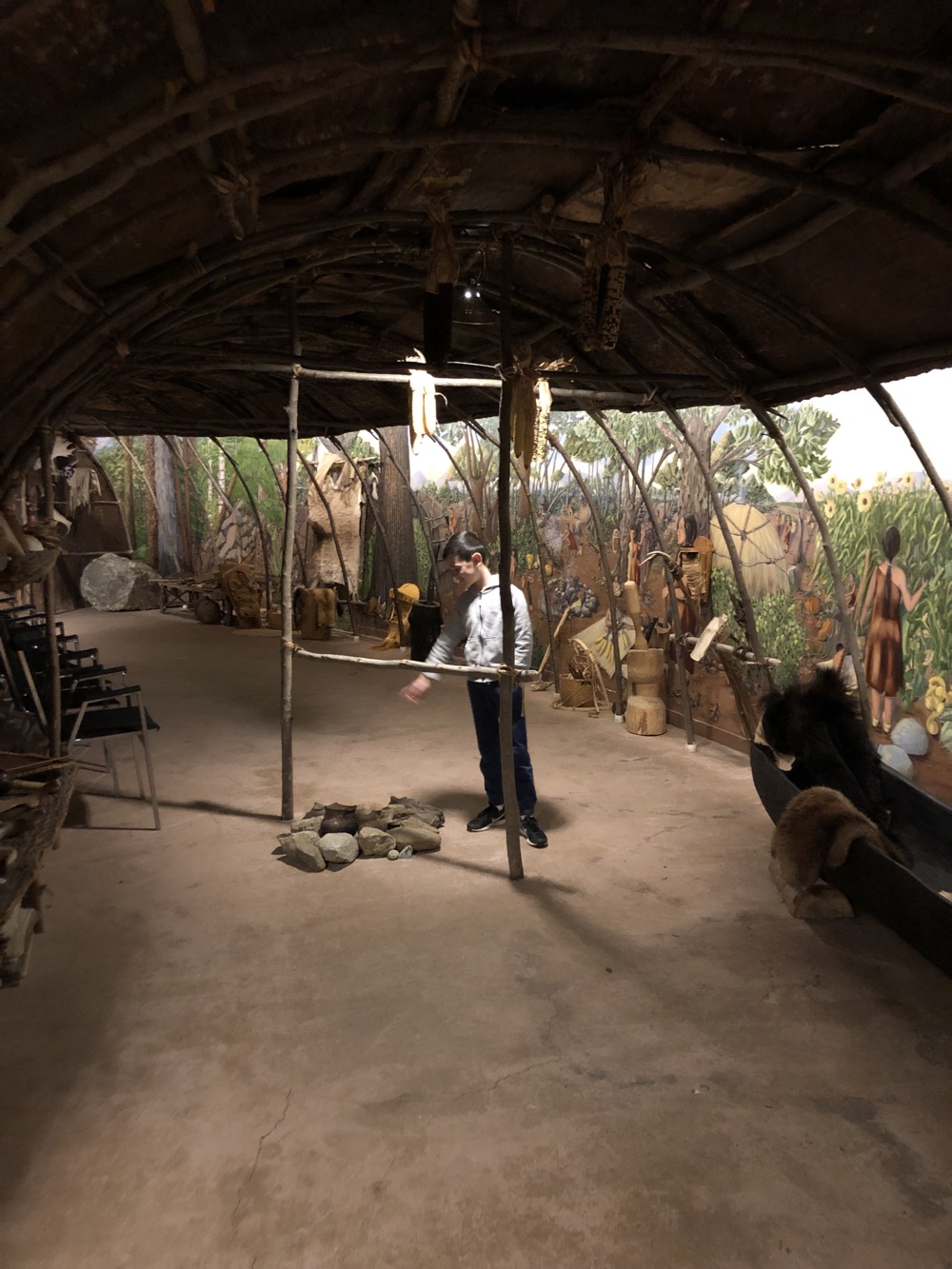
It must be said that these photos are so well done though; the way they are presented is really quite interesting. While not 3-D, the way each human photo is placed in the exhibit really brings this place to life.
But again, why are they so white?
I’ll tell you why, you colonialist.
The individuals used as models in our exhibits are all modern Native Americans, generally of Eastern Woodland descent. Today’s Native Americans descend from over 300 distinct nations and tribes, spanning the continent. Just as someone from a Southern European nation can look very different from a Northern European individual, so too are Native Americans different. A person with Eastern Woodland heritage will have different physical characteristics than people from the Plains, Southwest or Northwest Coast regions. Today, many Native American families have intermarried with non-Natives and may have African, Asian or European characteristics, but that does not make them “non-Native”; they still continue the traditions and spiritual practices of their ancestors.
I love the fact the IAIS has that as an answer to a FAQ.
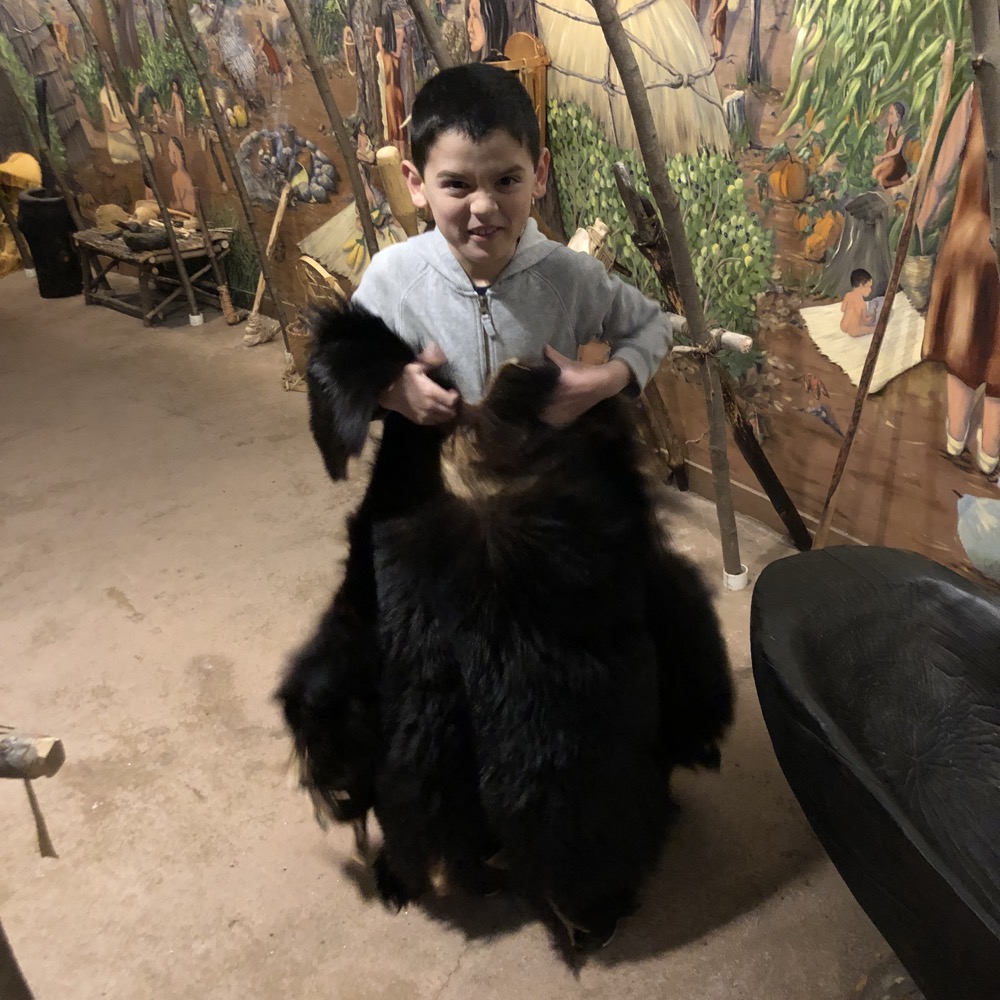
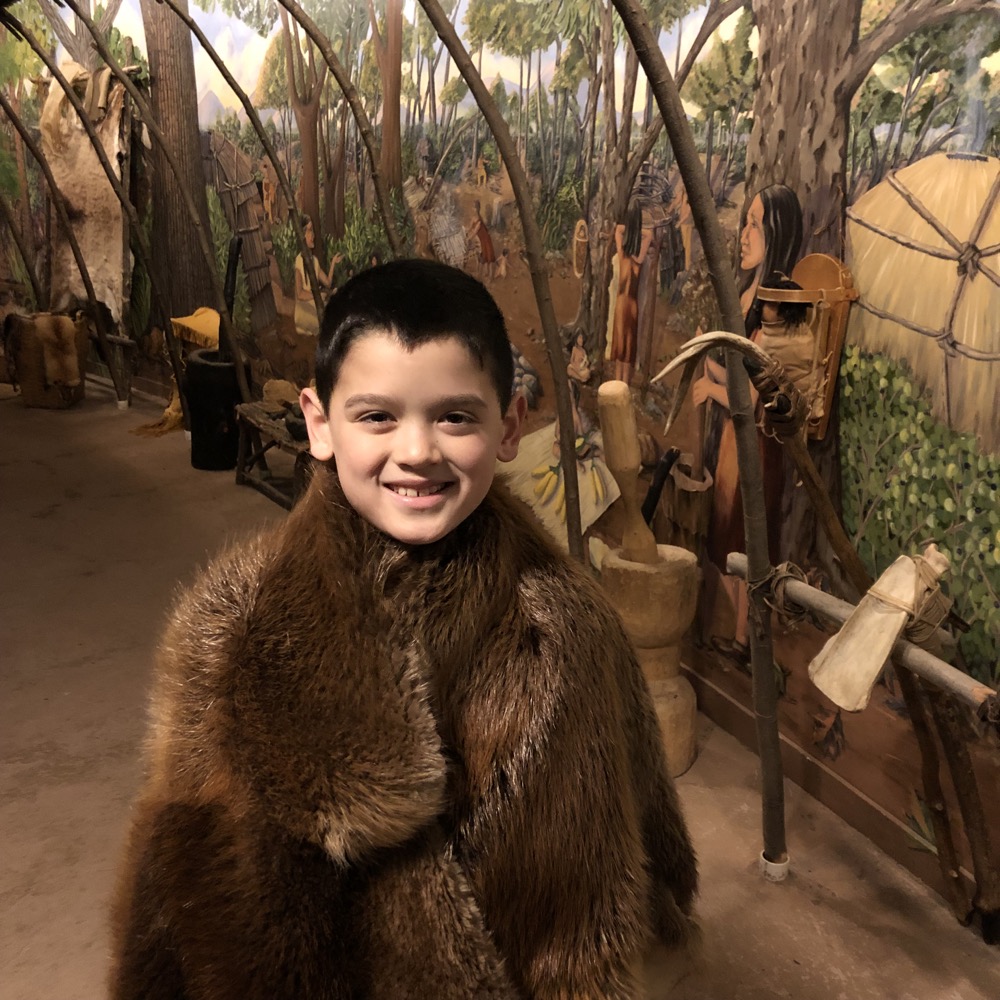
The history of the peoples here is thorough but not overwhelming. The visuals are interesting enough to keep an eight-year-old engaged for as long as his boring dad needed to read stuff.
Another room contains a replicated Algonquin Village (spelled Algonkian here, which I can only assume is “more correct,” but I’ve never seen that before.) The Algonkian/quin peoples inhabited the eastern US and Canada. Sure, there were all the different tribes, but they were generally head together by similar langage and customs.
The village here is of a relative recent time – around 500 years ago or so. Again, there is plenty of interactivity for the kids and plenty of reflective reading for adults. Someone knew what they were doing here, that’s for sure.
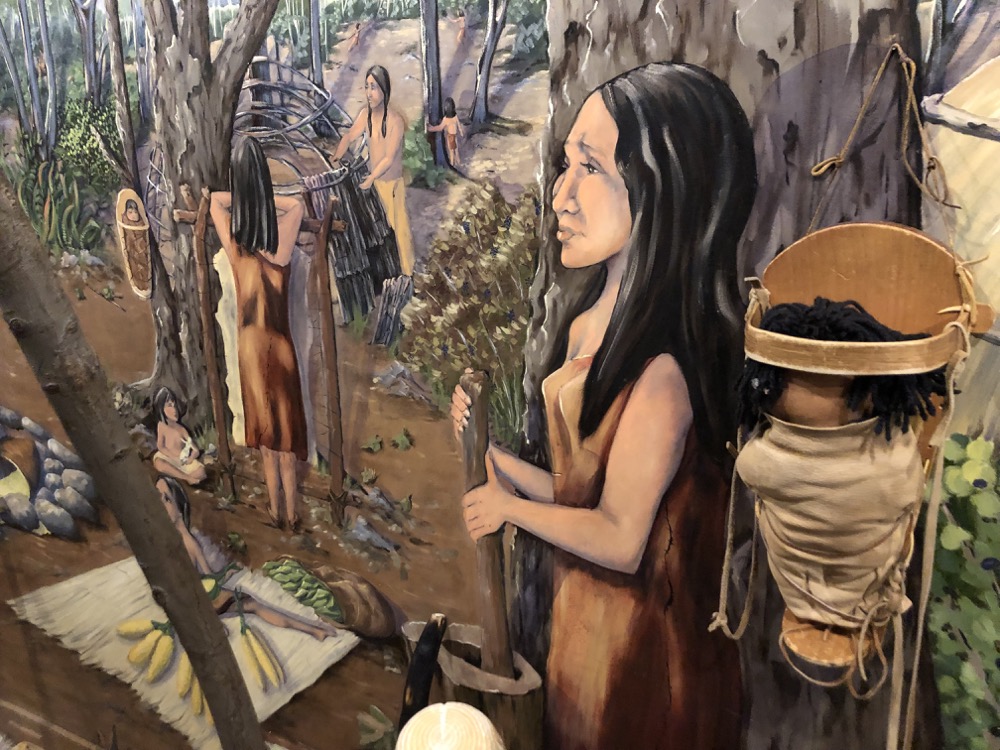
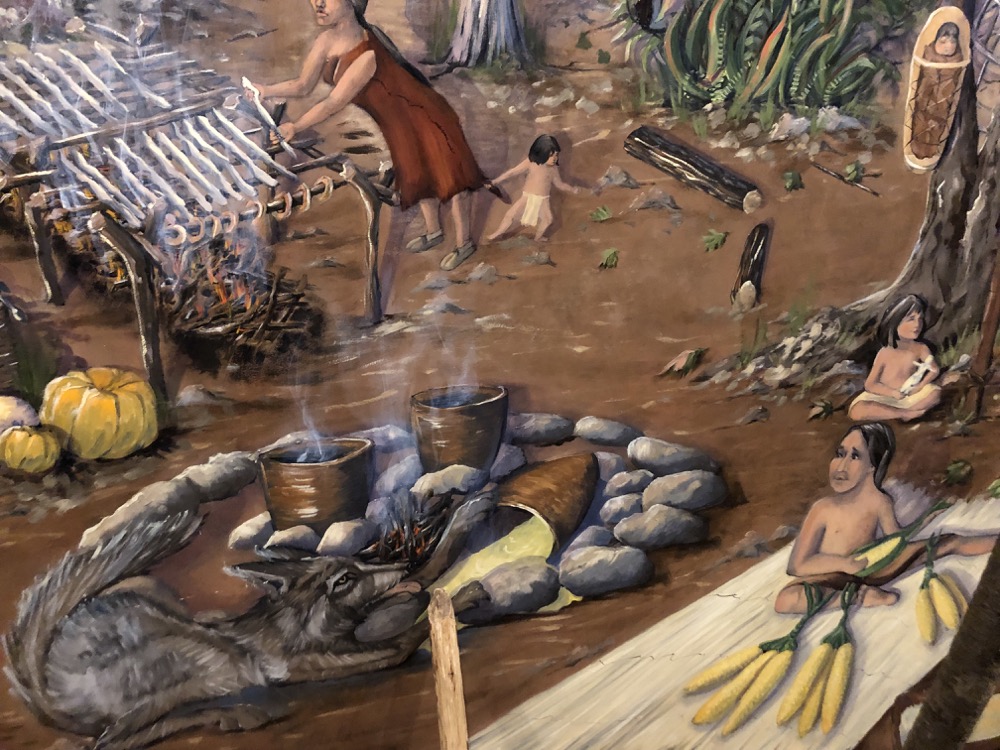
I think the overarching theme at the IAIS museum is to promote, remind, and embed in brains the fact that the Indigenous are still here. Despite our country’s horrifying genocide, racism, and eradication of the native peoples and cultures, they are still here. From northern Alaska to southern Florida.
Not only are they “still here,” they’ve modernized. Of course they have! And this museum makes that point. Per the IAIS, “All cultures are organic entities, and change is a constant within them. For example, Anglo-Americans no longer wear Pilgrim hats, drive Model T Fords, or dance the Charleston.”
My wife loves dancing the Charleston, but she’s not Anglo-American at all, so I guess she gets a pass.
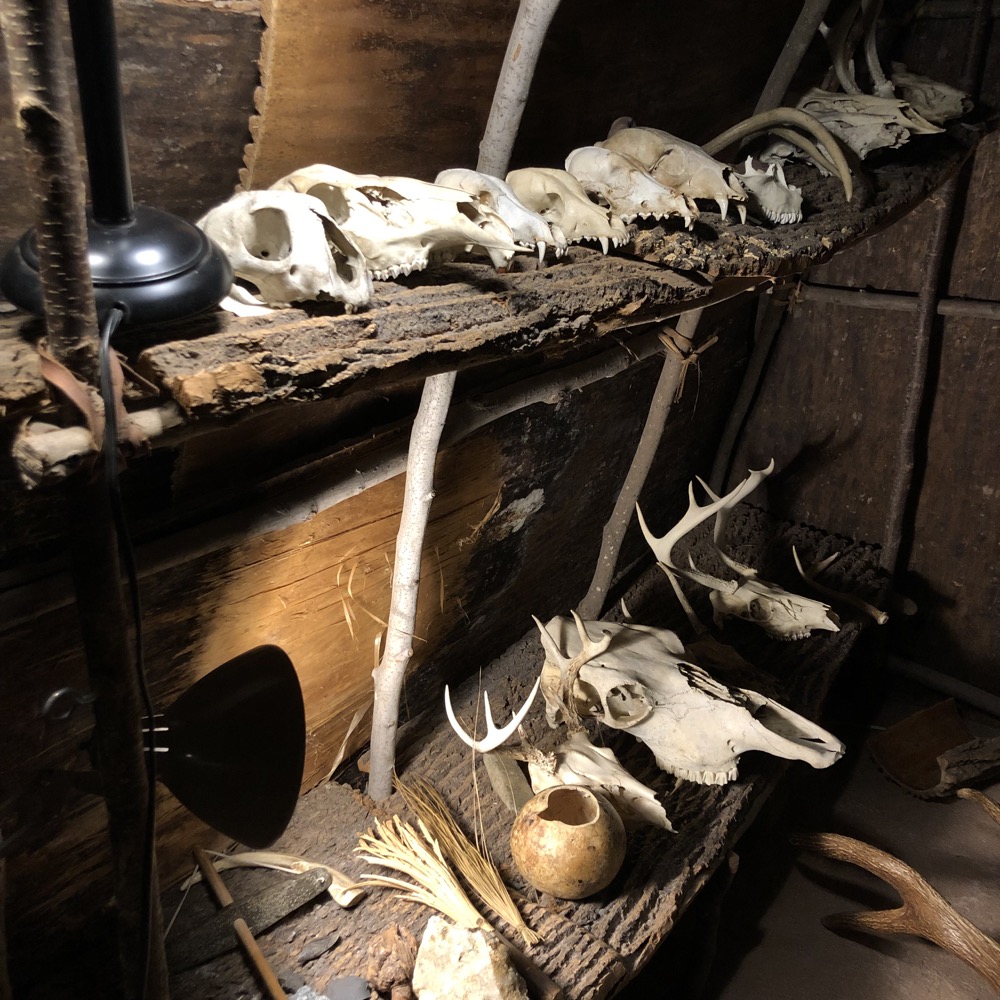
Did you know Native Americans – read that again – Native Americans were not granted American citizenship until 1924? Less than a hundreds years before my visit to this museum.
It’s enough to make me scream, but fortunately the Children’s Discovery room was right around the corner and nothing brightens a day more than a cute little kid enjoying cute little kid stuff.
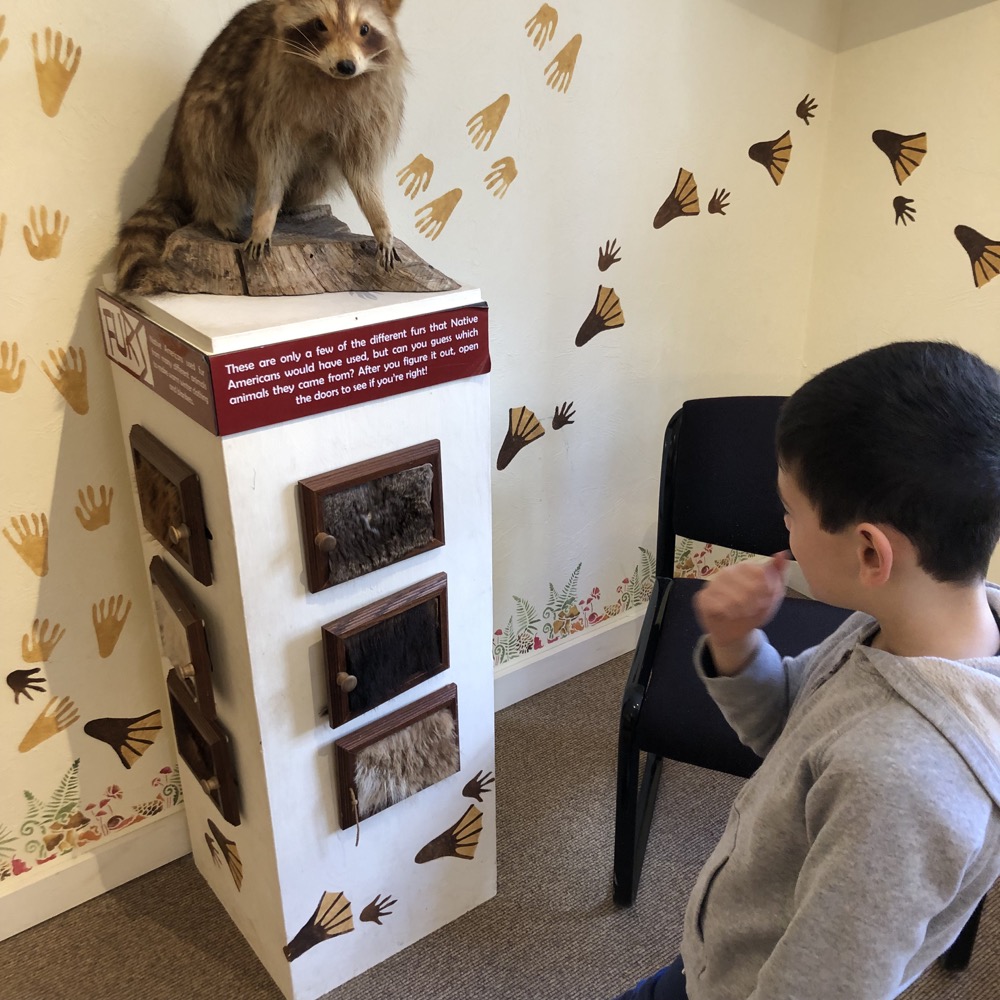
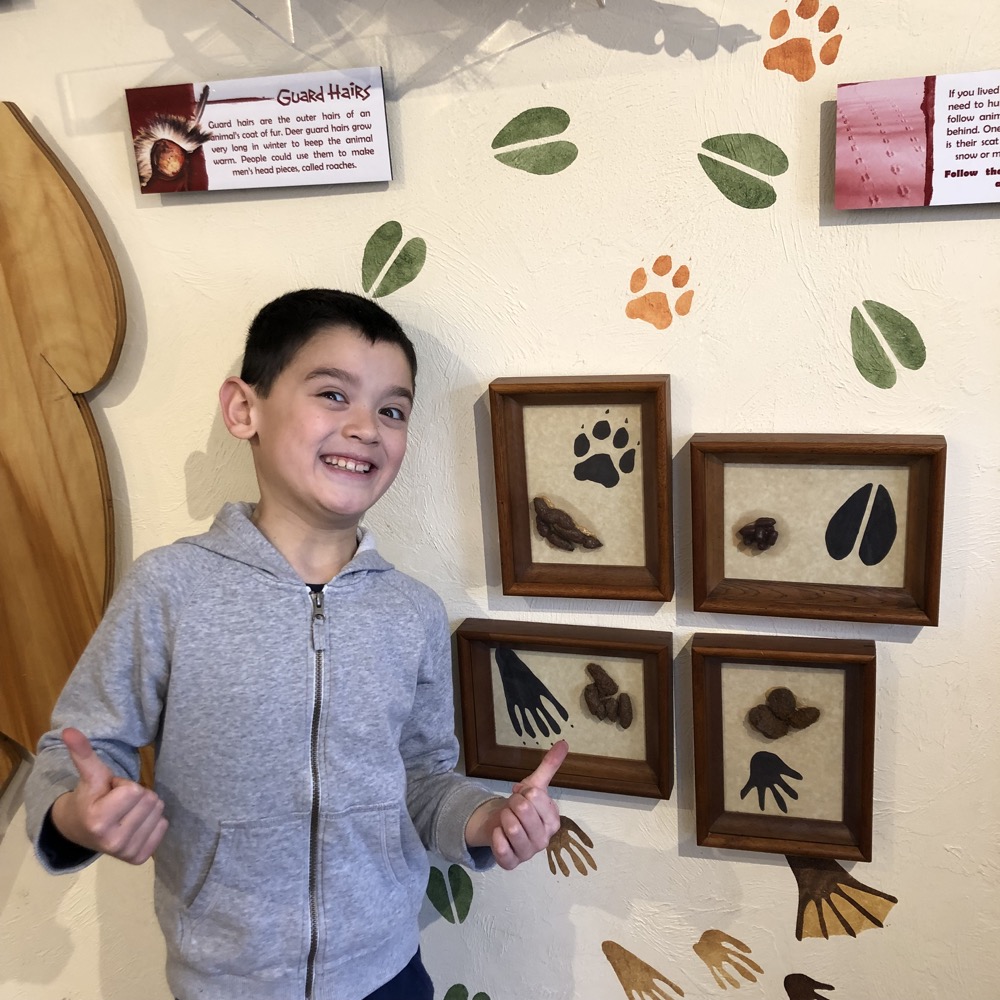
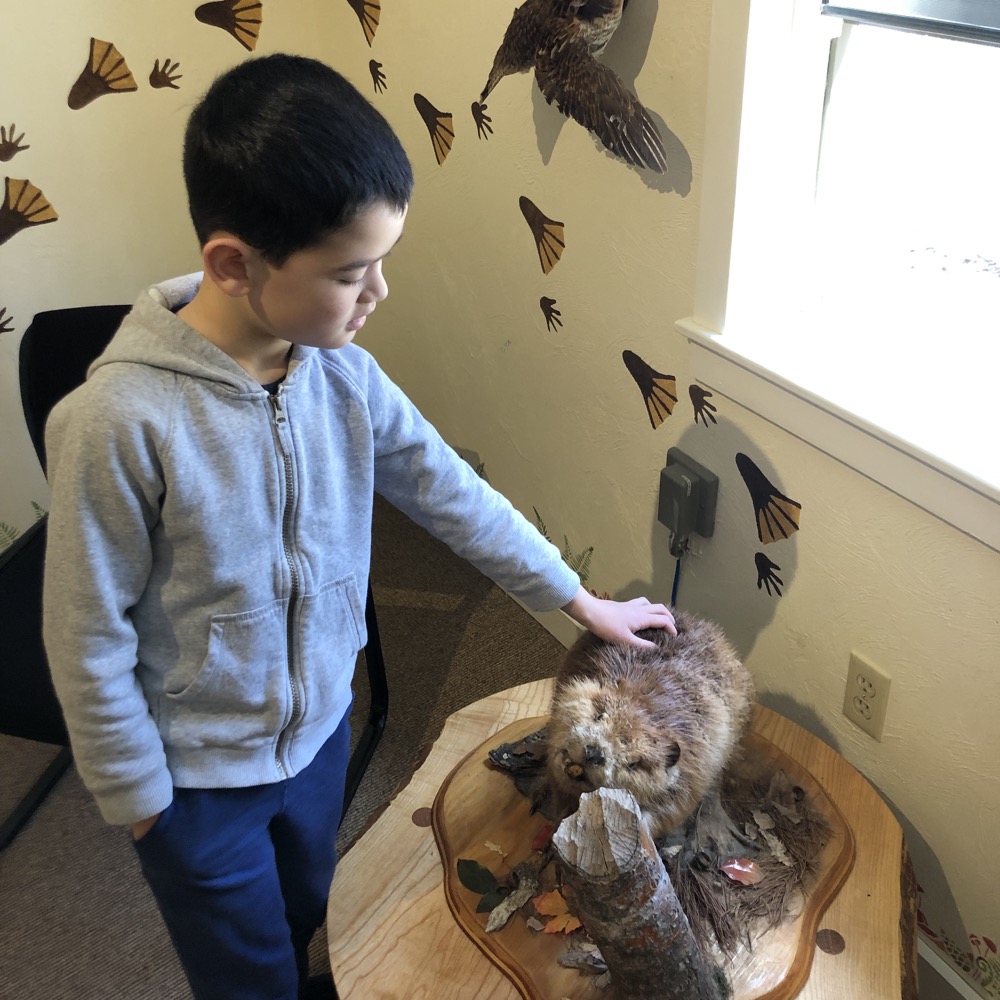
All the animals here are fun and all, but there are lessons to be learned as well. Everyday life living in the elements in Connecticut wasn’t easy. The indoor recreation of the wigwam allows of kids (and adults) to attempt to imagine what it would have been like trying to survive.
I think the whole “reverance for nature” lifestyle was just as much a “nature will kill us at every turn so we better respect it and learn how to live in it” as anything. The museum issued a challenge:
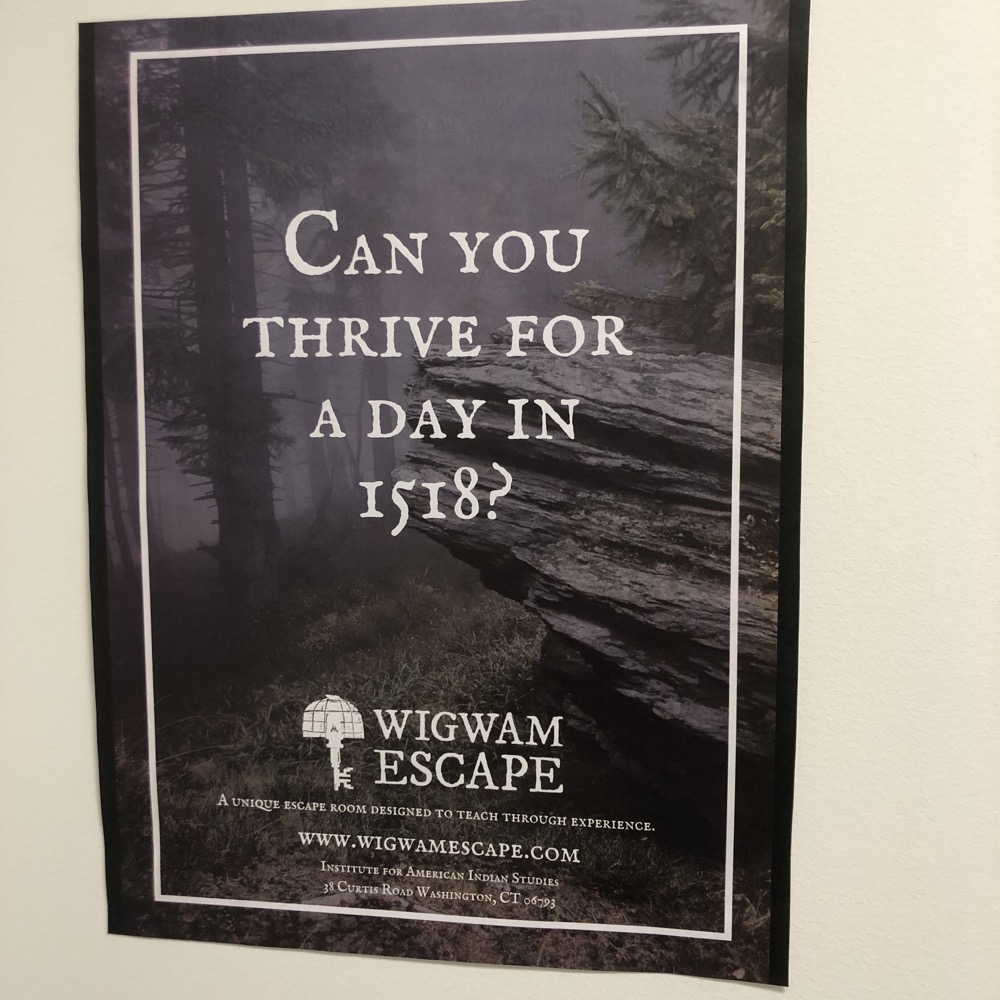
A day? Yes, I could thrive for a day! Sure, I might go hungry (Yes, I’d go hungry) but I’d survive. Then again, does “thrive” imply caloric intake, some joy, and perhaps some self-improvement? Hm.
Okay, I could not thrive for a day in 1518. (If you can read the small print in the picture of the sign above, this was a “unique escape room” idea the museum had in their outdoor wigwam, which is totally rad.
We’ve been having too much fun. Let’s change that:
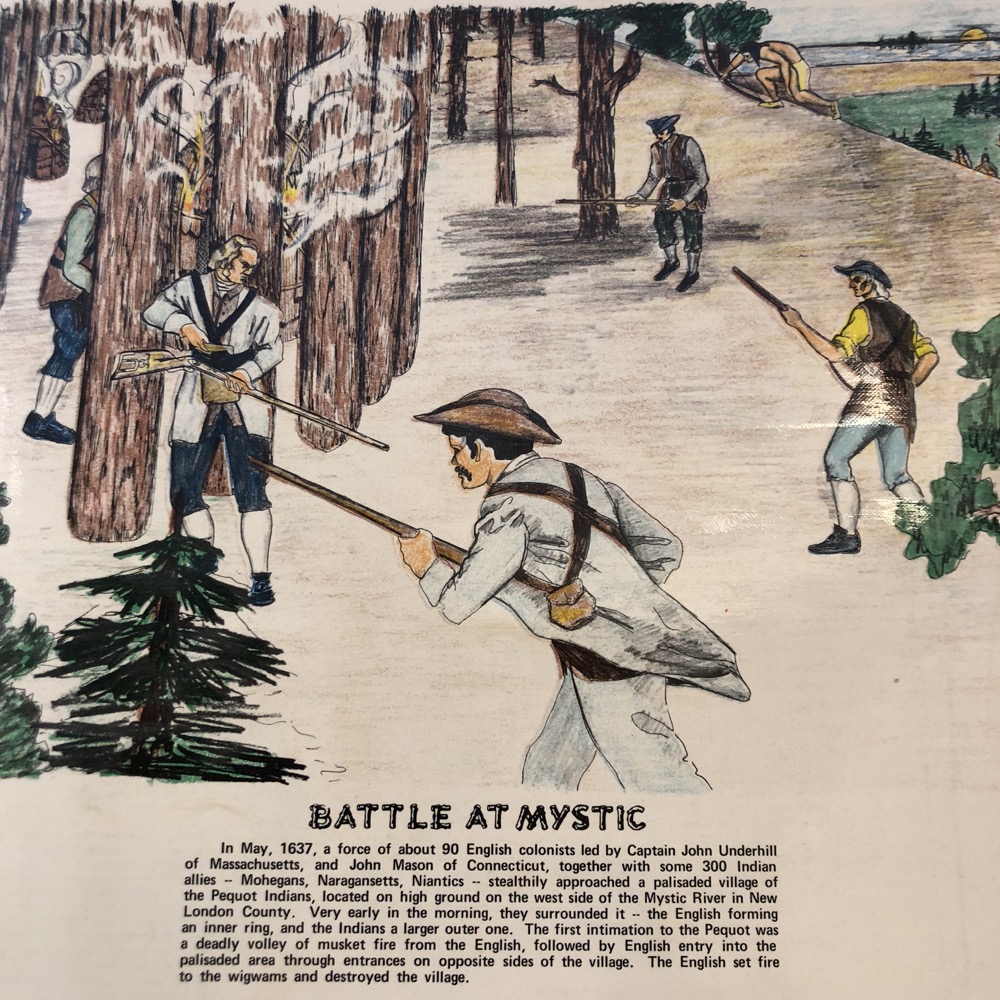
Yeah, that’s John Mason and his band of English and Indian mercenaries who surprised a Pequot village, murdering everyone – including burning women and children alive.
There exists in Windsor the much-maligned statue of John Mason, which has had quite a life as a statue. You can read about him, his ways, and according to some of the comments, his redemption tour.
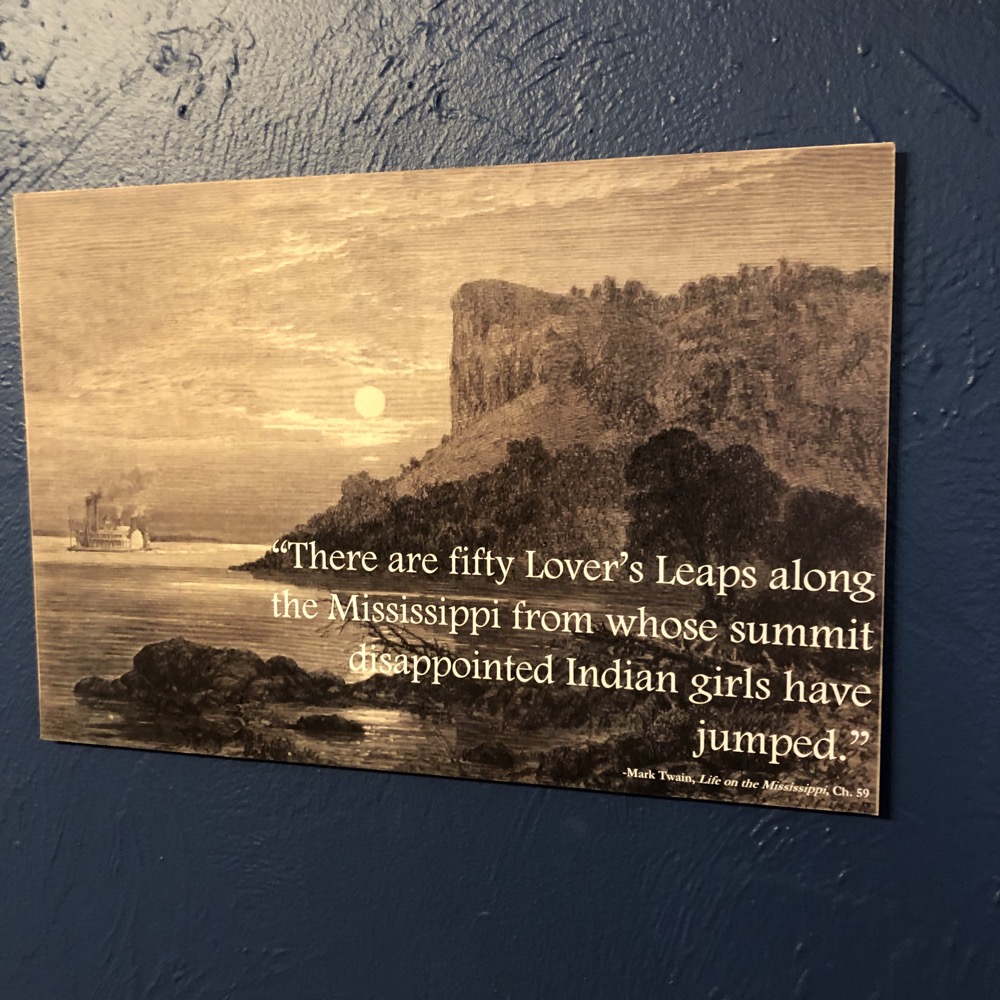
There are a whole bunch of other less awful stories from Connecticut’s past that the museum addresses rather adeptly. These are less awful because they are almost all certainly fictional: Lover’s Leap stories.
The IAIS told the story of these places across southern New England for an exhibit, but then this happened:
The initial goal of the our exhibit Tales of a Forgotten Day: Myth and Memory at Lovers Leap was to separate fact from fiction, and to decolonize the place-lore associated with locations called “Lovers Leap” in Southern New England. What came out of our research for this exhibition was a wider study of these toponyms and realization that we needed to continue the story.
There are a bunch of these in Connecticut of course. Heck, off the top of my head we have Lover’s Leap State Park, Indian Well State Park, Yantic Falls, Nonnewaug Falls, and Ninevah Falls.
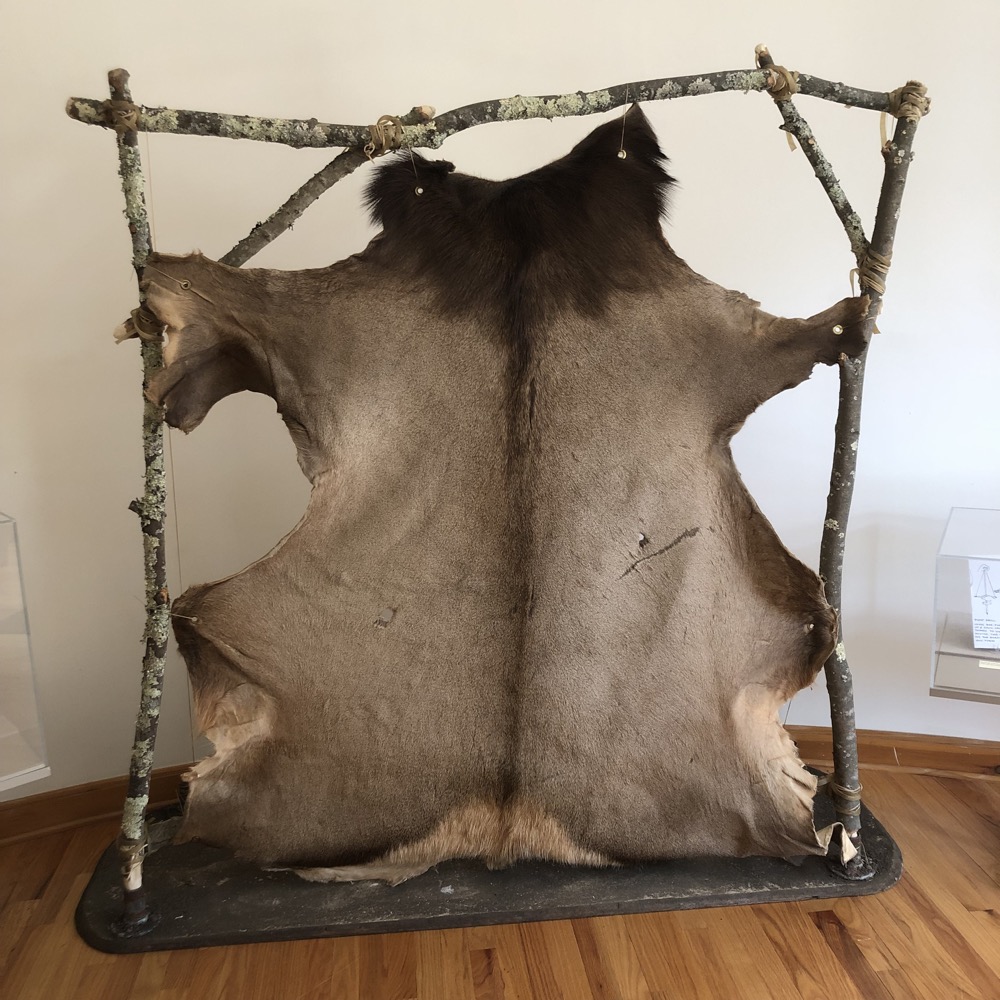

What began as a temporary exhibit describing and explaining these legends and why they became so prevalent has turned into a permanent exhibit collecting “lover’s leaps” nationwide.
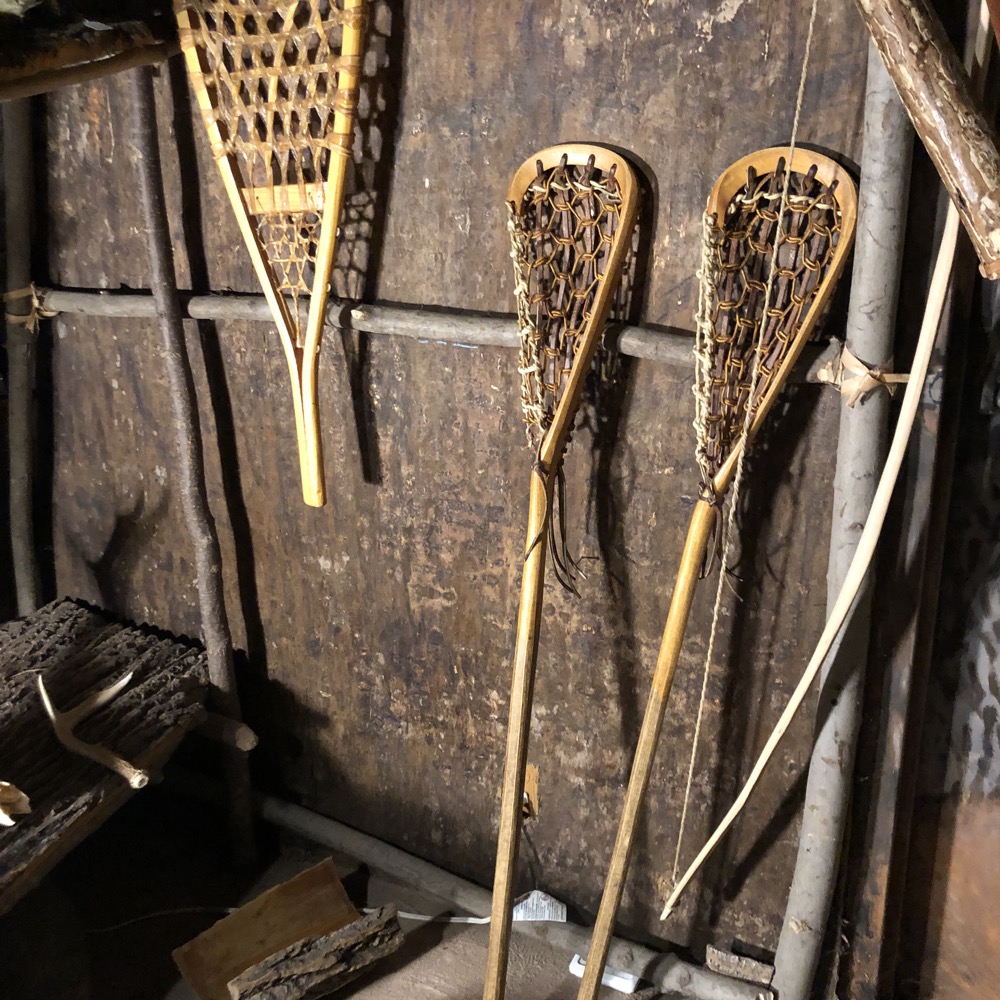
The museum does have temporary exhibits of course. Things like the history of lacrosse, an art exhibit by Indigenous tribespeople of Connecticut. And lots of identity-culture stuff, which is important.
The museum extends outside in their 15 acres of woodlands and trails. There are gardens and a replicated 16th-century Algonkian (still getting used to that spelling) Village. The construction of the village is based upon traditional knowledge and archaeological research and is built from locally harvested trees and stone. Calvin and I walked a little bit of the trails here but our focus was on the replicated village, as it was incredibly well built.
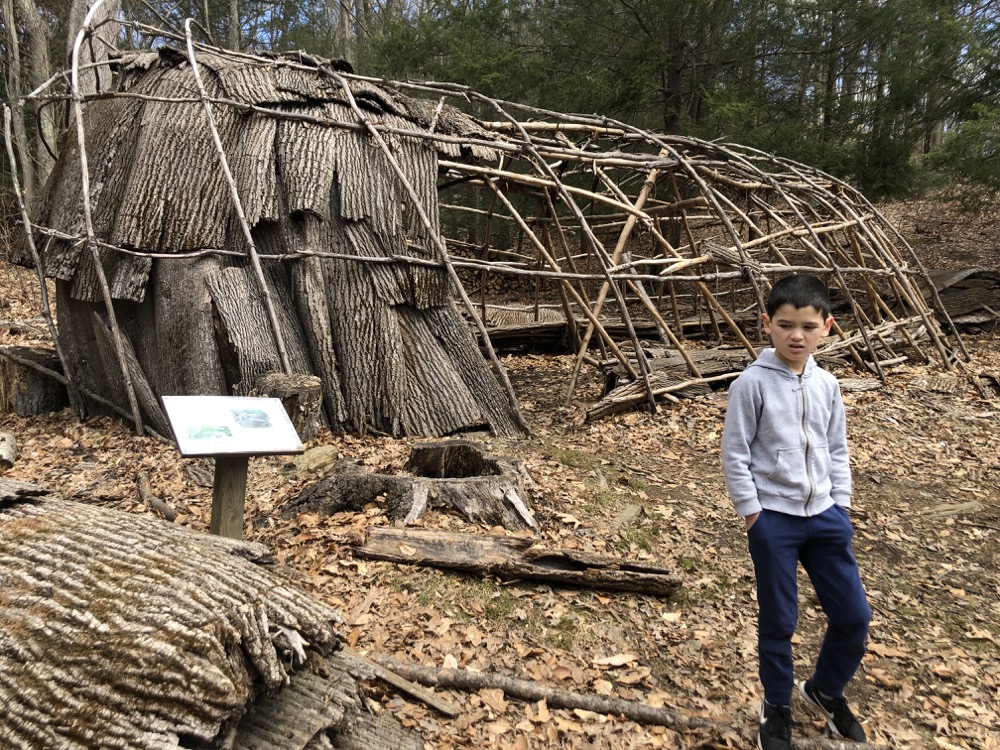
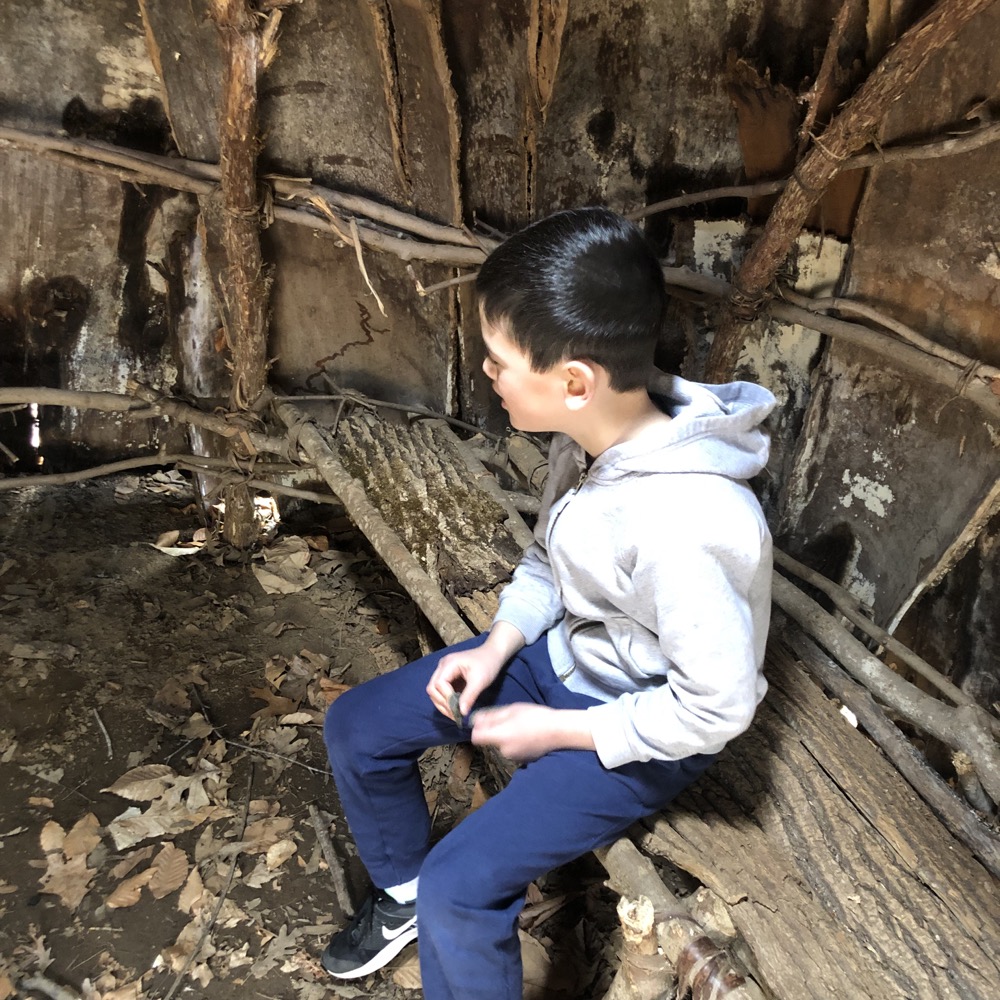
Calvin and I enjoyed our visit and both learned some stuff. I believe museum is more or less a gateway into the educational and advocacy programs the IAIS does. I think their “angle” on Indigenous cultures is fairly unique – it certainly is in Connecticut. In explaining cultures and history, the IAIS is clear to make us realize the culture still exists, is still evolving, and is still very much part of Connecticut life.
And sometimes we Eurocentric folks need those reminders. And in my son’s case, I hope he never forgets.
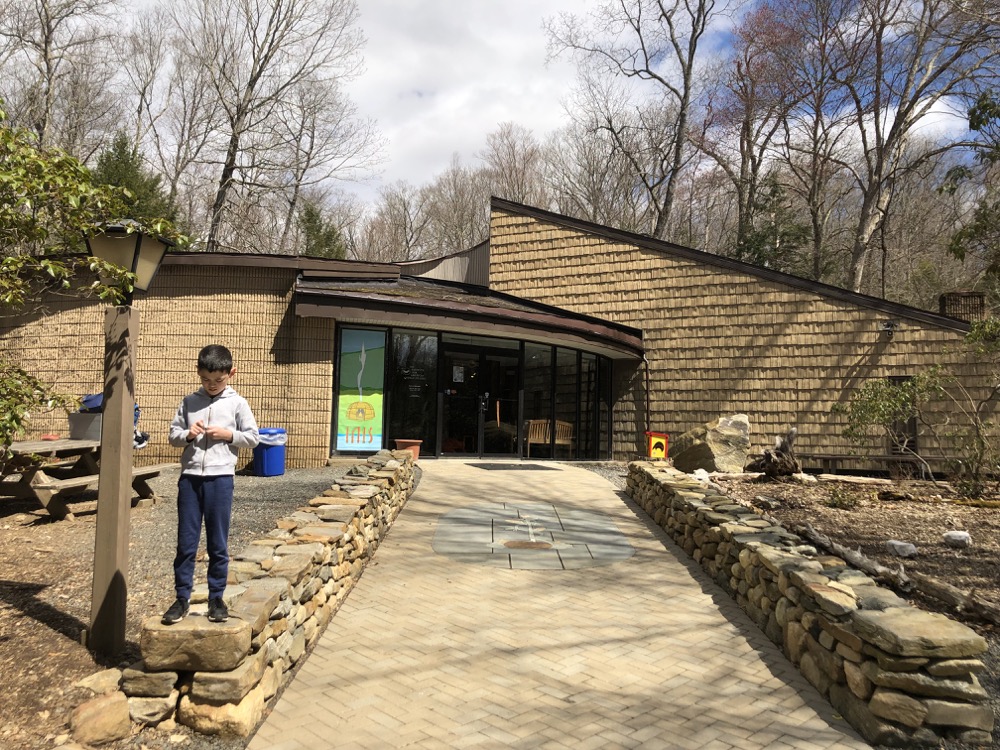

The Institute for American Indian Studies
CTMQ’s Museum Visits



Leave a Reply